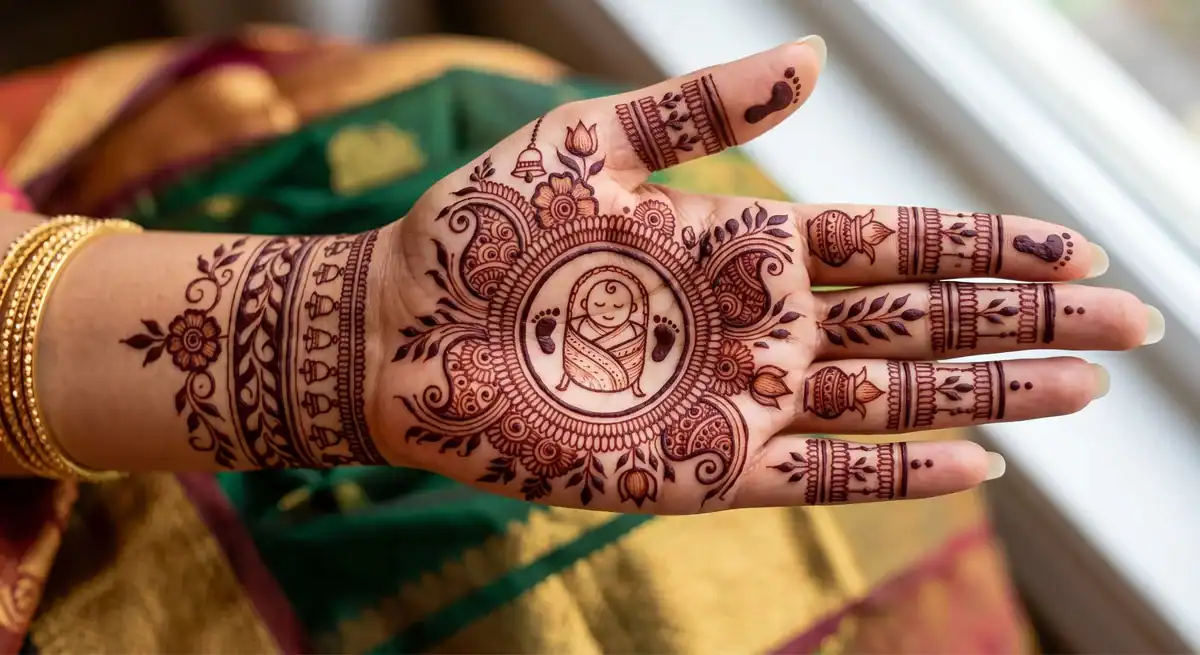
Central Baby Motif Front Hand Design With Kalash Fingers And Bell Cuff
60 min · Intermediate


Browse — Royal
Bridal-weight by definition — full coverage, layered motif families, sixty to a hundred and twenty minutes per side. 8 curated patterns drawn by our resident artist across Mughlai, Rajasthani, and modern bridal traditions.
60 min · Intermediate
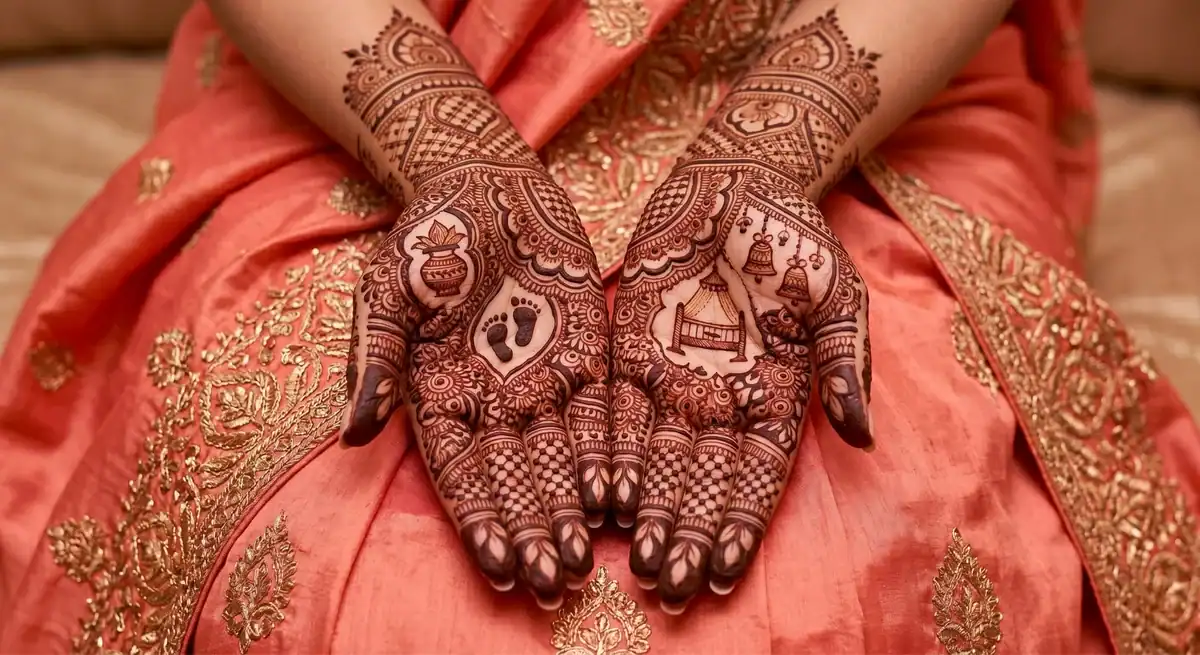
90 min · Advanced
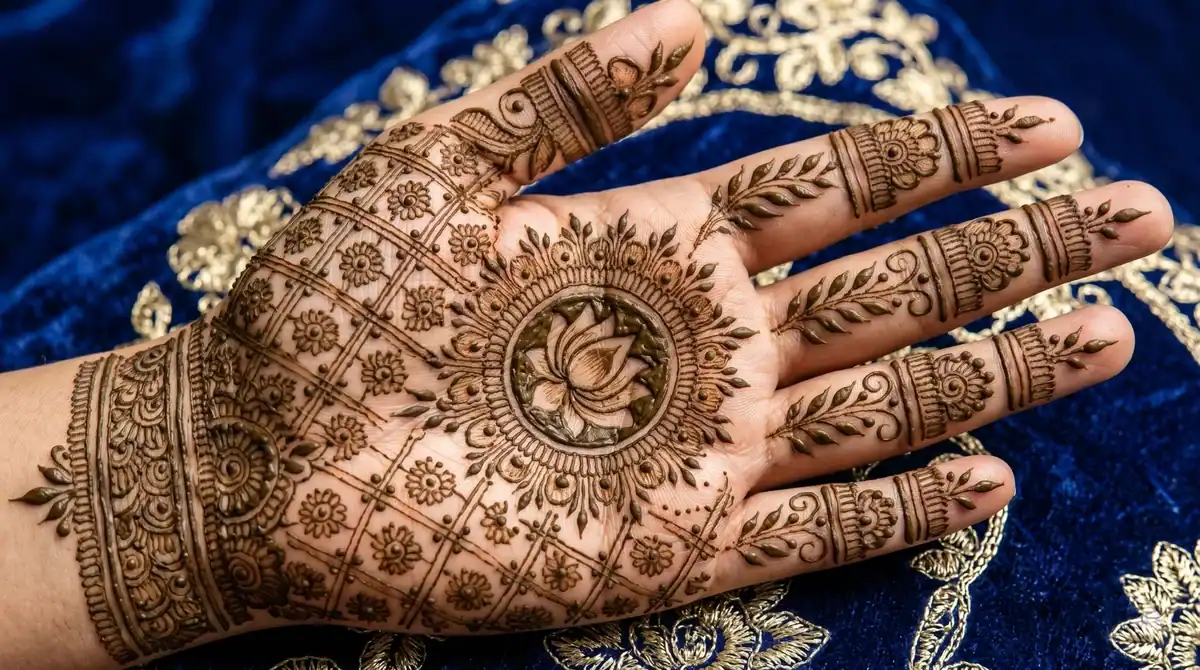
90 min · Advanced
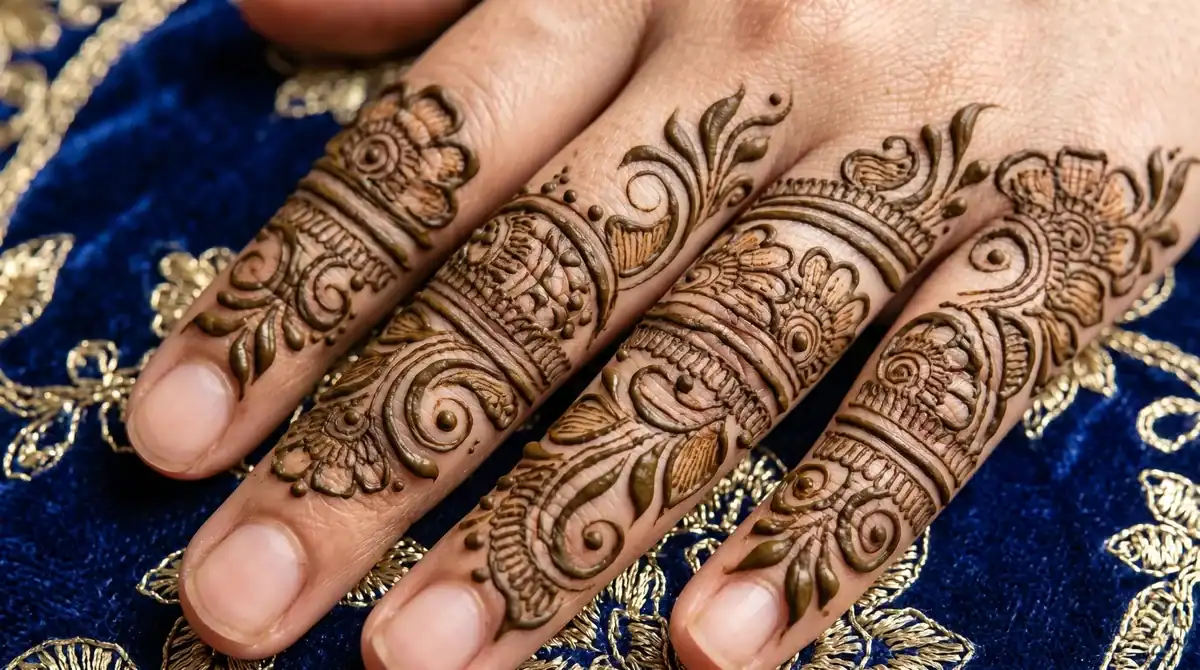
50 min · Advanced
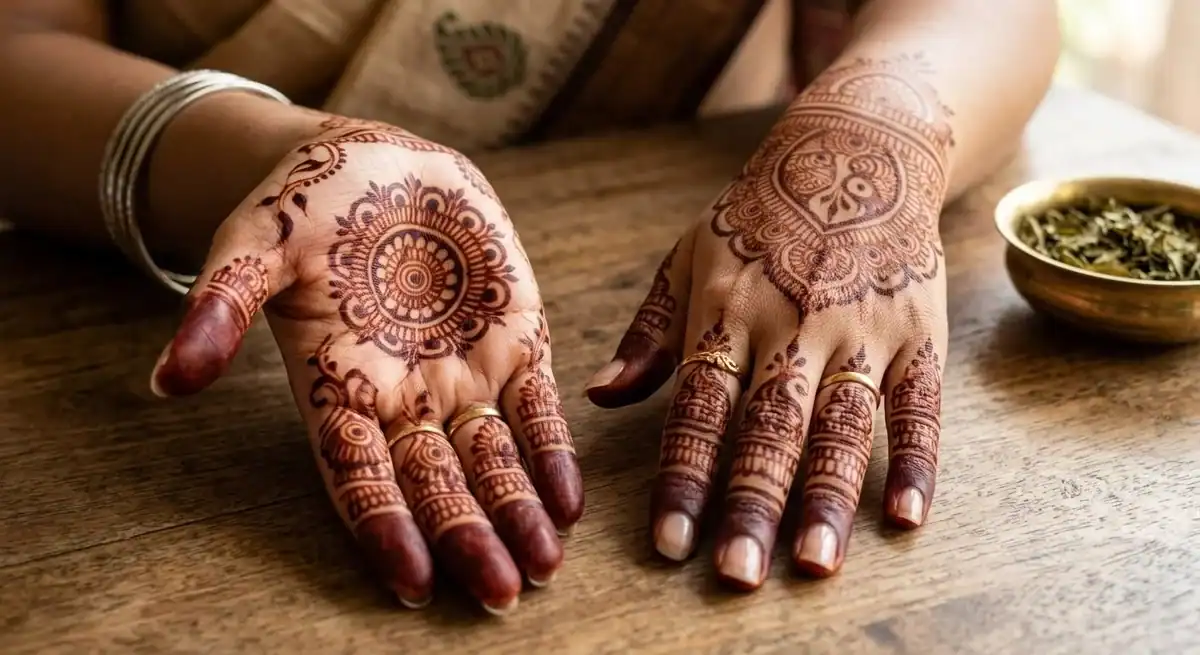
90 min · Advanced
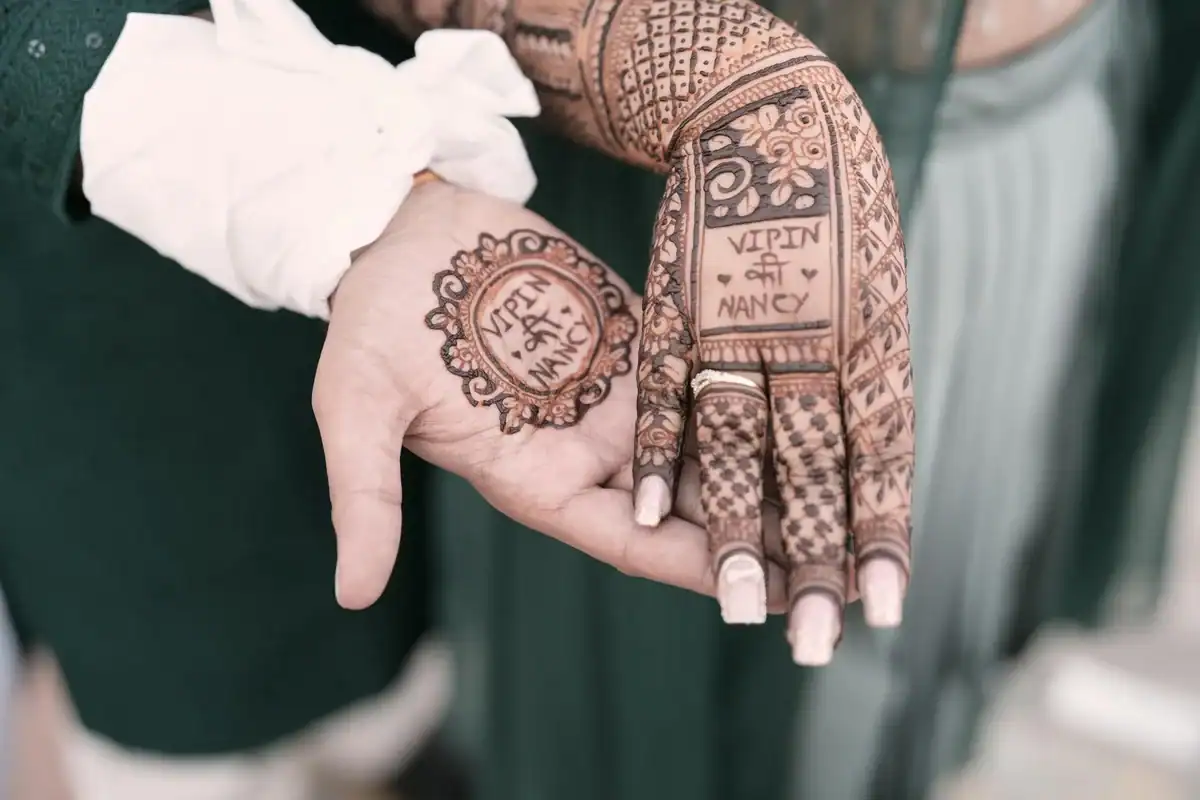
120 min · Advanced
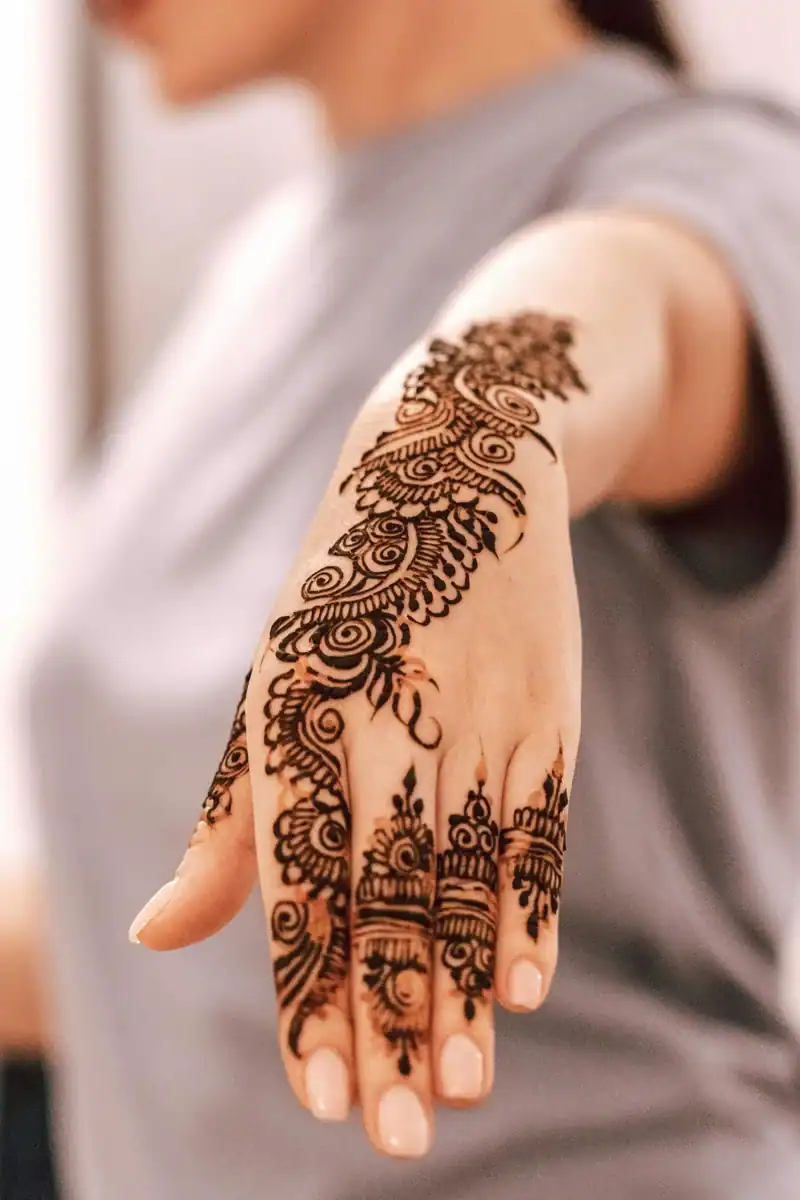
50 min · Advanced

120 min · Advanced
About this collection
"Royal" gets used loosely in mehndi vocabulary — to mean elaborate, ornate, or simply expensive. We use it precisely. A royal mehndi design (also called dulhan mehndi or wedding-weight mehndi) is the bridal-weight category: full coverage from wrist to fingertip, three or more motif families layered into one composition, sixty to a hundred and twenty minutes of application. Anything lighter is stylish or modern; anything bolder-but-sparser is Arabic; anything denser-but-flatter is Pakistani khafif. Royal hand mehndi is dense, layered, and time-intensive.
The vocabulary draws from Mughlai miniature traditions — Persian-influenced dense ornament — and from Rajasthani jaal, the fine net pattern that fills the back of the hand. Modern royal designs often combine Mughlai paisley work with Pakistani fingertip handling and a Rajasthani-derived back-hand jaal, producing the canonical Indian bridal mehndi most readers recognise from wedding photography.
Three diagnostic markers
The three things that have to all be true at once for a design to earn the royal tag — not any single one of them.
A royal design covers eighty per cent of the available surface or more. The remaining bare skin is composed negative space within the motif — the centre of a paisley, the gap between two jaal nets — not blank patches around the design. Stylish designs leave thirty to fifty per cent bare; royal leaves under twenty.
A royal design uses three or more distinct motif families in the same composition: paisleys plus jaal plus peacock, or mandala plus floral plus bracelet bands. The layering — not any single motif — is what gives the design depth. A dense single-motif pattern is not royal; it’s stylish-with-coverage.
Royal mehndi takes sixty to a hundred and twenty minutes per side because layered density at fine line weight cannot be applied faster. Anyone offering "royal mehndi" in twenty minutes is selling stylish-with-fancy-name. The sit is part of the form.
Royal mehndi is defined by three things together — density (full coverage with little or no bare skin), layered motif vocabulary (jaal, paisleys, peacock, mandala in the same composition), and time (sixty to a hundred and twenty minutes per side). Any one of these alone is not royal: a dense Pakistani khafif is not royal, a single mandala is not royal, a long Arabic application is not royal. The combination of all three is.
Sixty to a hundred and twenty minutes per side, with bridal full coverage on both hands typically taking four to five hours. The wedding day’s mehndi sit is one of the longest single applications in the catalogue — comparable to bridal makeup or styling. Most brides apply two evenings before the wedding to allow forty-eight hours of stain development.
Density and layering. A stylish design uses one or two motif families with breathing room between them — recognisable, photogenic, twenty to forty minutes. A royal design layers three or more motif families together with little bare skin between, building visual depth that reads slowly rather than at a glance. Stylish reads in a thumbnail; royal reveals on close inspection.
Mughlai and Rajasthani lead, with Pakistani Punjabi-bridal and South Indian-bridal close behind. Mughlai work centres on layered paisleys, ornamental borders, and dense filling derived from Persian-influenced miniature traditions. Rajasthani jaal — a fine net pattern across the back of the hand — is the signature regional contribution. Modern bridal mehndi often combines elements of both with Pakistani fingertip handling.
No, honestly. Royal work is the highest skill ceiling in mehndi — not because any single motif is hard, but because composing a layered hundred-and-twenty-minute design while maintaining a steady line throughout is a different skill from drawing pretty motifs. Brides book trained artists for royal mehndi for exactly this reason. If you want a royal-looking design at home, choose a Mughlai-influenced full hand at lower density and accept that it won’t reach bridal weight.
Three rules. Apply two evenings before the event, not one — bridal stain peaks at thirty-six to forty-eight hours after scraping, not before. Set with lemon-sugar after the paste dries, leave on overnight, scrape rather than rinse. Steam the hands above warming cloves for two minutes the morning after scraping. Avoid water, soap, and the gym for forty-eight hours; the stain will continue darkening across the wedding day itself.