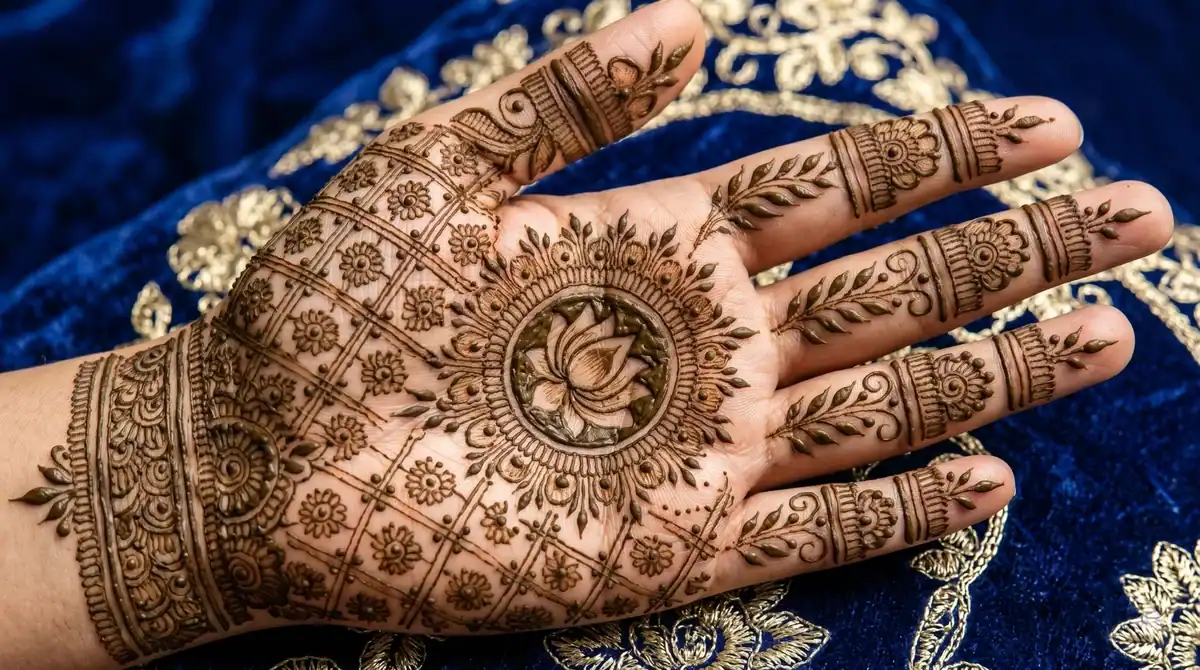
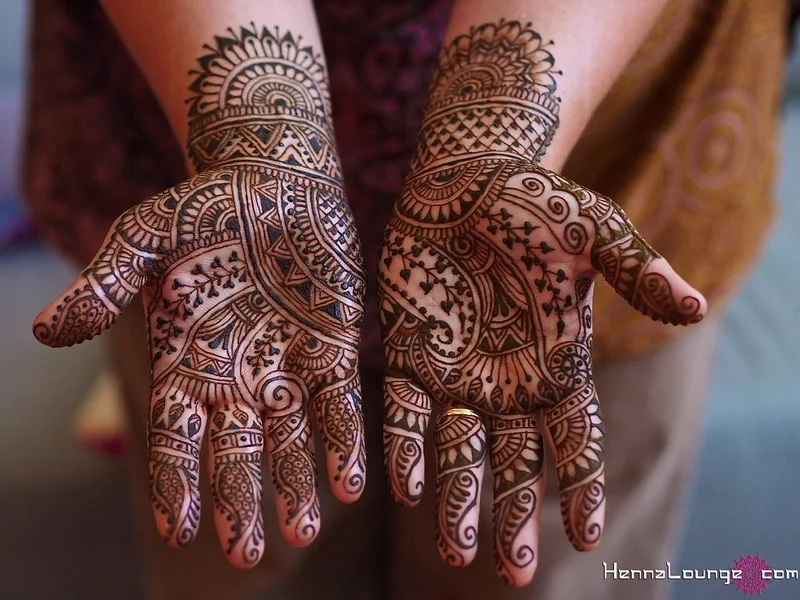
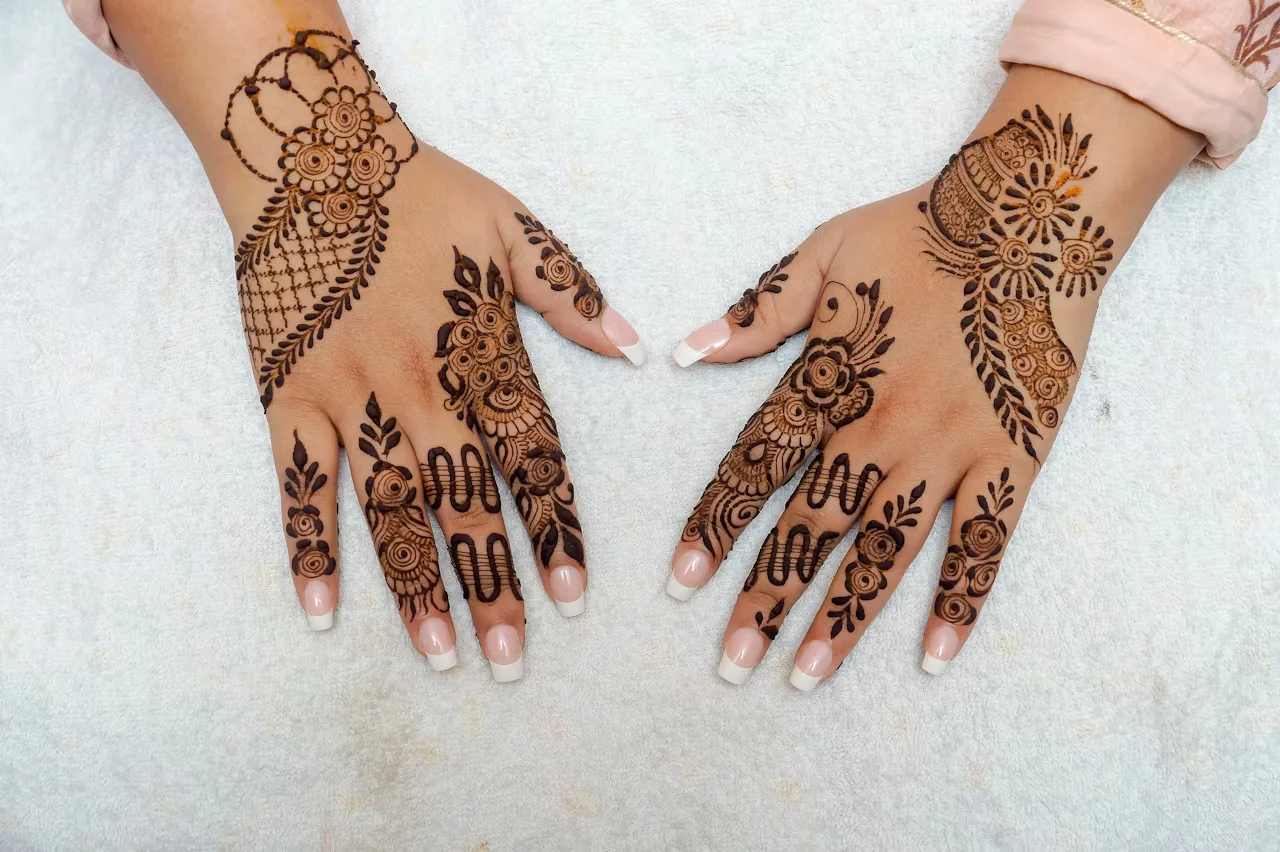
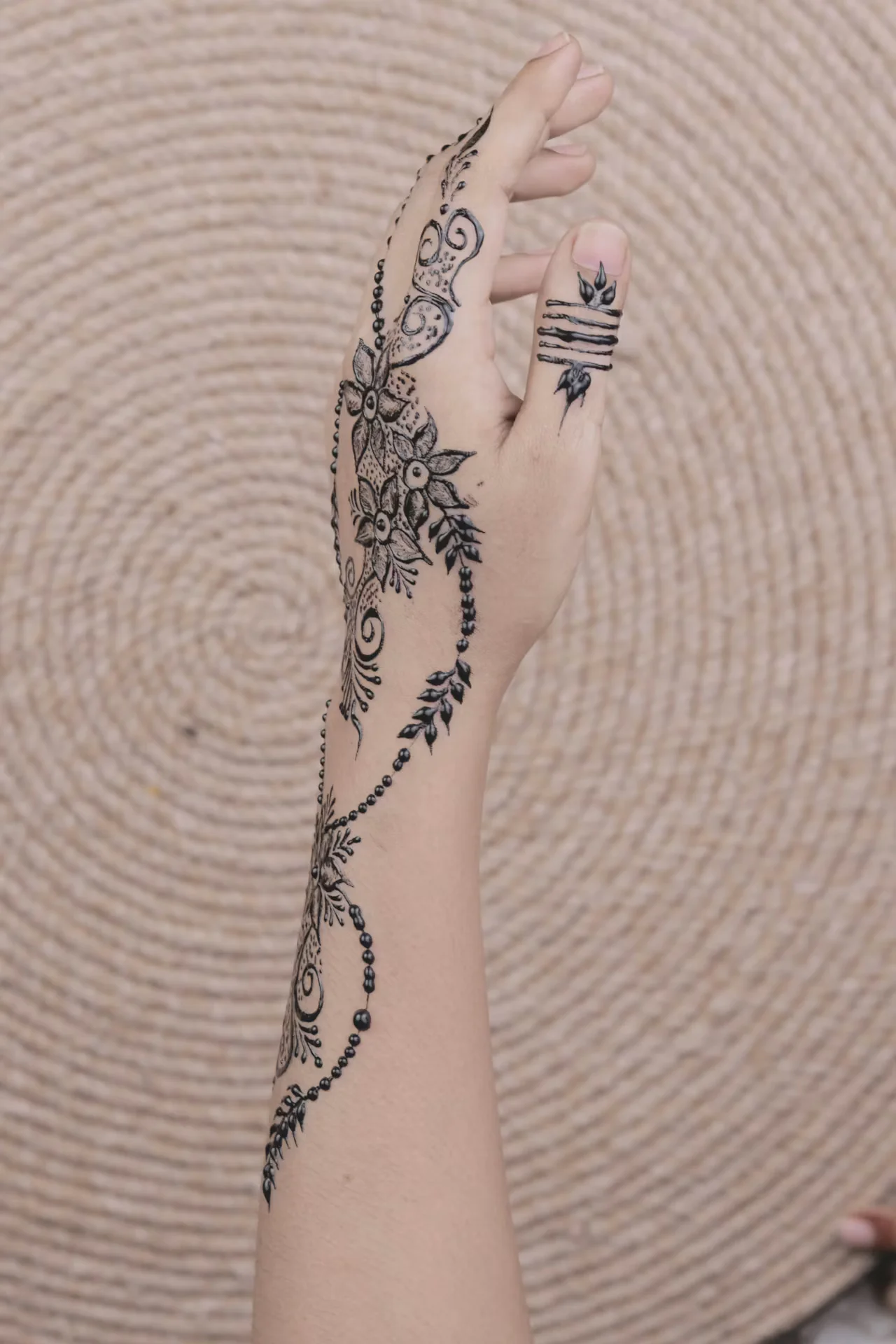
Lotus Mandala Palm with Geometric Jaal and Detailed Fingers
90 min · Advanced

Motif — Lotus
The most-used motif in mehndi vocabulary — five petals around a centre, five minutes to draw, infinite variation. 2 curated lotus-centred designs across every placement and skill level.
90 min · Advanced
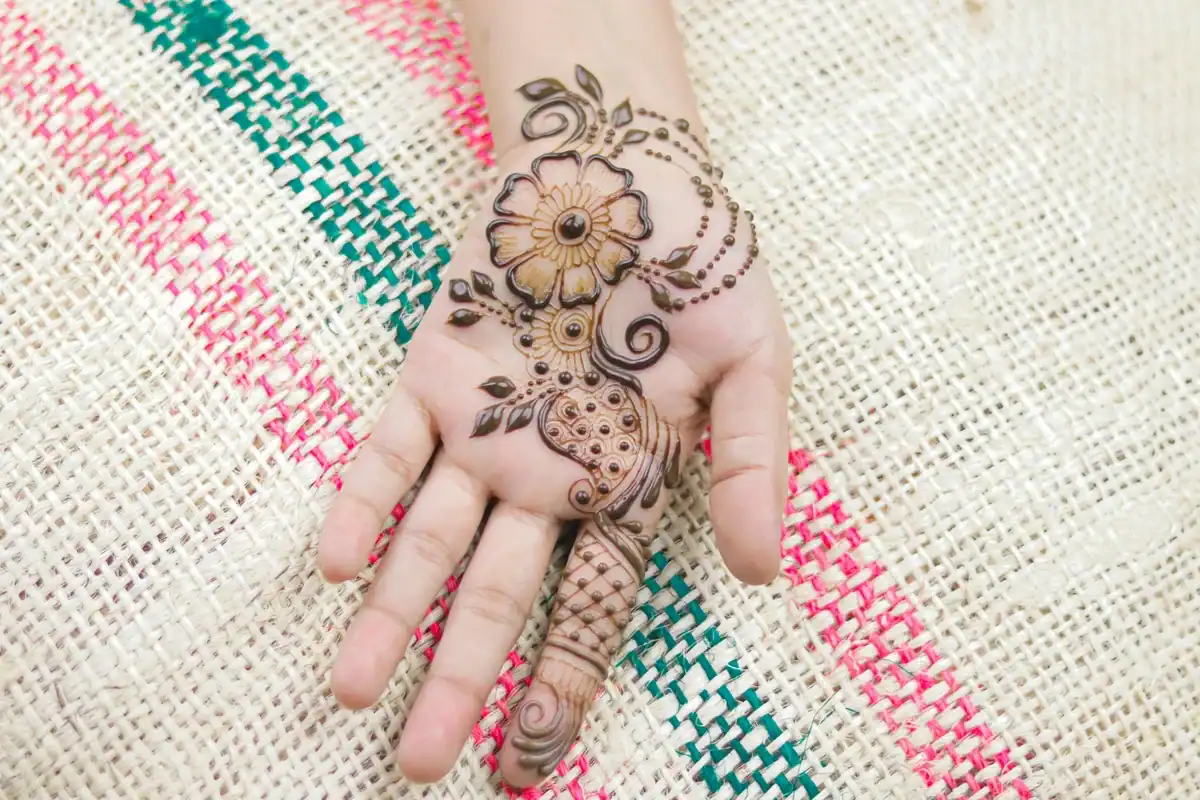
30 min · Beginner

About this motif
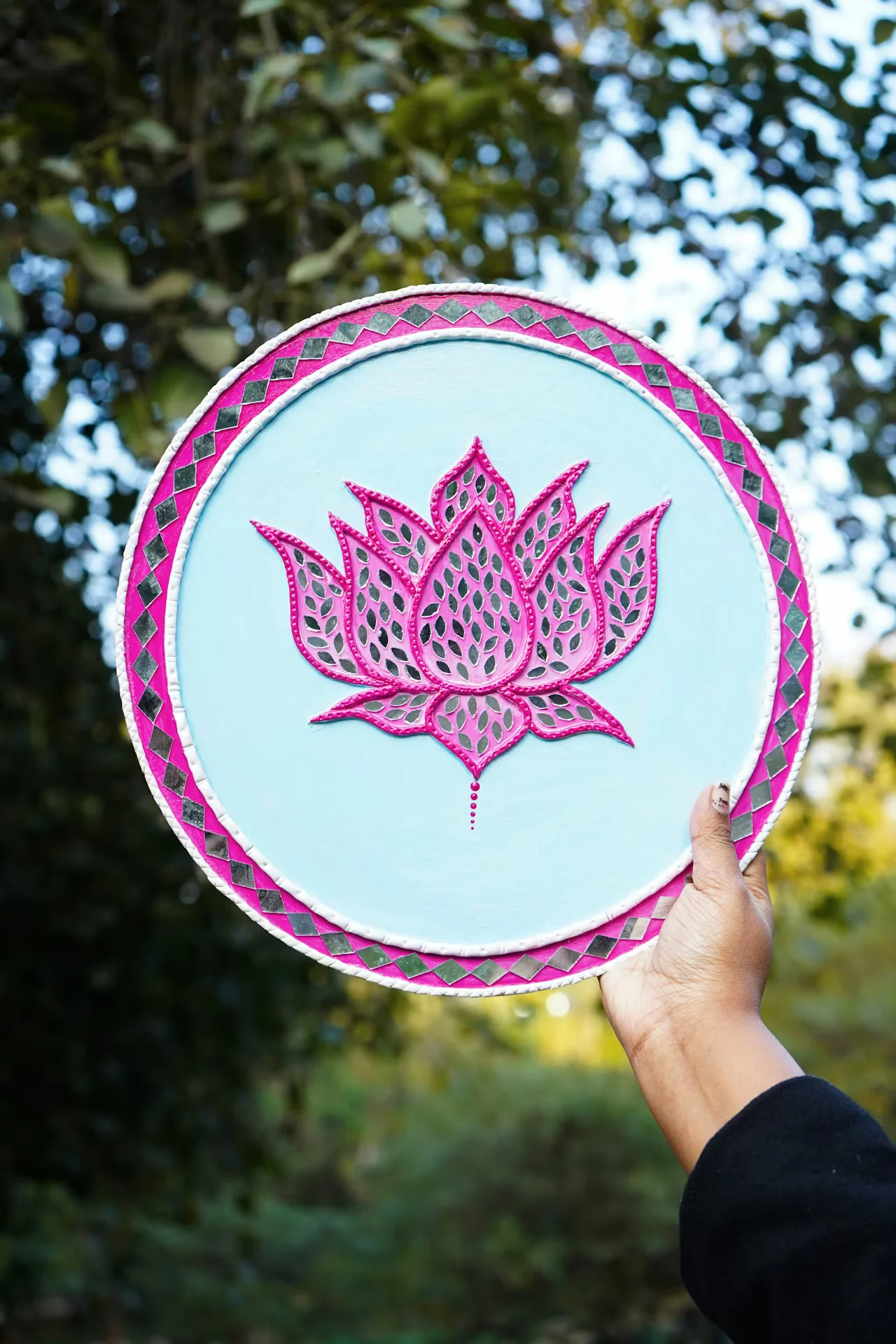
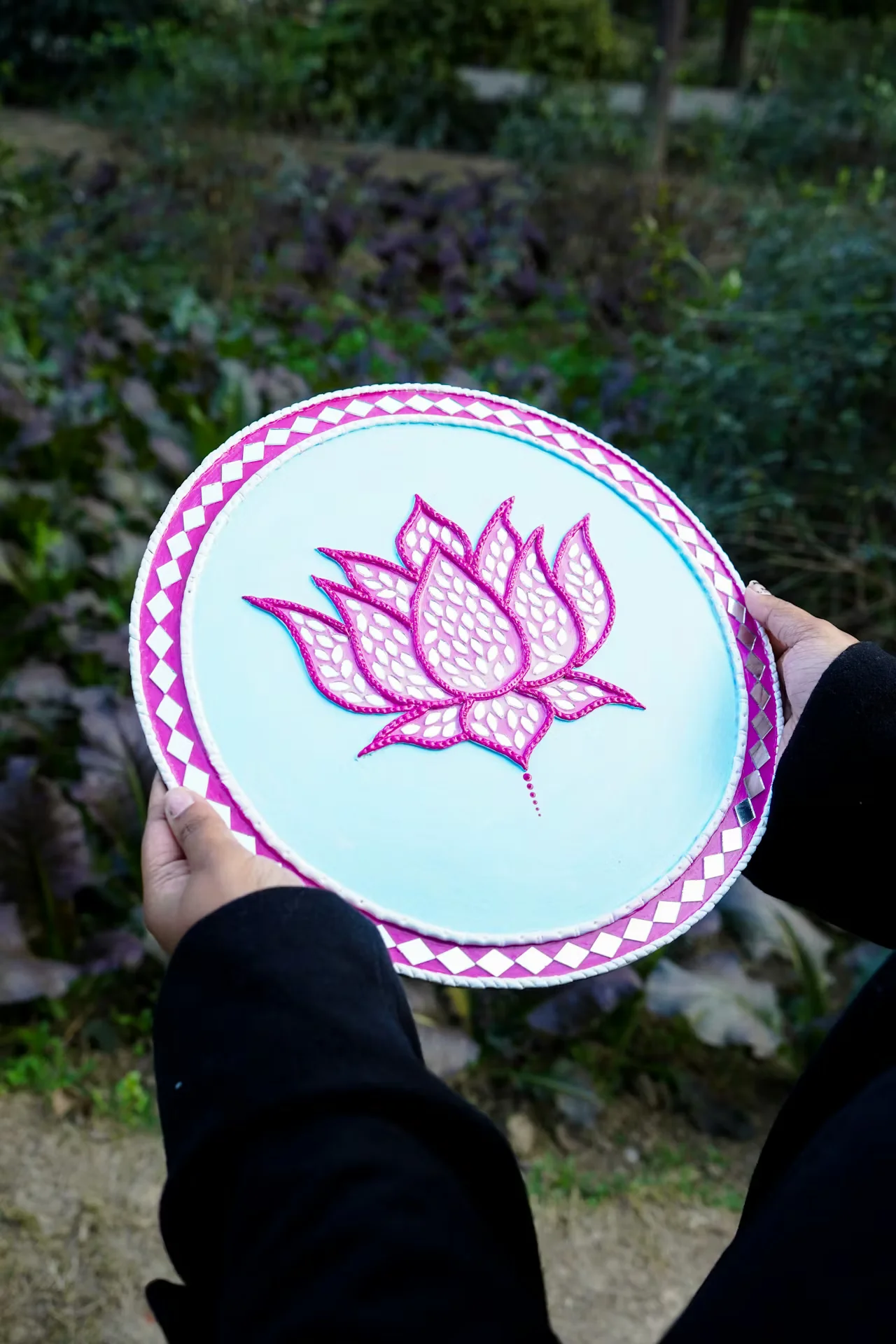
The lotus mehndi design — kamal in Hindi-Urdu — is the most-drawn motif in henna across every regional tradition. It outranks the rose, the paisley, the peacock, and the mandala combined in catalogue appearances. The reason is geometric: a lotus is five teardrop petals arranged radially around a centre dot. The radial symmetry hides irregular line work. A wobbly petal reads as variation rather than mistake, which is why beginners gravitate to lotuses for their first attempt and bridal artists return to them as the centrepiece of full-hand pattern.
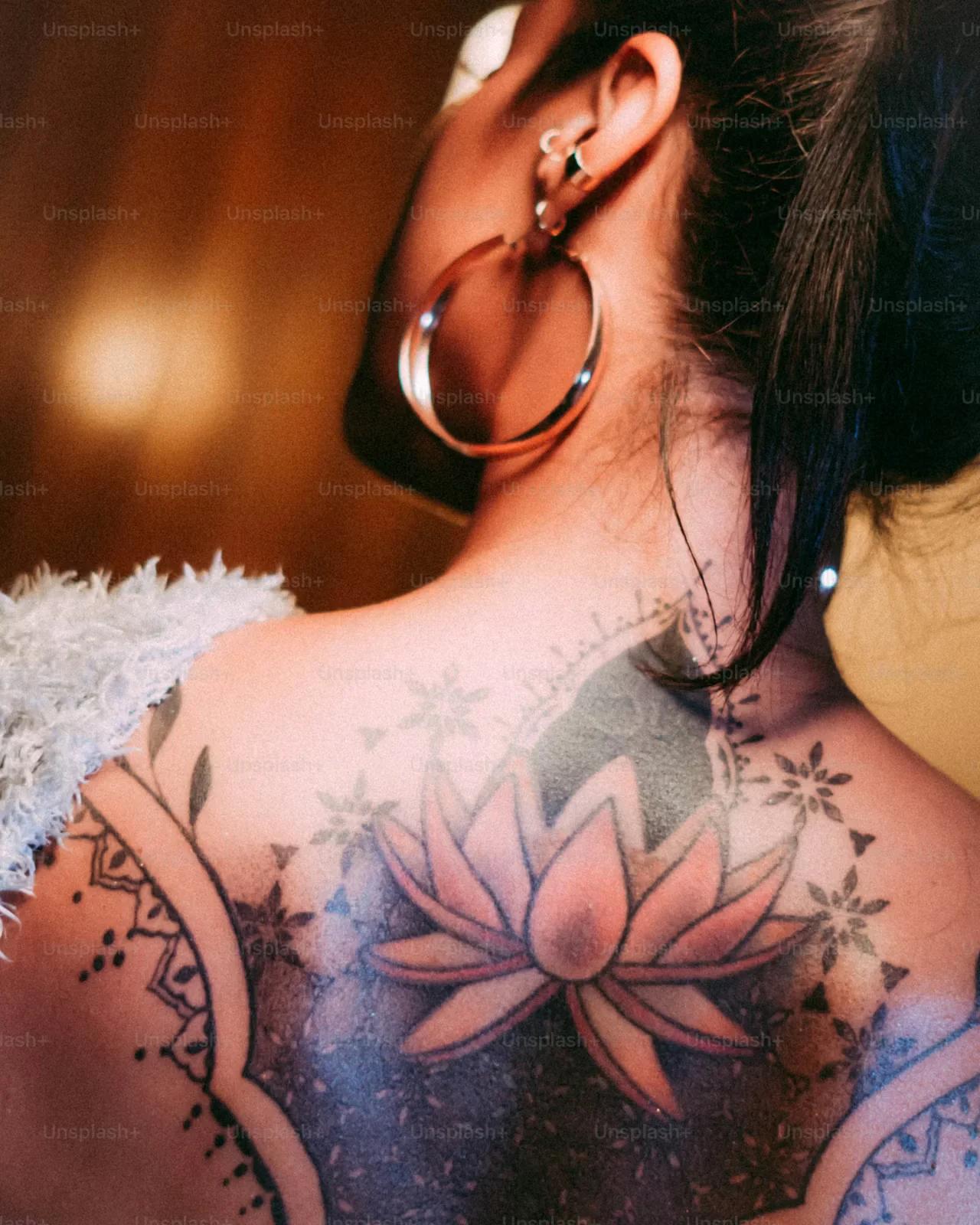
Beyond geometry, the lotus carries deep cultural breadth. It’s the seat of Lakshmi in Hindu iconography, the symbol of awakening in Buddhist art, present in Sikh and Jain motif vocabulary, and recognised across South Asian-diaspora mehndi regardless of the wearer’s tradition. That breadth is why we tag lotus designs across Indian, Pakistani, and Arabic-influenced traditions on this site rather than confining the motif to one regional category.
The recipe
Five minutes of practice, three minutes to apply, infinite variation once the silhouette is in your hand.
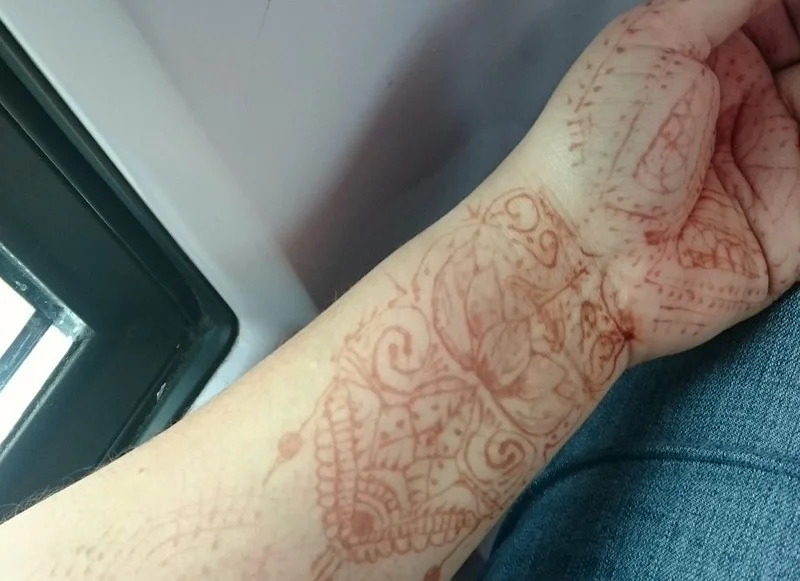
Place a single dot where you want the lotus to sit — palm centre, wrist, or back of the hand. That dot is your reference point for everything that follows. Don’t skip it; an anchored lotus stays symmetric, an un-anchored one drifts.
Working outward from the centre, draw five teardrop petals at roughly twelve, two-thirty, four-thirty, seven, and nine-thirty on a clock face. Each petal narrow at the centre, wider at the tip. Don’t worry about exact spacing — the eye corrects mild irregularity in radial patterns.
Slot a smaller petal into each gap between the first-row petals — twelve-thirty, three-fifteen, six, eight-thirty, eleven. The lotus should now read as ten petals total, alternating large-and-small around the centre. Stop here if you want a simple lotus.
Draw a small circle around your original anchor dot, just inside the inner ring of petals. Add three or four small dots inside that circle — the stamen. This step transforms the design from "five-petal flower" to recognisably lotus.
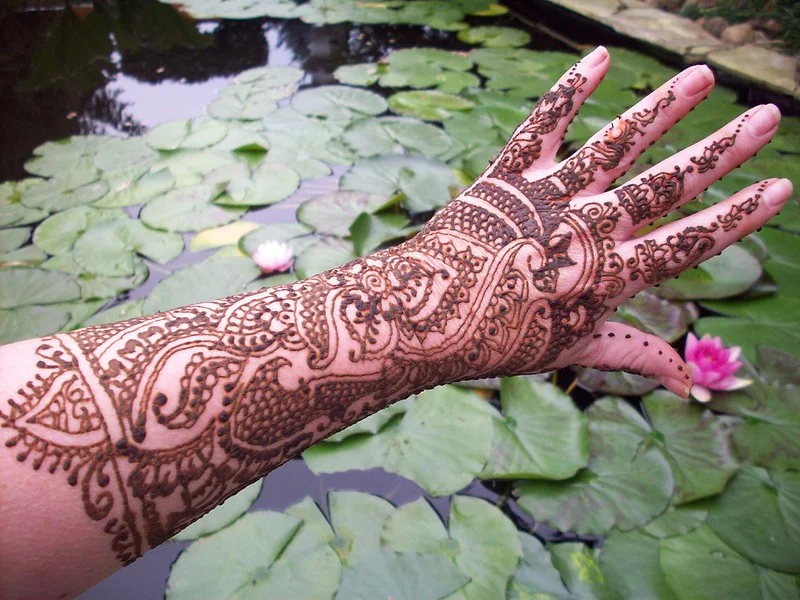
For a stand-alone lotus, stop at step four. To extend into a half-hand or full-hand pattern, add two trailing leaves below the lotus pointing toward the wrist, or vines climbing toward the fingers. The lotus is the anchor; everything else flows out from it.
Three reasons. First, geometric forgiveness — five petals arranged radially around a centre will look composed even if your line is shaky, because the symmetry hides irregularity. Second, scale flexibility — the same lotus reads cleanly as a coin-sized palm centre or as a full bridal anchor at the wrist. Third, cultural breadth — the lotus carries meaning across Hindu, Buddhist, Sikh, and Jain traditions, which is why it appears in Indian, Pakistani, and South Asian-diaspora mehndi alike.
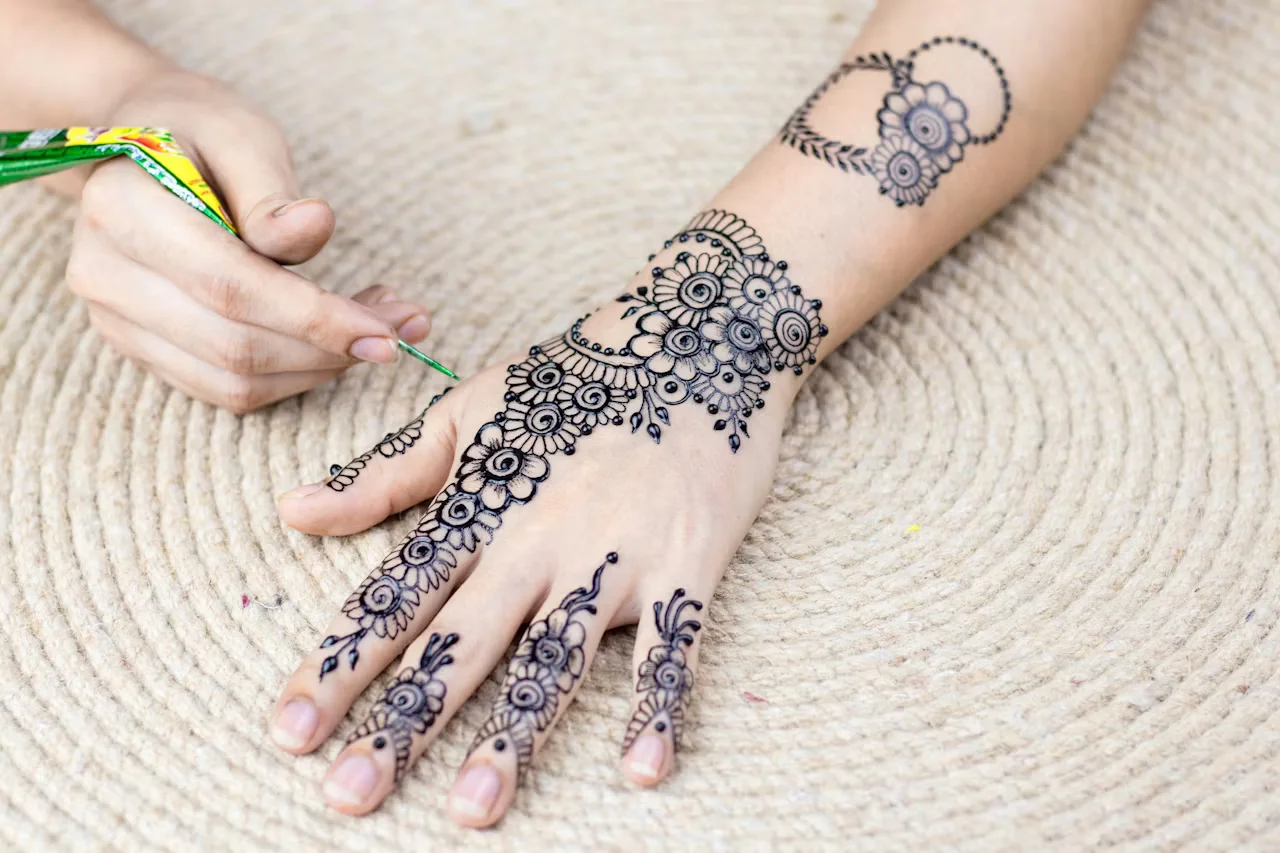
Start with a small dot at the centre. Around it, draw five teardrop petals at roughly equal spacing — twelve, two-thirty, four-thirty, seven, and nine-thirty on a clock face. Add a second row of five smaller petals slotted into the gaps. The five-and-five symmetry does the work; you don’t need a steady hand to get a lotus that looks composed. For a half-lotus growing from the wrist, draw three petals fanning upward and skip the back row.
Five to ninety minutes — the lotus scales further than any other motif. A single coin-sized lotus at the palm centre with no surrounding work is five minutes. A stylish front-hand lotus with three trailing leaves and a wrist outline is twenty. A bridal full-hand pattern centred on a layered lotus mandala with surrounding paisleys, finger filling, and fingertip caps is sixty to ninety.
The centre of the palm — historically and visually. Palm-centred lotuses photograph well, hold the deepest stain (palm skin keratin), and read clearly because the surrounding skin frames the motif without competing texture. The other strong placement is at the back of the wrist as the anchor for a half-hand design that grows up across the back of the hand. Avoid finger placement for your first lotus; the curved finger surface fights the radial symmetry.
The lotus carries meaning that predates mehndi by centuries. In Hindu tradition it’s the seat of Lakshmi (prosperity) and the symbol of beauty rising from impure water; in Buddhist iconography, of awakening; in Sikh and Jain art, of purity. In modern mehndi the symbolism is mostly aesthetic — the lotus appears more often than every other motif combined, regardless of religion or tradition — but it carries those associations softly when worn for a wedding, baby shower, or religious festival.
Yes — it’s the single best first motif. Practise the five-petal radial pattern twice on paper. Place a dot at the palm centre as your anchor. Draw five teardrop petals around it. If the petals come out uneven, that reads as variation rather than mistake — unlike paisley walks or jaal nets, where irregularity reads as a botched line. Expect the third lotus you ever draw to look surprisingly good.