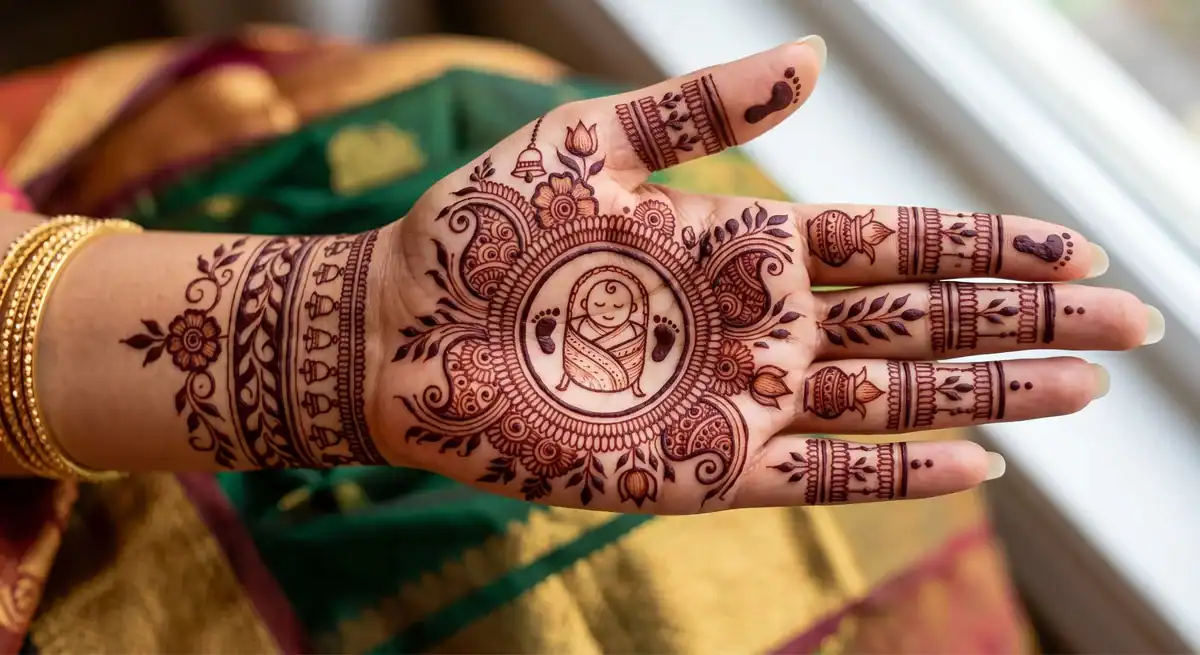
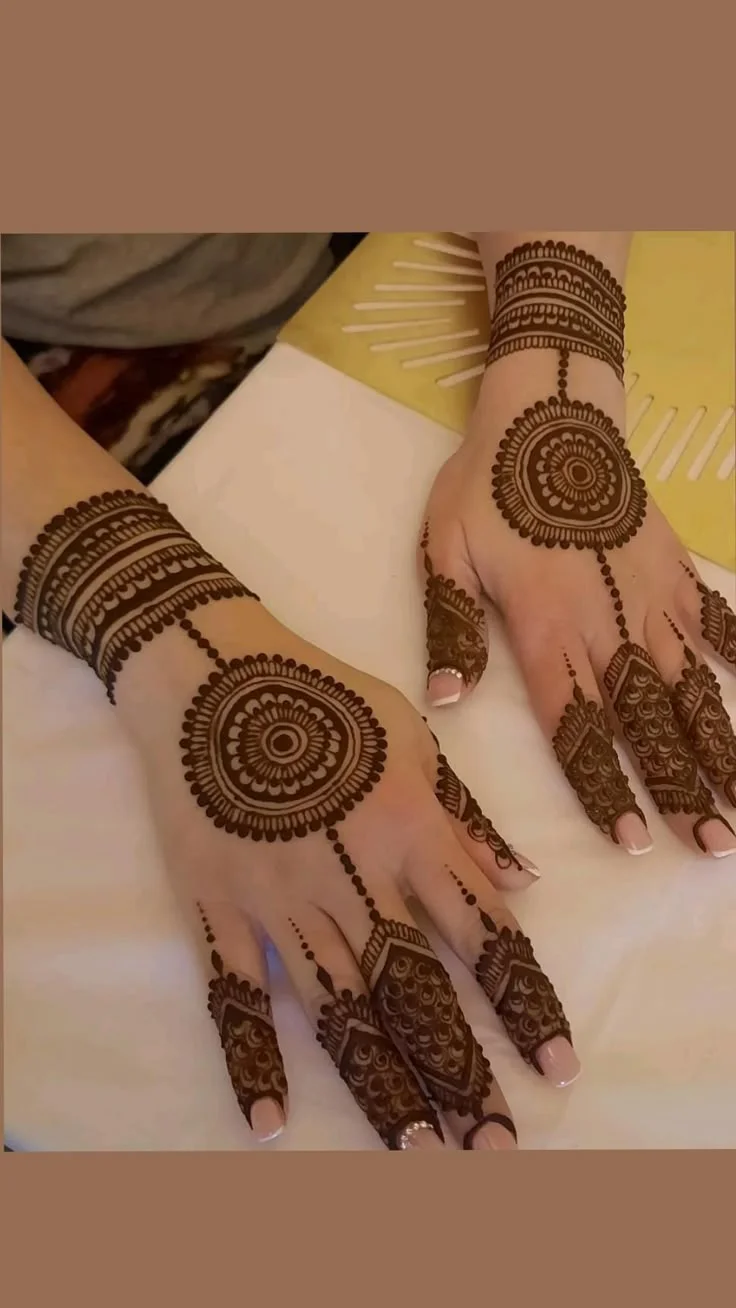
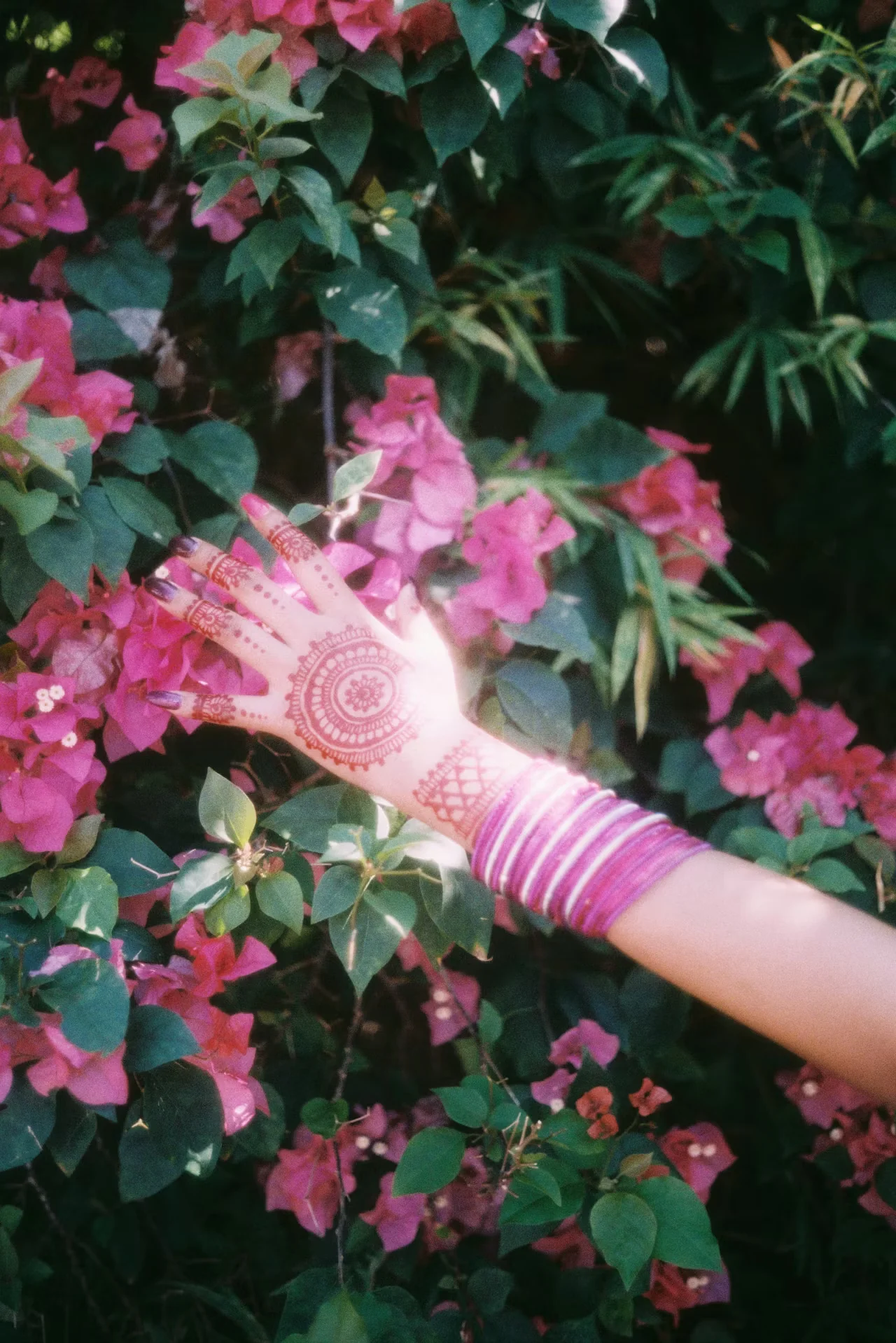
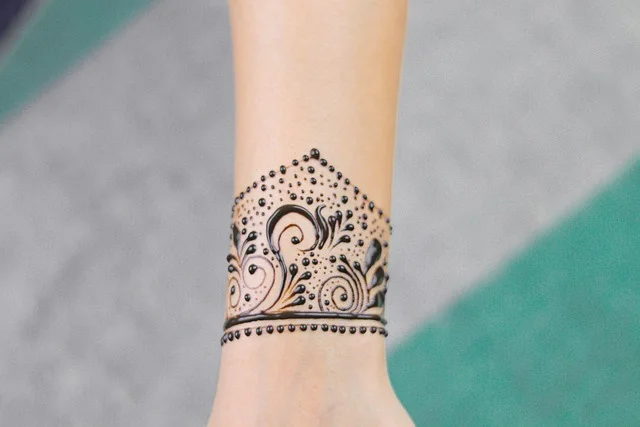
Central Baby Motif Front Hand Design With Kalash Fingers And Bell Cuff
60 min · Intermediate

Motif — Mandala
The motif that scales further than any other — coin-sized palm accents to full bridal wrist anchors. 6 curated mandala mehndi design ideas across simple, stylish, and royal traditions.
60 min · Intermediate
90 min · Advanced
90 min · Advanced
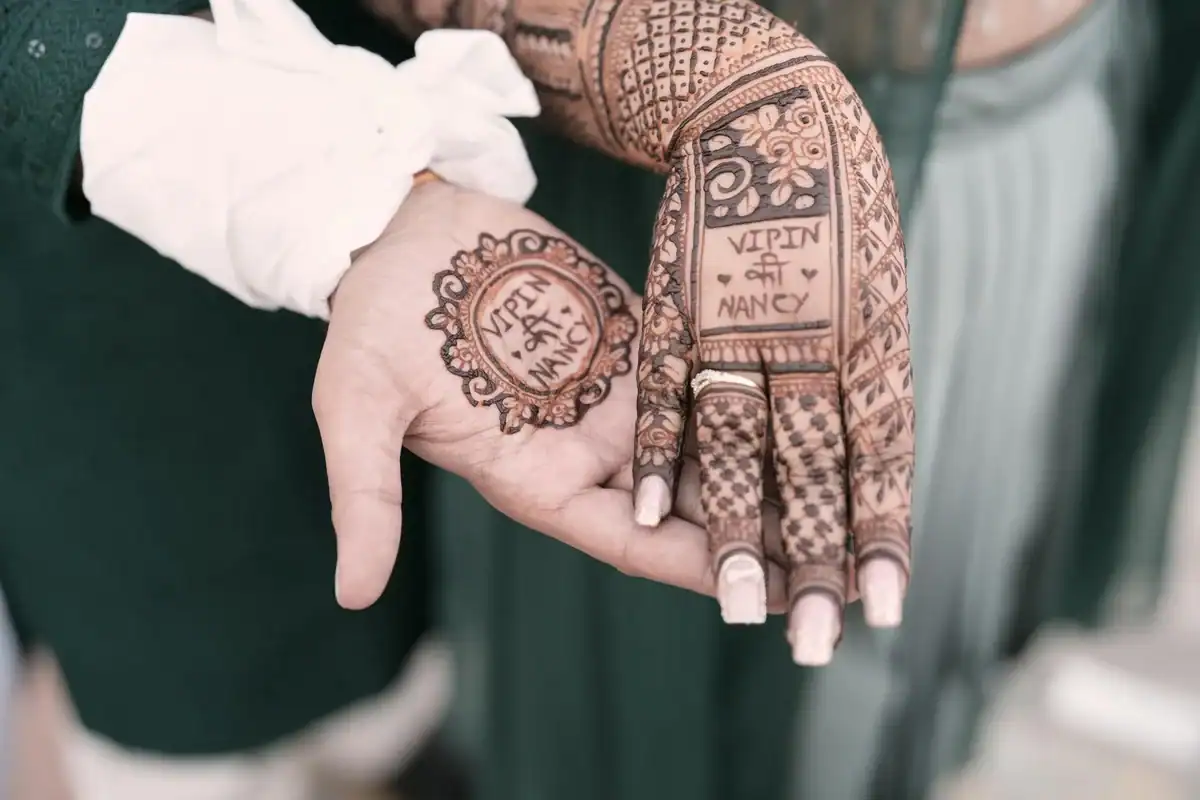
120 min · Advanced
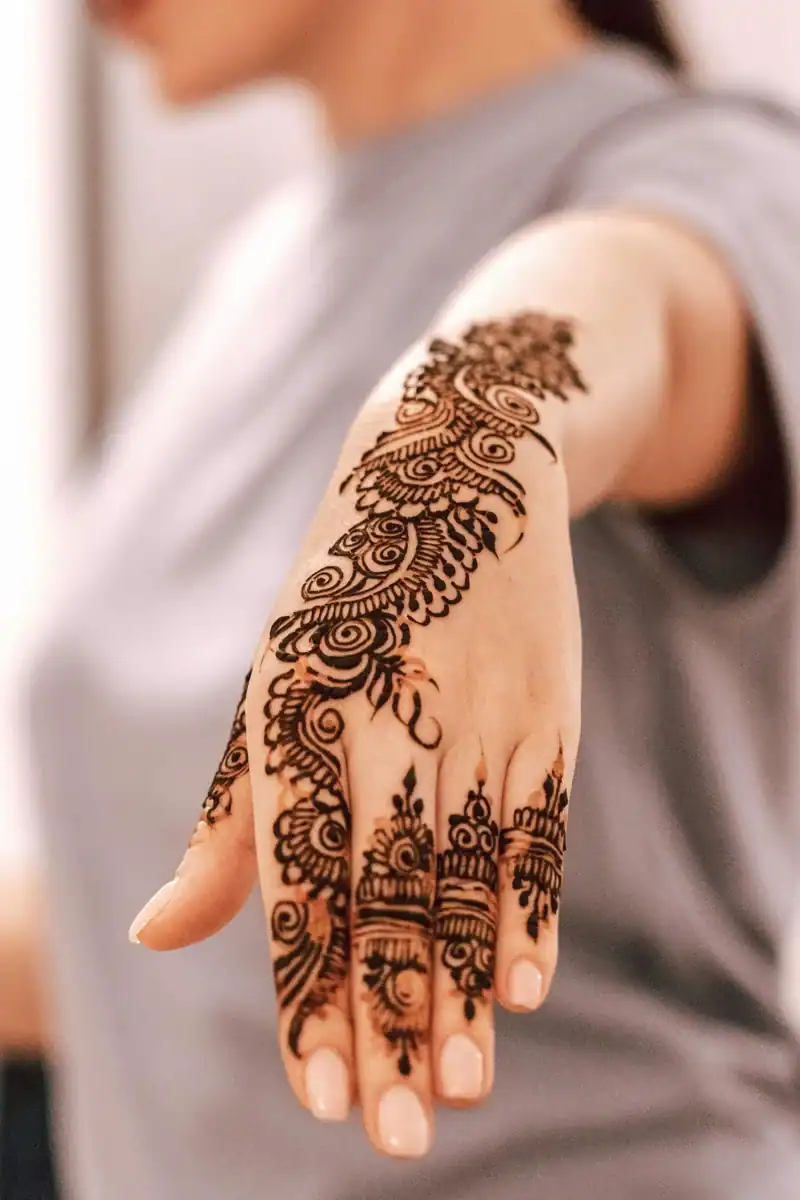
50 min · Advanced
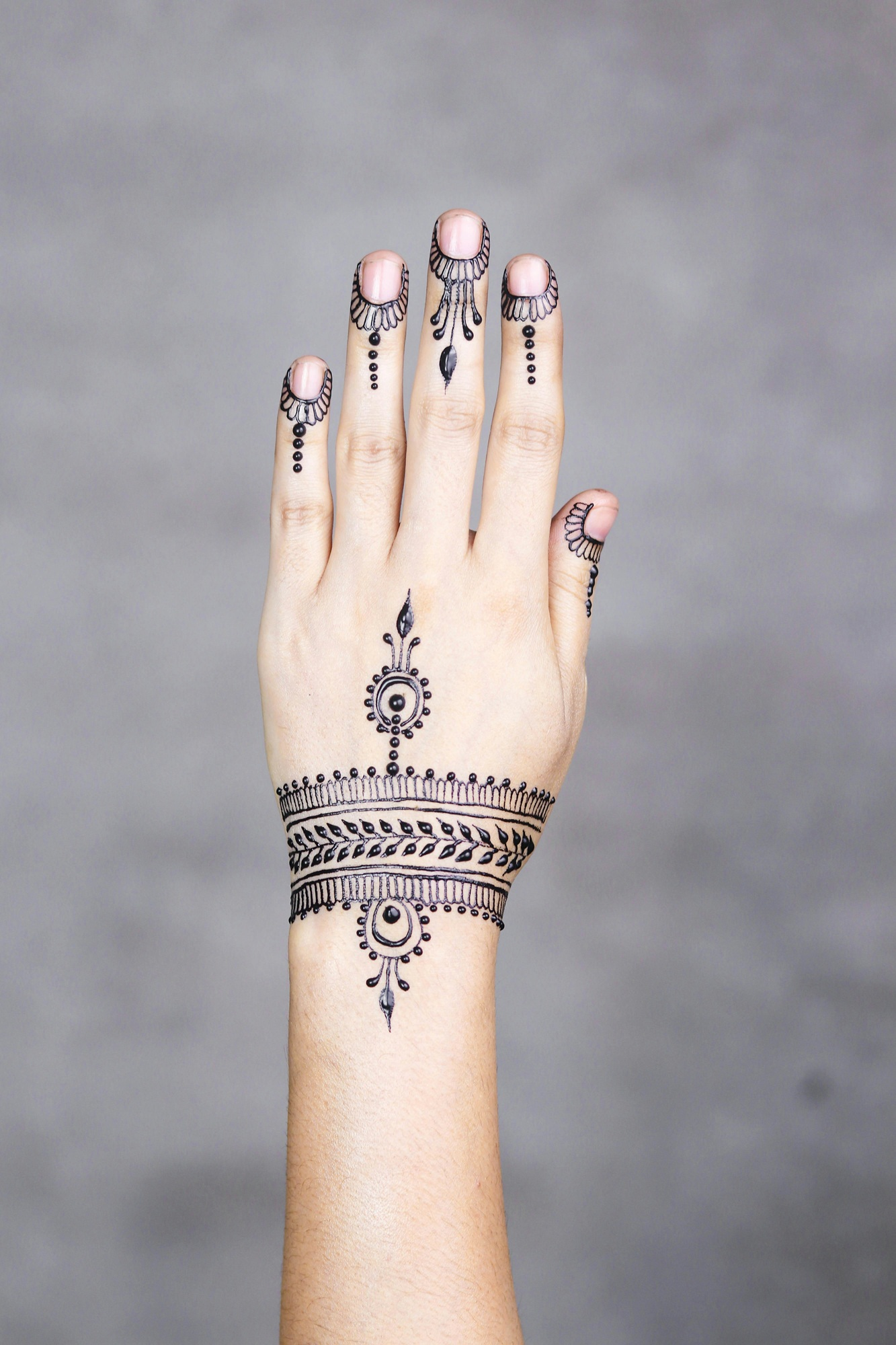
40 min · Intermediate
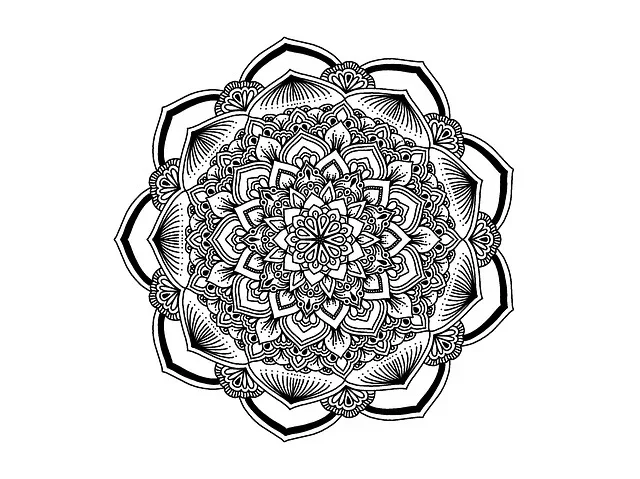
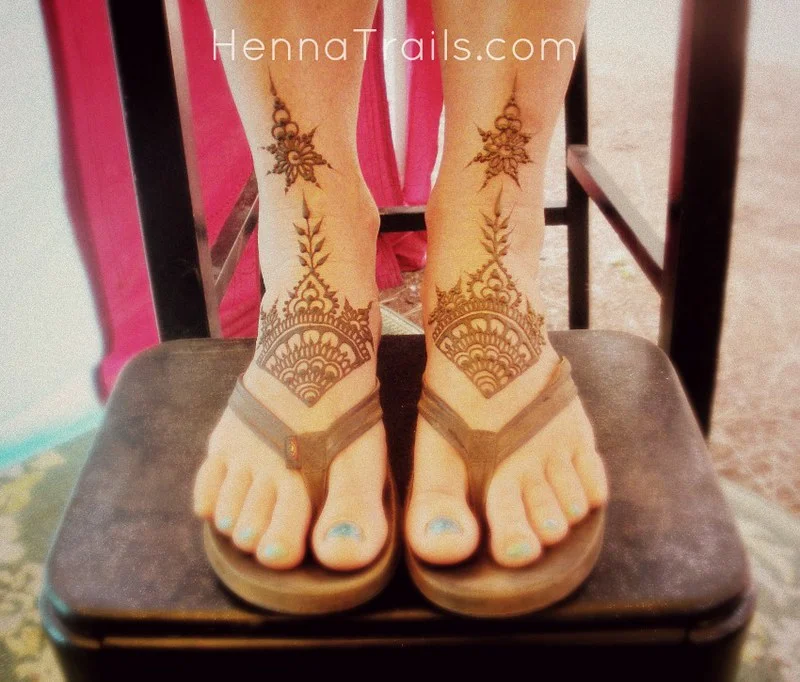
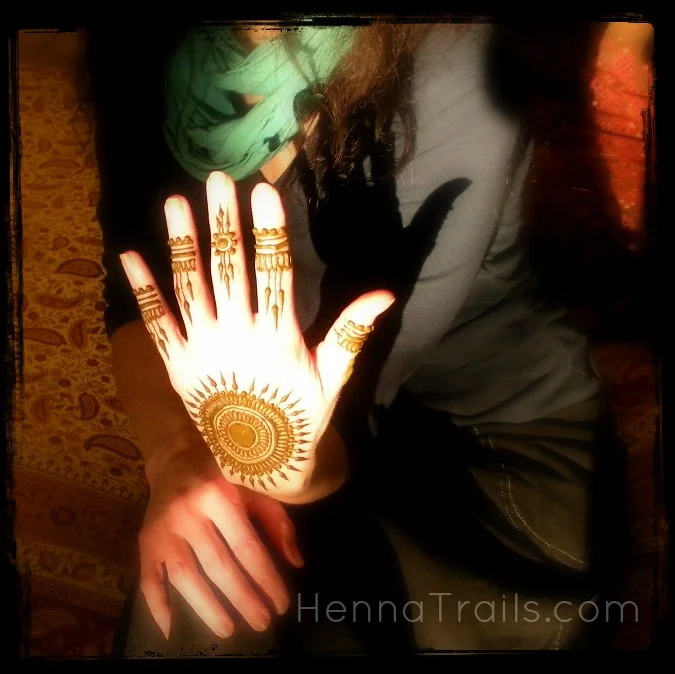
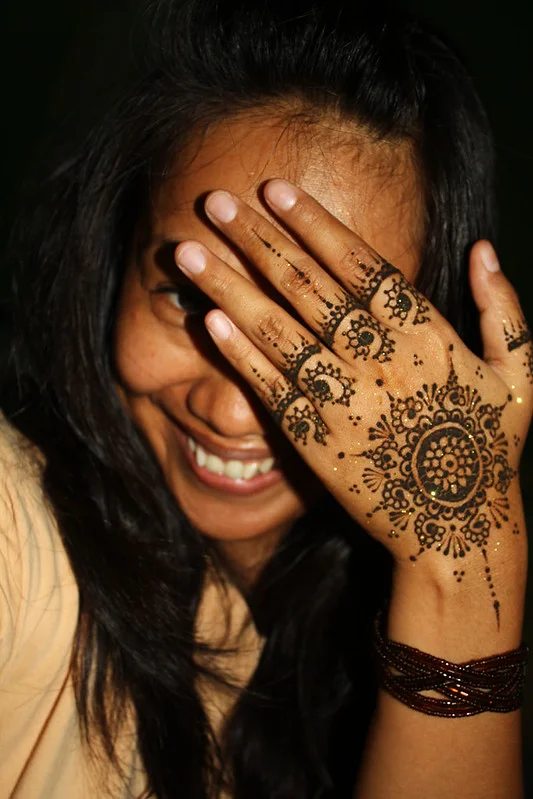
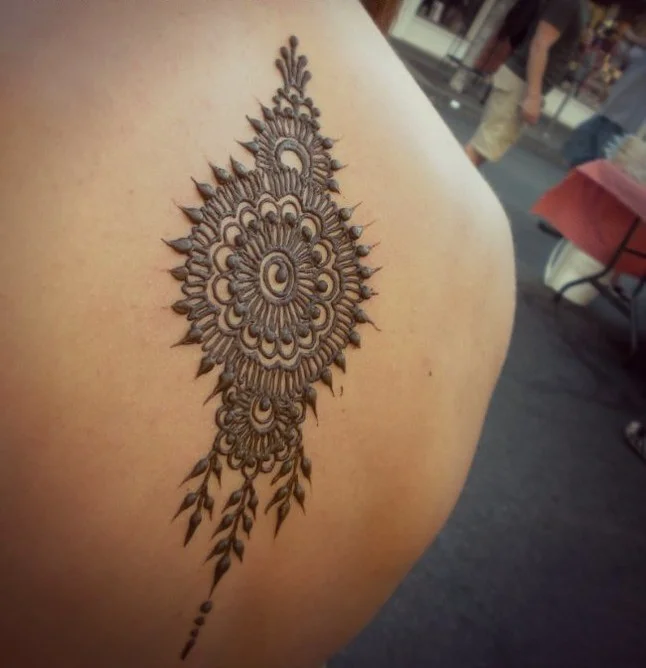
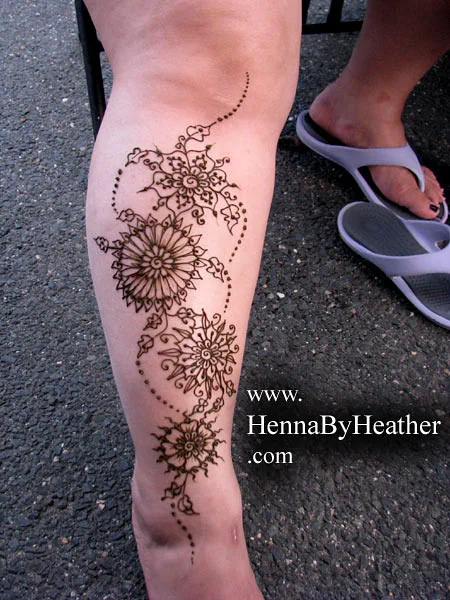
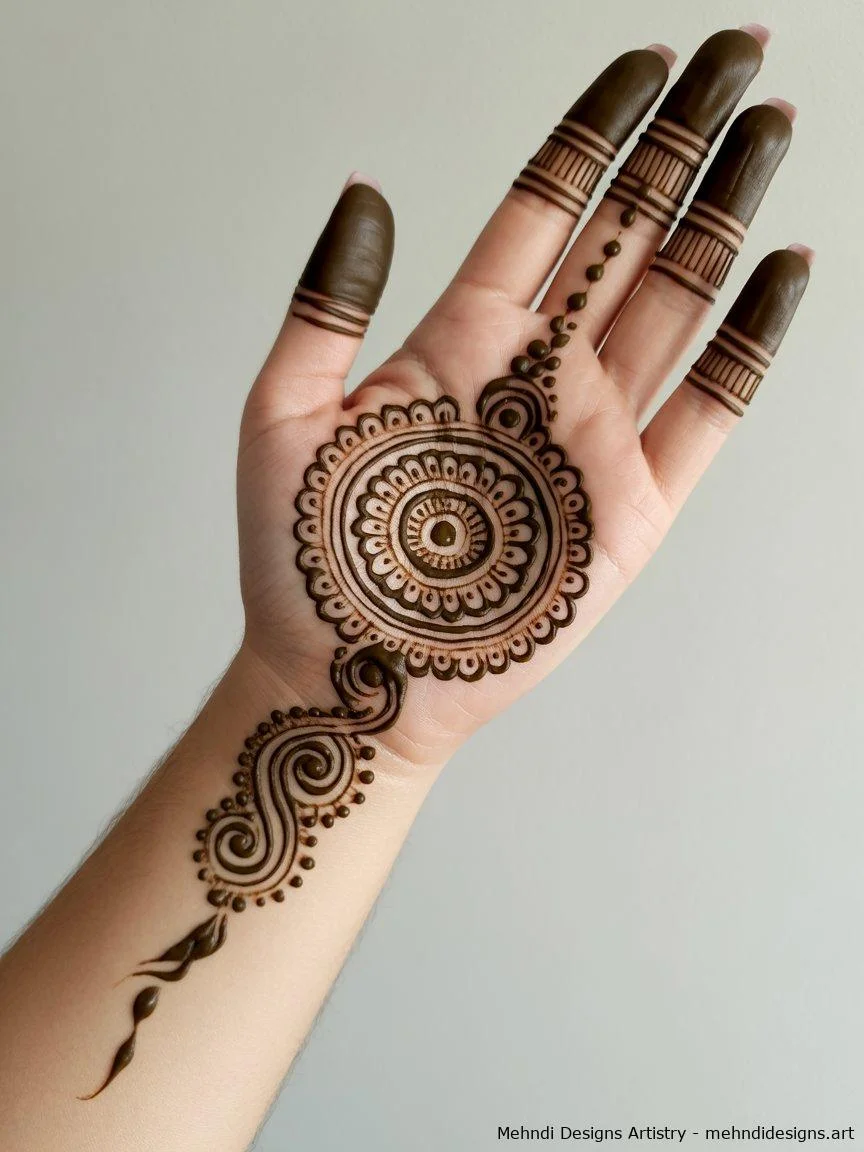
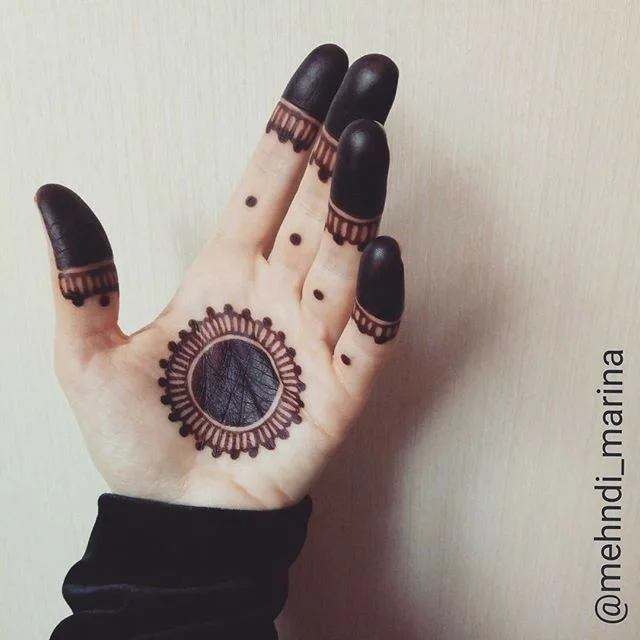
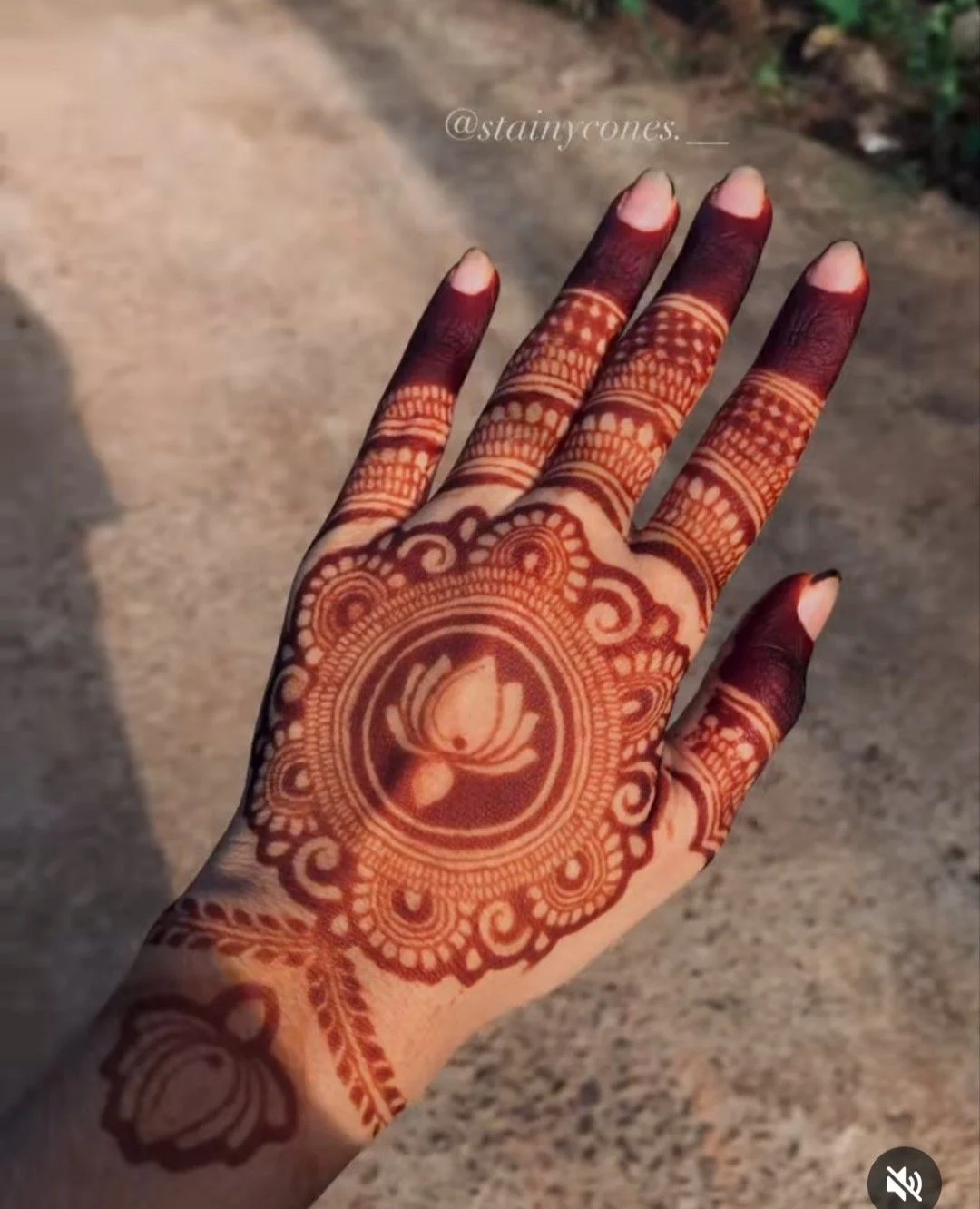
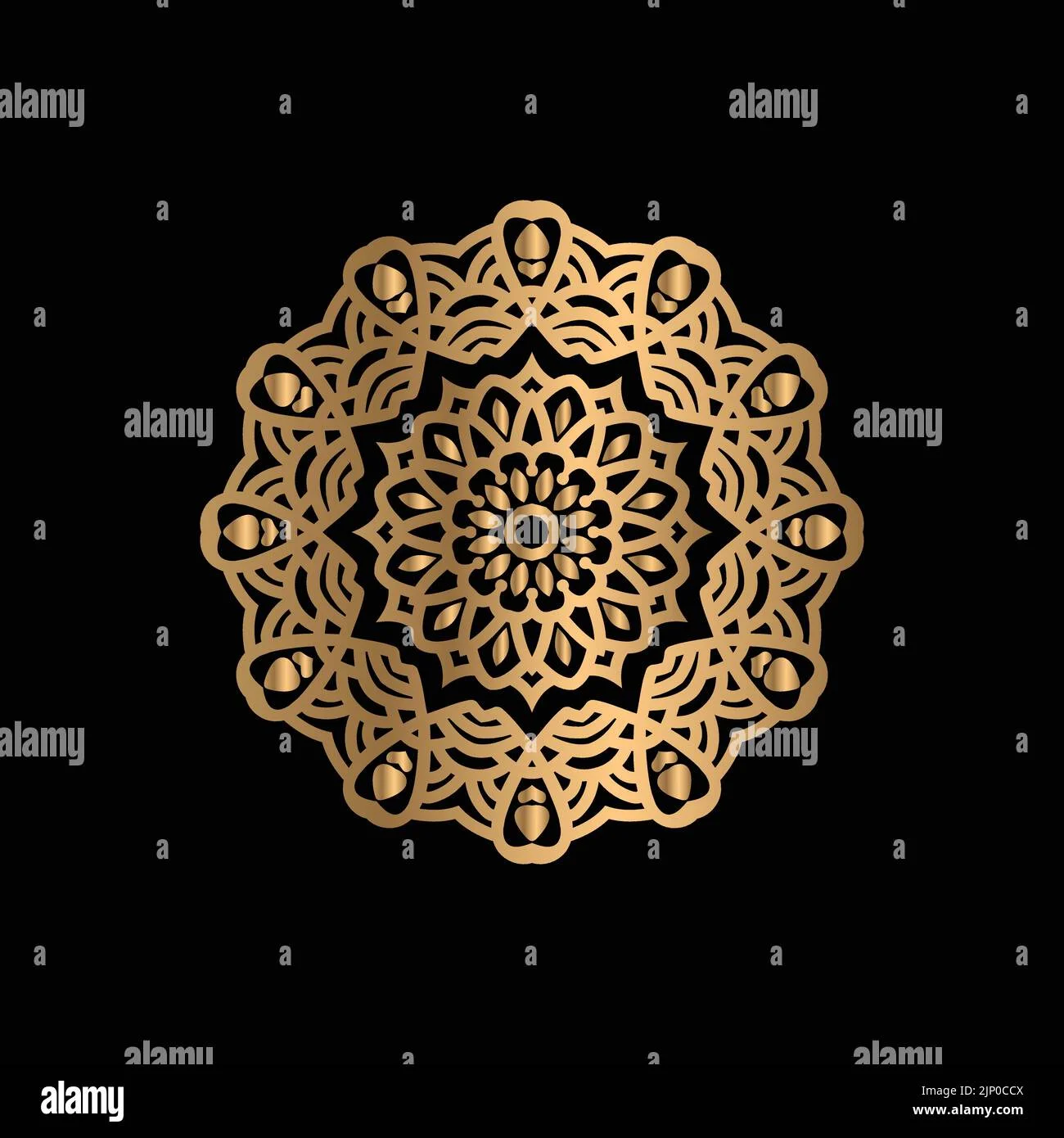
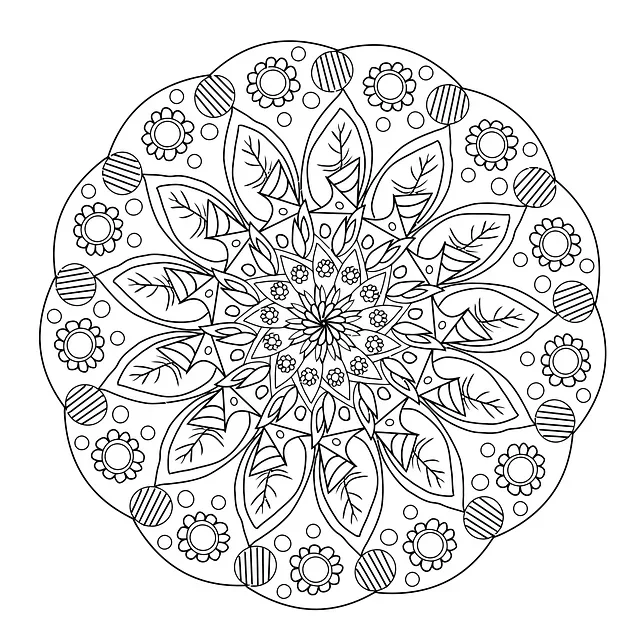

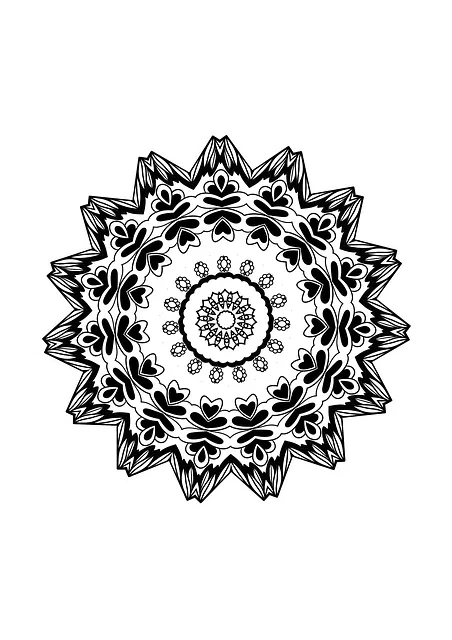
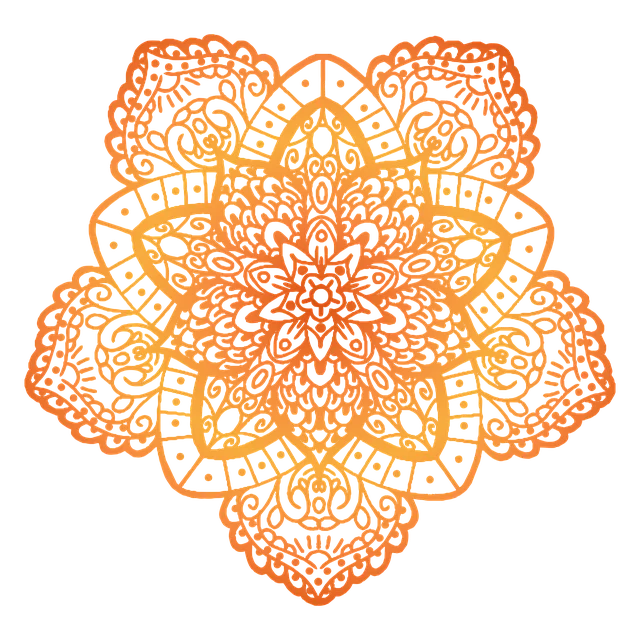



About this motif
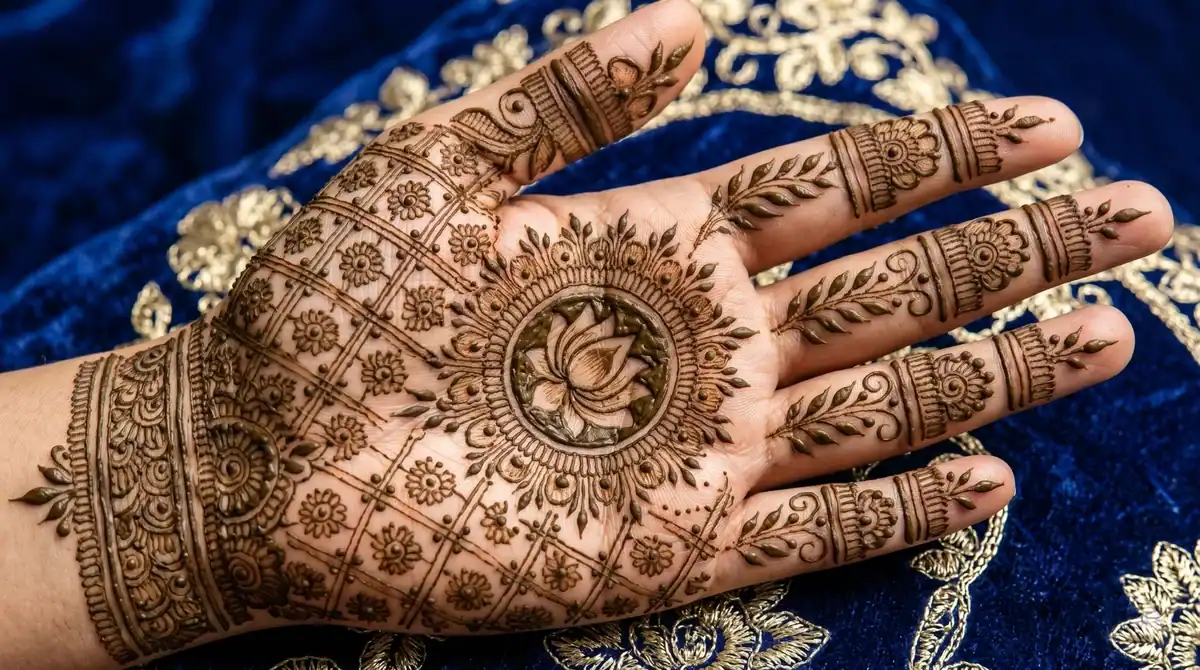
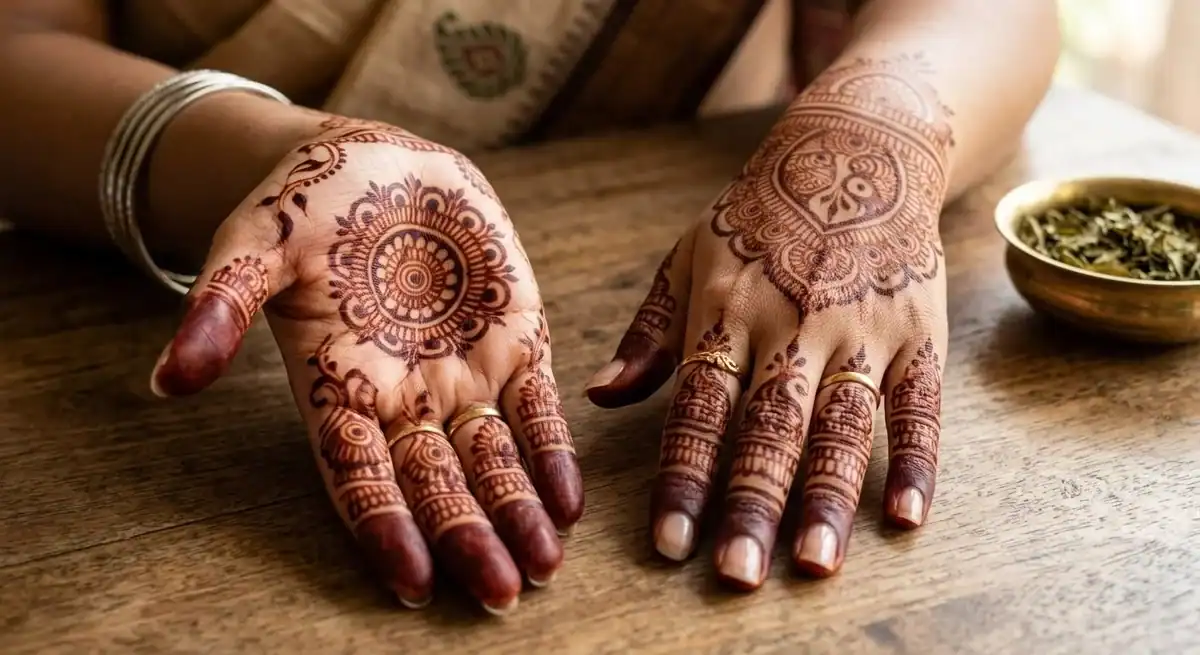
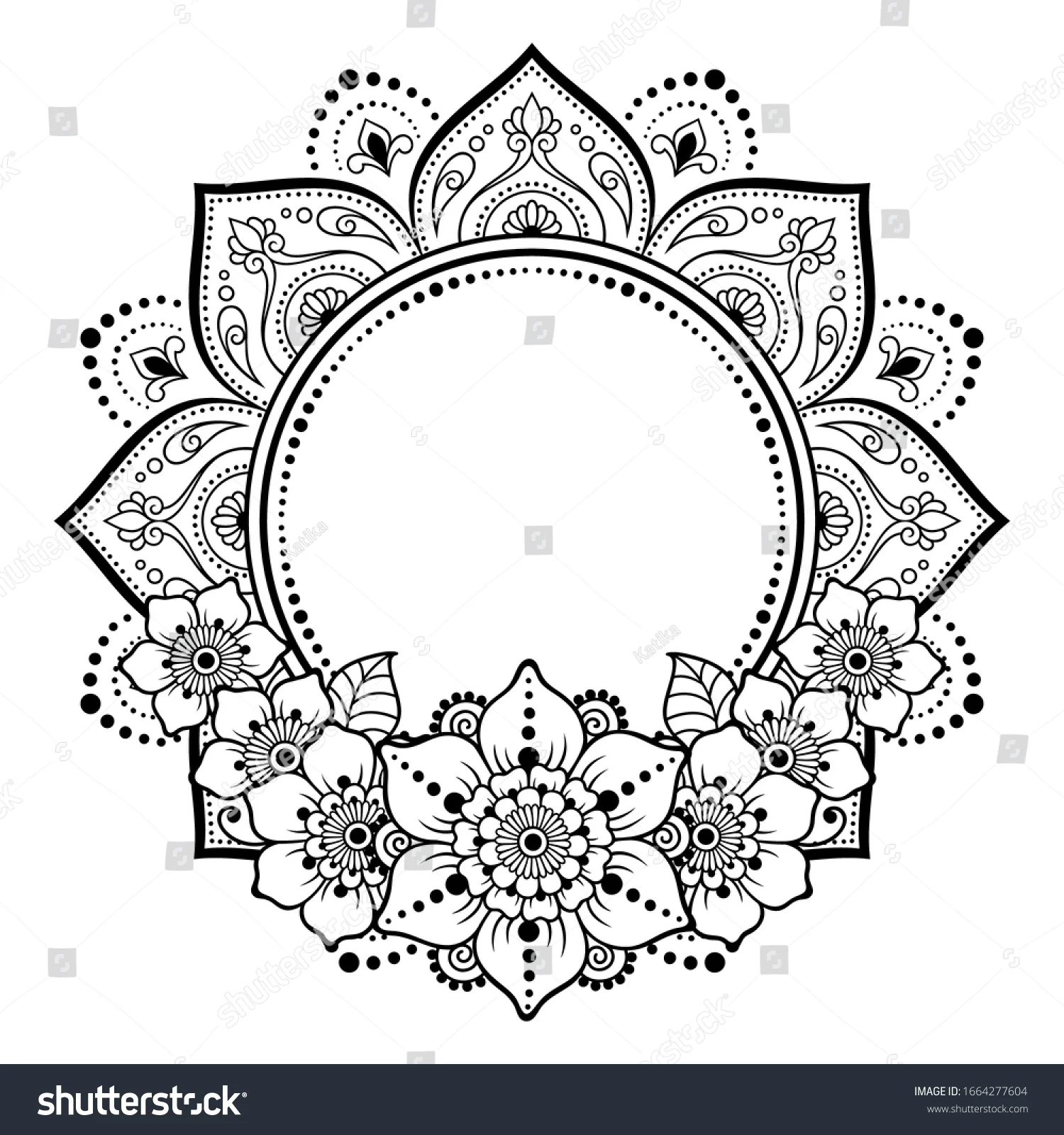
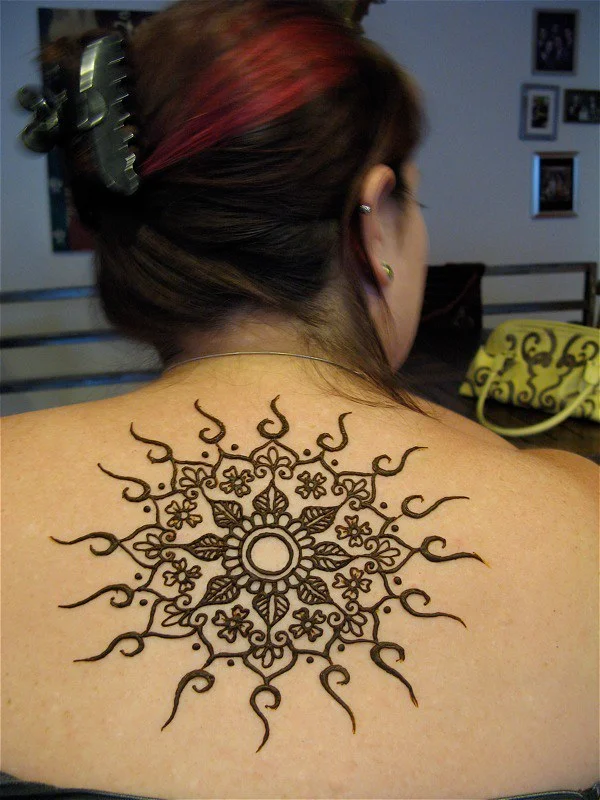
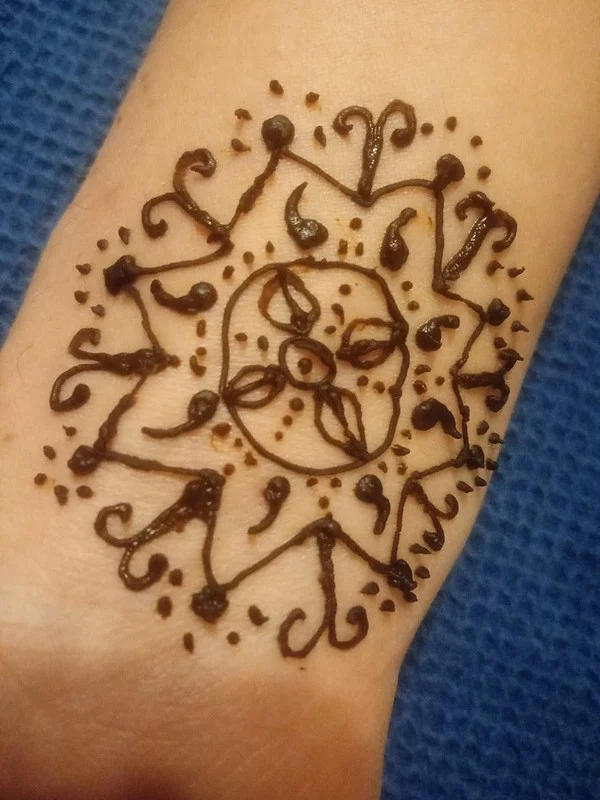
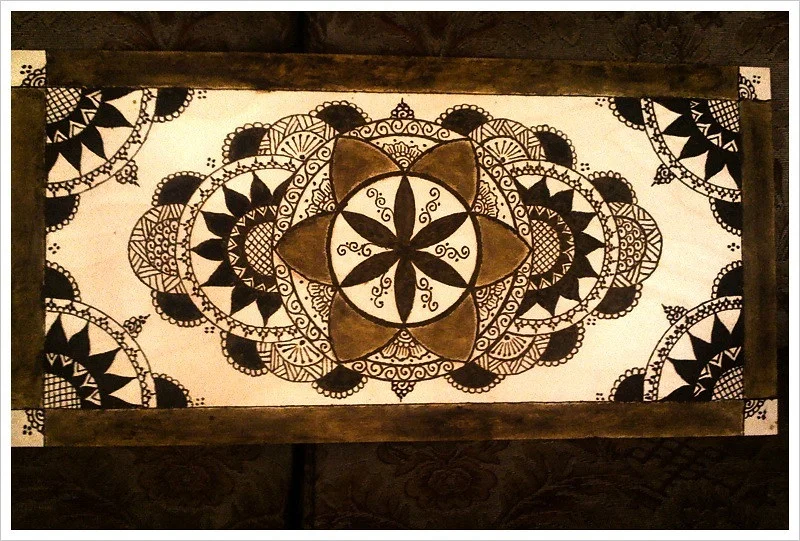
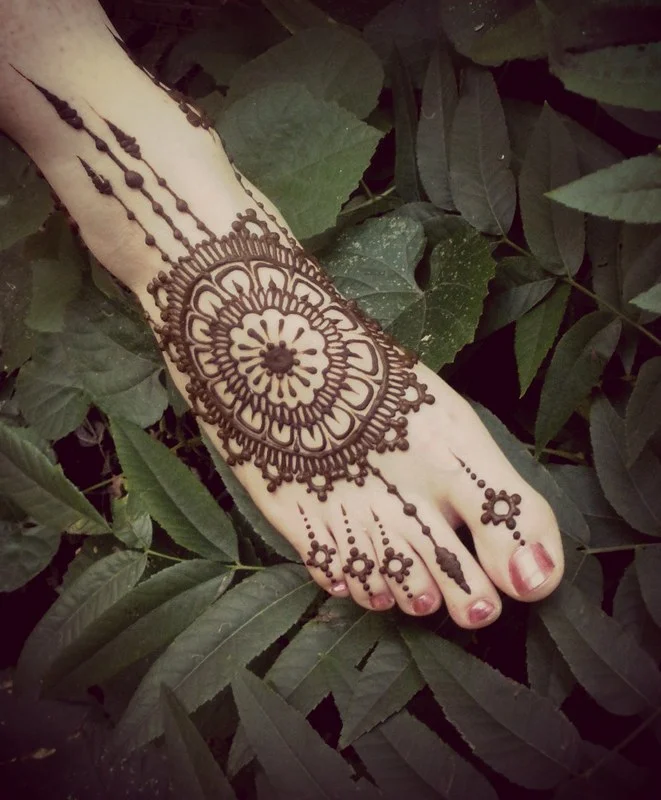
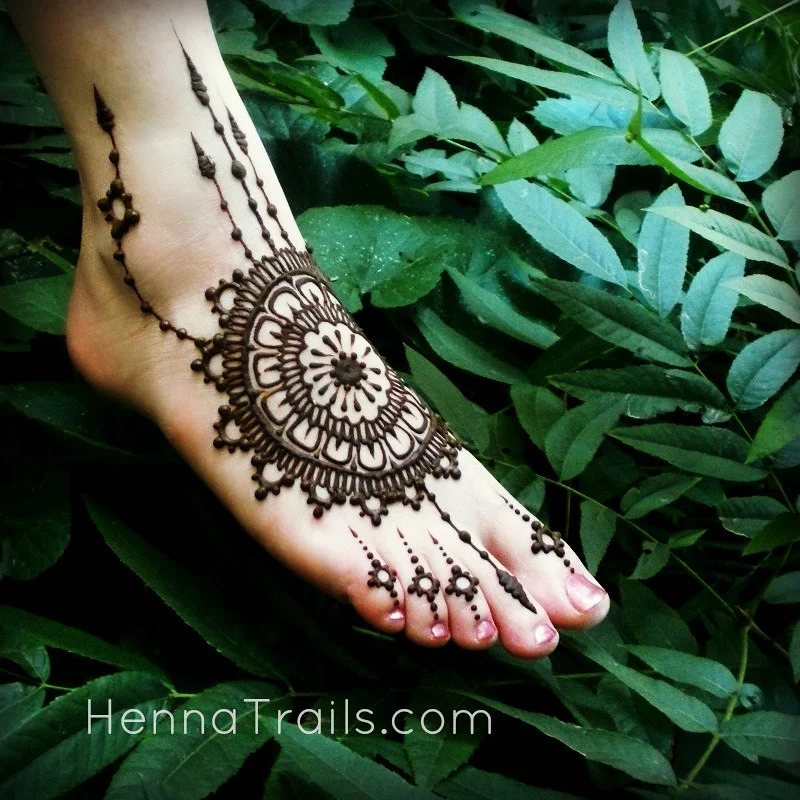
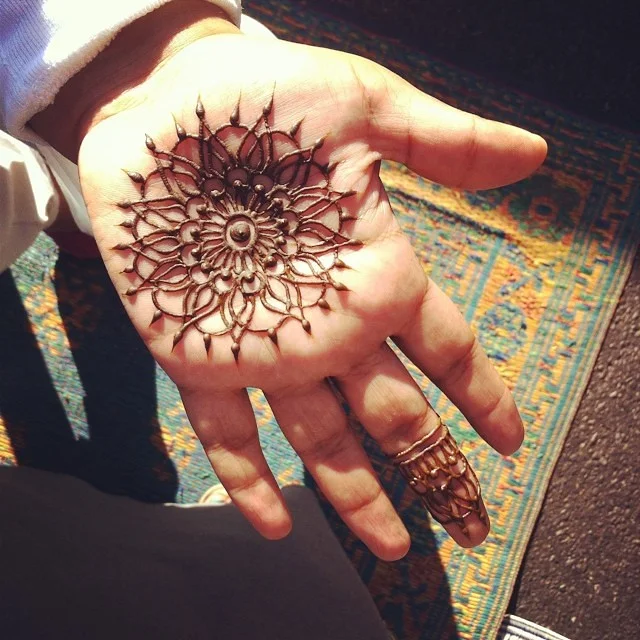
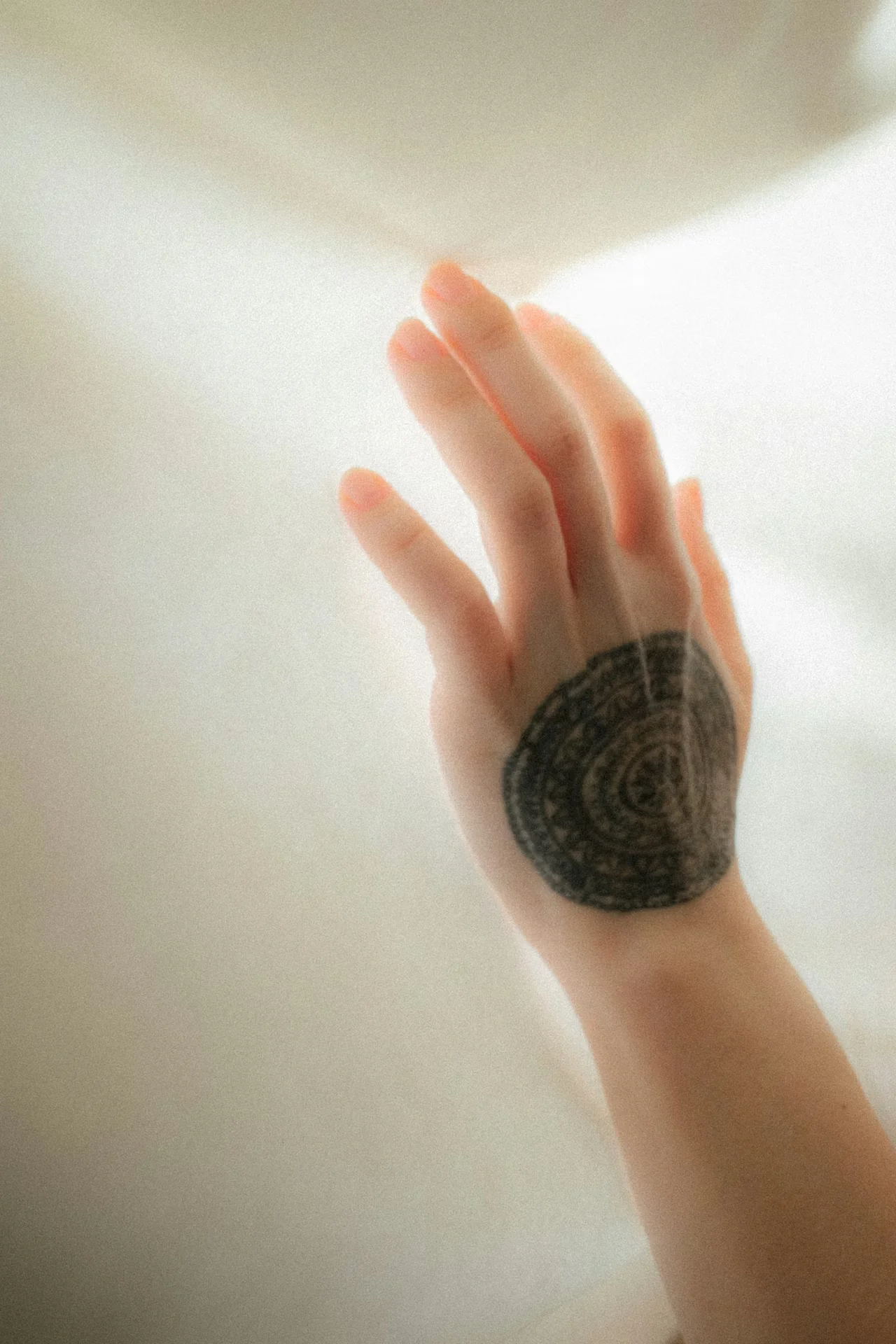
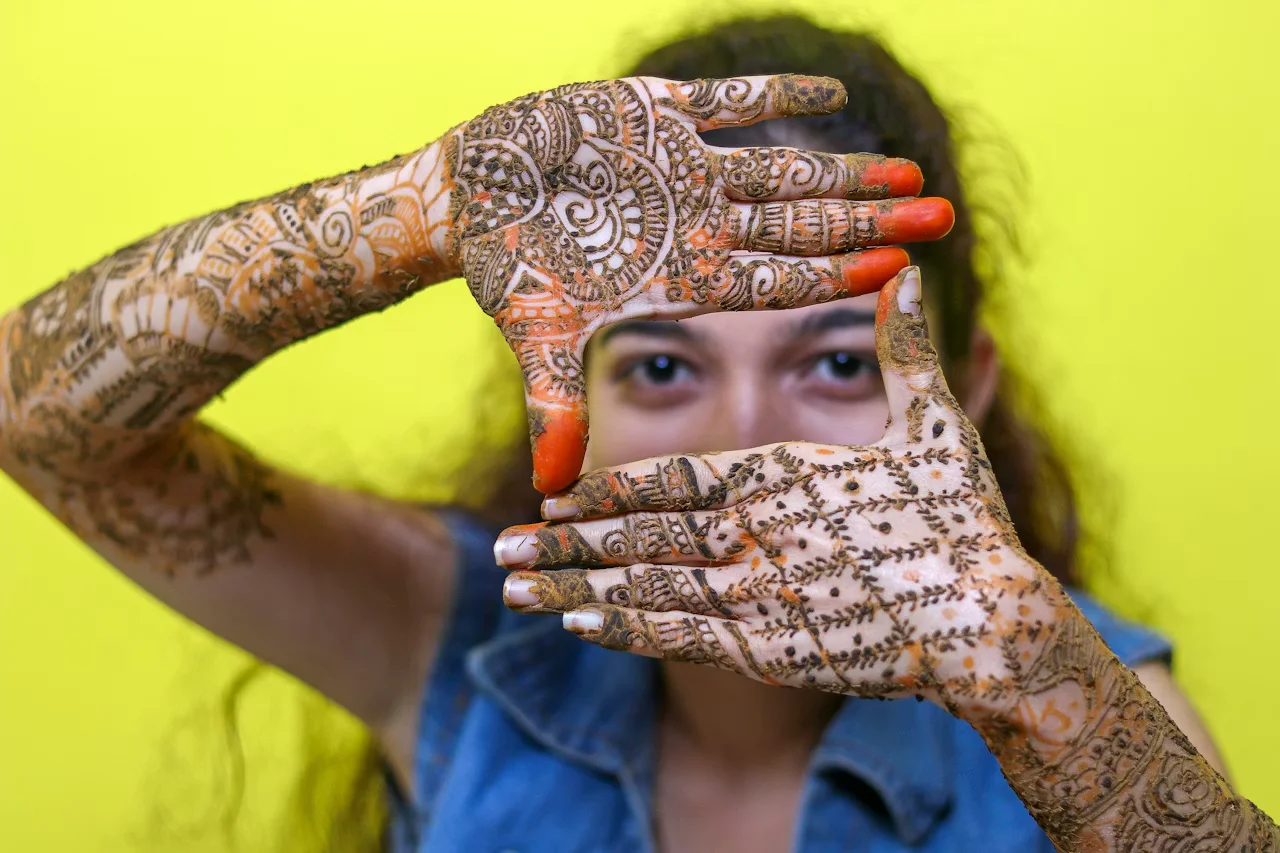
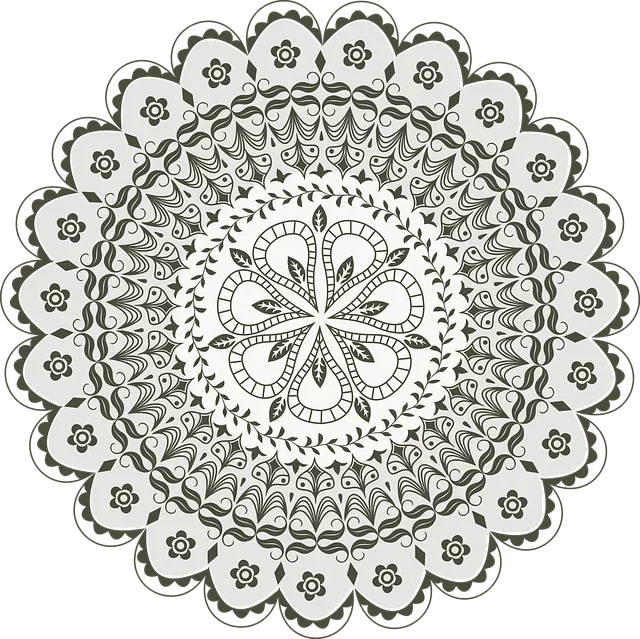
A mandala mehndi design — sometimes called a chakra or a circular mehndi medallion — is the most-scalable motif in the catalogue. The same six-slice or eight-slice symmetric structure works as a coin- sized accent at the centre of a palm and as a hand-spanning anchor for full bridal pattern. Add or remove concentric rings to dial the complexity up or down without changing the underlying form. No other motif scales this cleanly: lotuses get cluttered above five rings, paisleys lose their teardrop silhouette at large sizes, but a mandala can carry six or more rings and still read as composed.
The other thing the mandala does well is hide beginner mistakes. Radial symmetry is the most forgiving structure in mehndi — whatever you put in one slice repeats six or eight times around the centre, and the eye reads minor irregularity as variation rather than error. Mandala patterns are the second-best beginner motif behind the lotus, and the most reliable bridal anchor when a client wants something that reads composed at every viewing distance.
The recipe
Stop at ring three for simple, ring four for stylish, ring five or more for bridal. Each ring follows the same symmetry as the first.
Place a centre dot. Around it, draw a small circle (5mm or so) and divide it into six or eight equal slices with short radial lines. The slice count is your symmetry rule for everything that follows — eight slices gives finer detail, six slices gives bolder presence. Pick one and stay with it.
Around the divided centre, draw a teardrop petal in each slice — six or eight petals total, depending on your slice count. Each petal narrow at the centre, wider at the tip. Stop here for the simplest mandala (a flower, essentially).
Outline the petals with a slightly larger circle. Place a single dot in each gap between the petal tips, on the new outline. The mandala now reads as a flower with a dot border. Stop here for a simple palm-centre mandala.
Outside the dot border, draw a row of small arches, paisleys, or finer petals — one per slice, again following the six-or-eight-slice rule. This is where stylish mandalas earn their depth. Stop here for a hand-anchor mandala.
Add concentric rings of finer detail — dot rows, geometric chevrons, miniature paisleys, line work — each respecting the original slice count. For bridal weight, six or seven rings is typical. Add trailing vines or paisleys outside the final ring to bridge the mandala into the rest of the hand pattern.
A mandala is a circular, symmetric pattern radiating from a centre point — typically four to six concentric rings of repeating motifs. The mandala originates in Hindu and Buddhist religious art (the Sanskrit word means "circle"), and entered mehndi vocabulary through Indian regional traditions. In mehndi the mandala can be coin-sized at the centre of a palm, hand-sized as the anchor of a stylish design, or full-bridal at the wrist as a launchpad for surrounding pattern.
Anchor with a centre dot. Around it, draw a small circle and divide it into six or eight equal slices with short radial lines (the divider count determines the symmetry). Build outward in concentric rings: ring two might be teardrop petals, ring three a row of dots, ring four a pattern of arches, ring five a finer dot border. Each ring should echo the same six-or-eight-slice symmetry. Stop at three rings for simple, four for stylish, six or more for bridal.
Five to sixty minutes depending on size and ring count. A coin-sized three-ring mandala at the palm centre is five to ten minutes. A hand-sized four-ring mandala anchoring a front-hand pattern is fifteen to twenty-five. A full bridal-weight mandala with six or more concentric rings as the wrist anchor of a bridal design is forty-five to sixty minutes for the mandala alone, before the surrounding pattern.
Symmetry hides irregularity. A six-slice or eight-slice radial pattern repeats the same motif six or eight times around the centre — if any single slice is wonky, the eye reads it as variation rather than mistake. The radial structure also gives you reference points: each new ring builds on the last, and you always know where the next petal goes. Mandalas are second only to lotuses as the best beginner motif.
Centre of the palm — historically and visually, exactly the same as the lotus. The palm centre frames a circular motif perfectly, and the deep palm stain saturates the radial pattern into a high-contrast medallion. Second-best is the centre of the back of the hand, where the mandala anchors a stylish design. Third is at the wrist as the launch point for a bridal pattern. Avoid finger placement — fingers are too narrow to support the radial geometry.
A lotus is one specific symmetric flower — five teardrop petals around a centre, possibly with a second row of five smaller petals. A mandala is the broader category of any circular symmetric pattern, which can include lotus-style petals as one of its rings but extends to dot rows, arch patterns, geometric shapes, and finer detail. Every lotus is a mandala; not every mandala is a lotus. In bridal work the two are often layered together — a lotus at the centre of a multi-ring mandala.