Royal Indian Bridal Full Hand Mehndi with Geometric Jaal and Name Mandala
120 min · Advanced

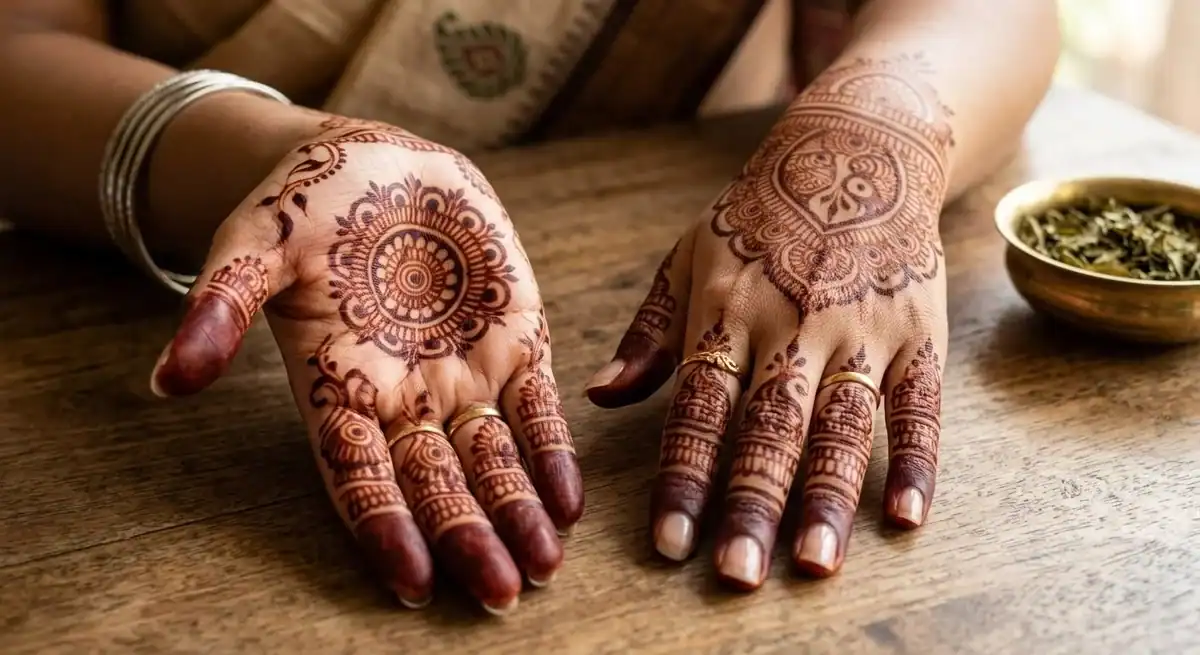
A dual-sided composition featuring a dense central mandala on the palm and a matching geometric mandala on the back hand, anchored by heavy jaal lattice work on the fingers.
Style mix
This is a masterclass in symmetry. When you look for a full hand bridal mehndi design, you usually want something that feels complete from every angle, and this composition delivers exactly that. The left hand showcases a classic palm design centered around a large, intricate mandala mehndi design. It radiates outward with concentric circles and dense floral borders, creating a focal point that draws the eye immediately.
On the back hand, the artist mirrors this weight with a matching geometric mandala. This creates a cohesive look that feels heavy and royal. The fingers are where the real craftsmanship shines. They are fully dressed in thick bands of jaal finger mehndi design, featuring lattice grids and horizontal detailing that extends all the way to the hennaed tips. This level of coverage is what separates a casual festival look from a true royal front hand mehndi design.
The Palm Mandala Begin at the center of the palm. Draw a solid core circle and build outward with three to four concentric rings. Use fine dots and tiny petal shapes to create texture within the rings. The outer border should be a scalloped floral edge that defines the boundary of the central motif. This is the anchor for the entire karwa chauth mehndi design.
The Back Hand Mirror On the back of the hand, draw a large diamond-shaped frame. Inside this frame, place a secondary mandala that complements the palm design. Fill the negative space around the diamond with small buti motifs and fine trailing vines. This ensures the back hand doesn’t look empty compared to the palm.
Finger Detail This is the most time-consuming part. Each finger needs to be treated like a separate column of detail.
Wrist and Forearm While the image focuses on the hand, a design this heavy usually extends slightly up the wrist with a matching cuff or band to frame the composition.
This design embodies the core principles of Indian bridal artistry.
The Wedding Ceremony: This is the standard choice for the bride. The density and coverage signal the importance of the event. The darker the stain, the better the omen, so this design is meant to be left on overnight.
Karwa Chauth: For married women wanting a beautiful karwa chauth mehndi design, this delivers traditional elegance with full coverage. It pairs perfectly with the bangles and red outfit traditionally worn for the fast.
Teej Festival: Similar to Karwa Chauth, this design is perfect for Teej, where women dress in green and adorn their hands with intricate henna patterns.
More like this
About 90 min. Advanced-level — a practised hand only — book an artist for this one if you have not done royal-weight work before.
One to three weeks, depending on placement. Palm-side skin holds the deepest stain (two to three weeks); the back of the hand fades faster (about a week). Heat, moisture, and exfoliation all shorten the stain.
Leave the paste on for at least six hours, ideally overnight. Skip moisturiser before applying. Once dry, dab a lemon-sugar mix to keep it sealed. Avoid water for the first 24 hours after scraping.