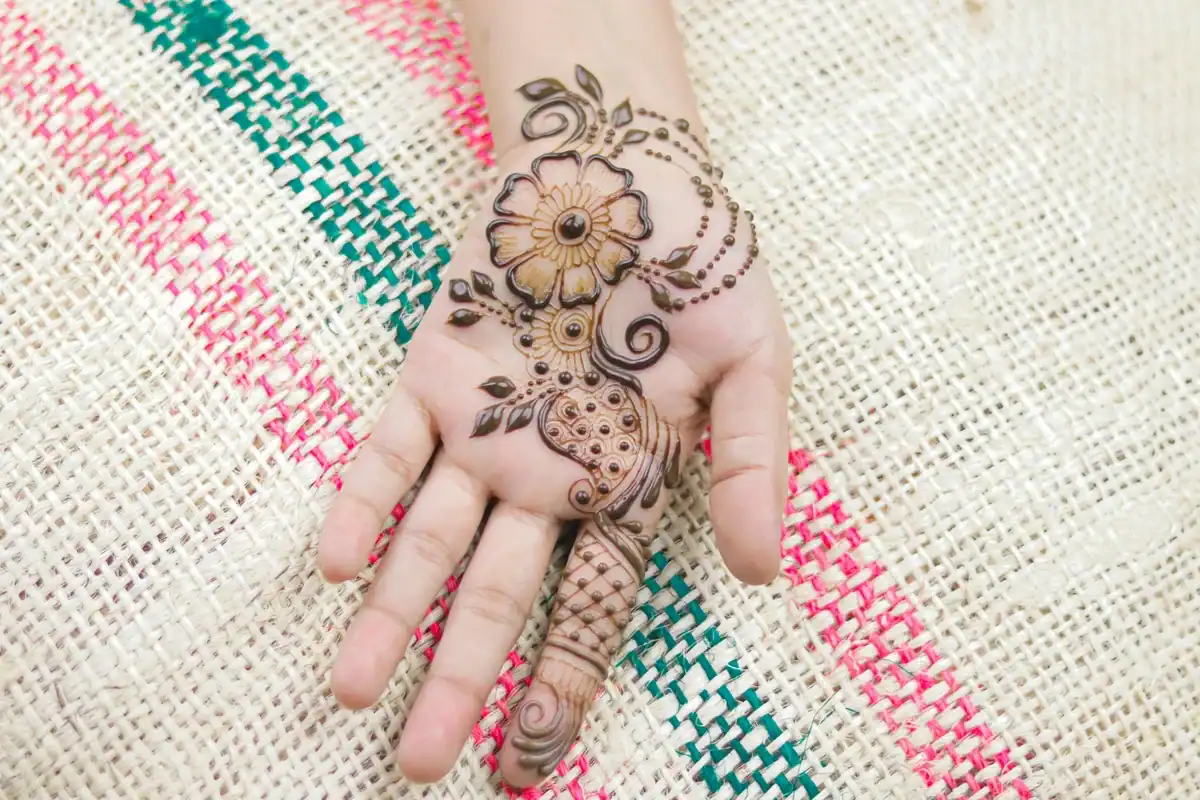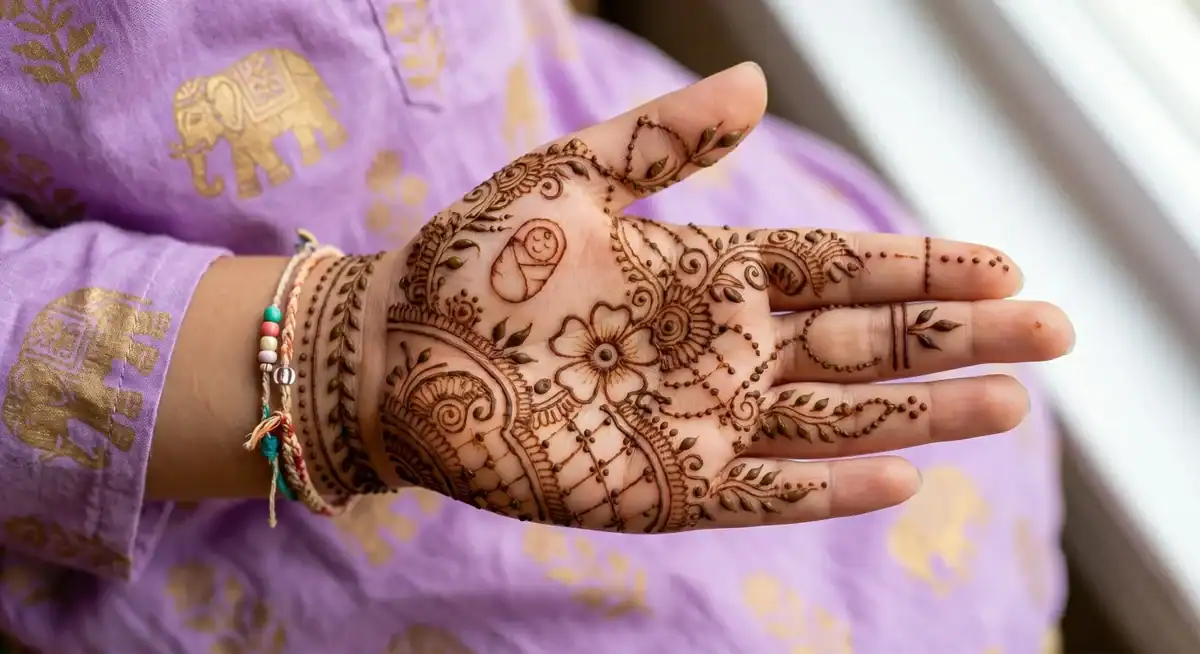
Baby Motif Front Hand Design With Floral Center And Vine Details
50 min · Intermediate


For — Kids
Under ten minutes per hand, single motifs, child-friendly. 2 curated designs sized for restless hands — plus the safety guide every parent should read before a first application.
About this collection
Children sit differently for mehndi than adults do, which is why a kids' mehndi design is its own category — easy, cute, and sized for short attention spans rather than miniature adult bridal work. Five to ten minutes of stillness, one hand at a time, no overnight set, no clove steam. The designs in this collection are built around that reality. Single motifs that read as complete on their own: a lotus at the palm centre, a heart on the back of the hand, three dots along each finger, a tiny mandala. Application time in the five-to-ten-minute range. Stain develops over four to six hours of normal kid activity rather than a managed overnight.
The collection is also a safety category. Children’s skin is more permeable than adult skin, reactions to non-pure pastes are more severe, and the most important parenting decision around mehndi is what you decline rather than what you apply. The safety guide below covers what to use, what to avoid, and the twenty-four-hour patch test that takes the guesswork out of a first application.
The safety guide
Read this once before any first application — and again before an application by anyone outside your home.
If a paste is sold as "black henna," "instant henna," or stains in under an hour, do not let it touch a child’s skin. The fast stain comes from paraphenylenediamine (PPD), a hair-dye chemical that causes severe burns and lifelong sensitisation. Pure henna paste is greenish-brown, smells of plants and essential oils, and stains over six to eight hours. There is no such thing as a safe black henna.
Apply a coin-sized dot of the paste you plan to use to the inside of the wrist. Leave it for two hours, scrape it off, and watch the spot for the next twenty-four hours. If you see redness, swelling, blistering, or itching, do not apply elsewhere. If the spot stains uneventfully, you’re clear to proceed.
Buy from a known source rather than a market stall. Fresh natural-henna cones from a reputable Indian or Pakistani brand stay good for two to four weeks refrigerated; old paste is both less effective and more likely to have been adulterated. Look for a green-brown colour and a strong herbal smell. Discard if it smells chemical, smells of nothing, or has turned grey.
Apply, let the paste dry naturally (no lemon-sugar mix), and leave it on the child’s hand for two to four hours of normal activity. Scrape rather than wash. The colour will be lighter than an adult overnight application — that’s fine and expected. Forcing an overnight set on a child means cracked paste on bedding and an uncomfortable bedtime.
For children under three we recommend skipping mehndi entirely — baby skin is more permeable, reactions are harder to read, and the celebration is for the parents anyway. For three-to-five, consult a paediatrician before a first application, patch-test forty-eight hours rather than twenty-four, and apply a single small motif only. Above five, treat it as a normal application with patch-test and supervision.
Pure plant-based henna paste is safe for most children over the age of five — but only if it’s actually pure henna. The product to avoid completely is "black henna," which contains paraphenylenediamine (PPD), a strong skin sensitiser that can cause severe burns and lifelong allergic reactions, particularly on children’s skin. Always patch-test inside the wrist twenty-four hours before a first application, even with pure henna, and consult a doctor before applying to a child under five.
Black henna is a paste sold at markets, festivals, and tourist spots that produces a stain in fifteen to thirty minutes — much faster than real henna’s six-to-eight hours. The fast stain comes from added paraphenylenediamine, a hair-dye chemical that should never touch skin. Reactions include severe blistering, scarring, and lifelong sensitisation to PPD-containing products including hair dye. Real henna paste is greenish-brown, smells of plant matter and essential oils (cajeput, eucalyptus), and stains slowly. If anyone offers a "black henna" application for a child, decline.
Two to four hours, not overnight. Children fidget, the paste cracks off onto bedding, and a four-hour application produces plenty of colour for festival or party wear. Skip the lemon-sugar setting mix; it’s sticky and uncomfortable for little hands. Once the paste dries, just leave it. Scrape off rather than wash to preserve the stain.
Single motifs with quick application time. A small lotus at the centre of one palm, a heart on the back of the hand, three dots at the base of each finger, a single rose, a tiny mandala. Application time five to ten minutes — long enough to be a memorable activity, short enough that the child sits still. Skip full-hand patterns and anything that needs both hands kept still; one hand at a time is plenty.
We recommend skipping mehndi for children under three entirely — and we’re cautious about three-to-five. Baby skin is significantly more permeable than adult skin, reactions can be more severe, and the patch-test window is harder to manage. If a family tradition calls for token application at a religious or family ceremony for a young child, a single small dot on the back of one hand is the most we’d suggest. Patch-test forty-eight hours before, use only fresh natural paste from a known source, and consult the paediatrician first.
Above the age of seven or eight, yes — and it’s a lovely activity. Buy fresh cones rather than letting them practise with old paste. Practise the design on paper first. Place a single anchor dot, then build outward. Expect the result to look childlike, which is the whole point. Supervise the cone snipping and the scraping; everything else they can manage. Skip the lemon-sugar mix unless the child is ten or older.