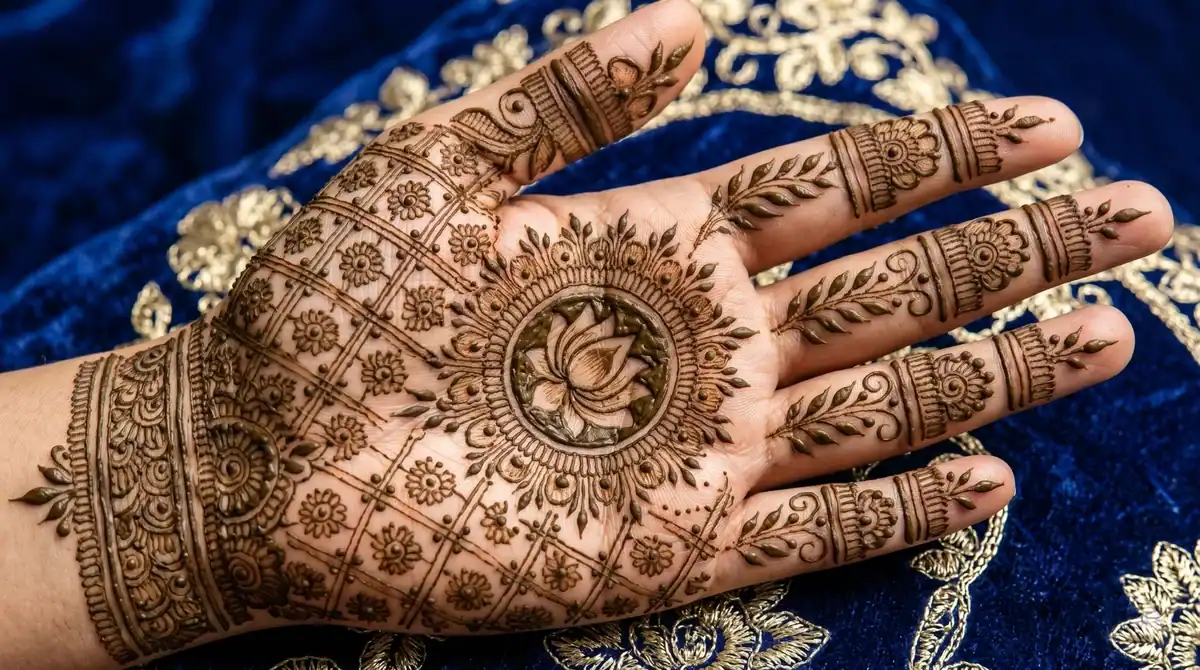
Lotus Mandala Palm with Geometric Jaal and Detailed Fingers
90 min · Advanced


Occasion — Karwa Chauth
Applied at sunset, left on overnight, peaks by morning. Front-hand patterns sized for the ritual rather than the photograph. 4 curated designs from our studio — every one tagged for placement, time, and style.
90 min · Advanced
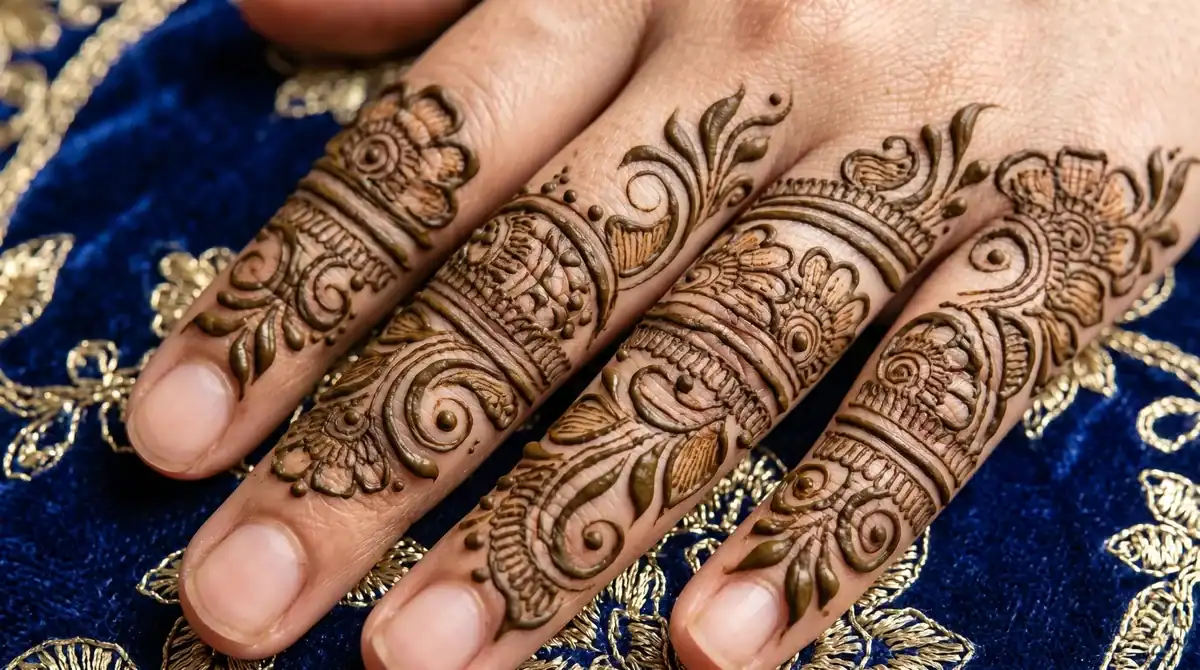
50 min · Advanced
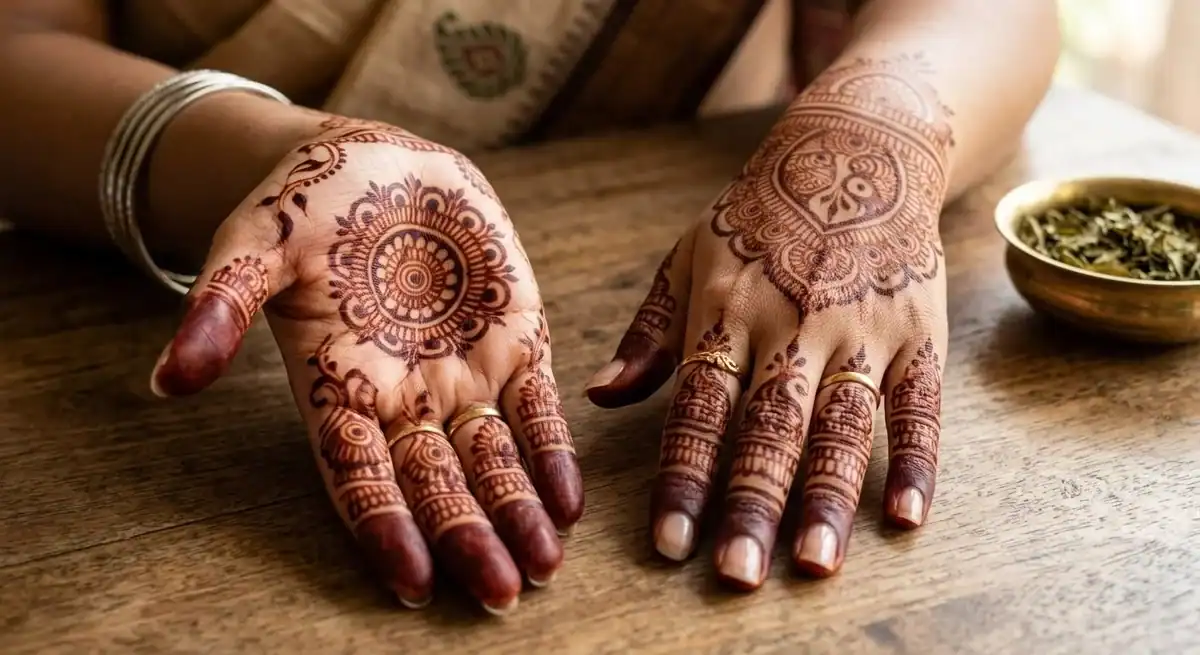
90 min · Advanced
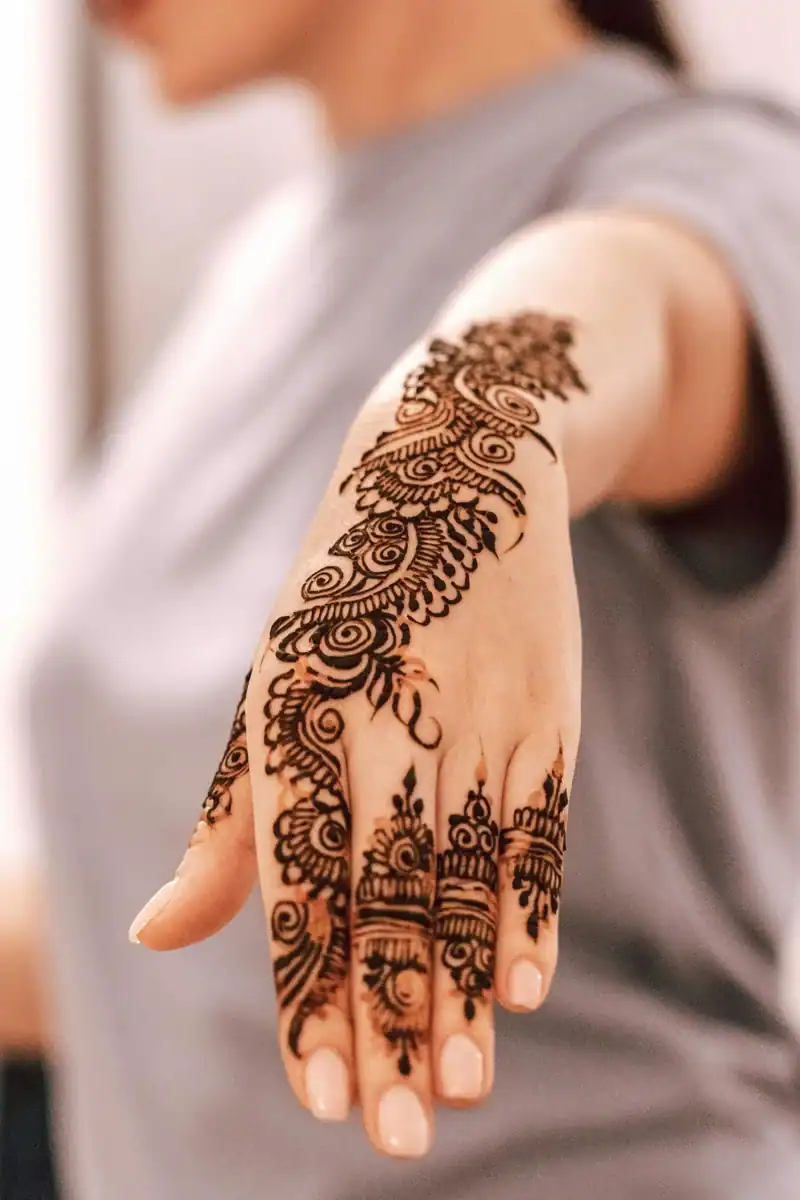
50 min · Advanced
About this collection
Karwa Chauth mehndi — sometimes spelled Karva Chauth or Karwachauth — is timed to a specific moment, the morning of the fast, and that timing shapes everything else about the design. Karwa Chauth mehndi design ideas are typically simple-to-stylish front hand patterns rather than full bridal weight: the henna is part of the ritual, not the centrepiece. The paste is applied at sunset the evening before, left on overnight while you sleep, and scraped off before sargi at dawn. The stain develops through the day, peaks deep maroon by evening, and is at its richest when the moon is sighted and the fast broken.
Patterns favour the front hand and lean simple to stylish — twenty to forty minutes per side. Tradition holds that the husband’s name or initials are hidden somewhere in the design for him to find after the fast ends. The henna is part of the ritual, not the centrepiece — so it’s sized to be read at arm’s length, not photographed in studio.
The night-before timeline
Five steps from sunset on Sargi-ki-raat through to the breaking of the fast the following evening.
Apply at sunset on the evening before Karwa Chauth. Front hand for both hands, twenty to forty minutes per side. Hide the husband’s initials in a paisley or along the fingers. Eat dinner before the artist arrives — once the paste is on, you’re committed for the next eight hours.
Once the paste has dried (about thirty minutes), dab a lemon-sugar mix to seal it. Wrap the hands loosely in cotton or tissue. Avoid getting paste on bedsheets — wear an old cotton kurta to bed.
Wake before sunrise. Scrape the dried paste off with a butter knife — never water. The stain at this point is bright orange. Eat sargi with hands wiped clean of any paste residue.
Hold both hands above a pan of warming cloves at a safe distance for two to three minutes. The heat draws colour into the upper layers of skin. This is the single biggest darkening intervention — the difference between an orange stain at moonsight and a deep maroon one.
By the time you sight the moon, the stain has darkened to its peak. The husband finds his initials in the design after the fast is broken; the henna stays visible for the next two to three weeks before beginning to fade.
The night before. Most women apply at sunset on Sargi-ki-raat — the evening before the fast — and leave the paste on overnight. The stain develops while you sleep, peaks the morning of Karwa Chauth, and stays deep through the moonsight ritual that evening. Applying earlier makes the stain too dark by the day; applying same-day means the colour barely registers.
Front hand, simple to stylish, with the husband’s name or initials tucked into the design. Patterns are usually lighter than bridal mehndi — half-hand or front-hand-only, twenty to forty minutes per side — because the focus is the ritual rather than the henna itself. Mandalas, paisleys, and small jaal nets are the most common motif choices.
It’s a long-running tradition, not a requirement. The custom is that the husband finds his initials or name woven into the pattern after the fast is broken — usually inside a paisley, along the fingers, or at the edge of a mandala. Modern artists also tuck the date or a private initial. Skip it if you’d rather; the ritual sits with or without.
Eight to ten hours minimum. Apply at sunset, sleep with the paste on, and scrape it off in the morning before sargi (the pre-dawn meal). Wrap the hands loosely in cotton or tissue overnight to keep the paste from cracking off. Skip water for the first twelve hours after scraping.
Both work — and the choice usually depends on the design. Simple front-hand patterns (a single mandala, three vines, paisleys along the fingers) are well within reach at home if you’ve practised on paper twice first. For half-hand stylish coverage with finer detail, book an artist for ninety minutes. Don’t attempt full-hand royal weight on yourself the night before.
Three things help on Karwa Chauth morning. Hold the hands above warming cloves (a few cloves on a hot pan, hands at a safe distance) for two to three minutes — clove steam is the single biggest darkening intervention. Avoid soap with lemon. Apply a thin layer of coconut or mustard oil before stepping out. The stain will continue darkening through the day.