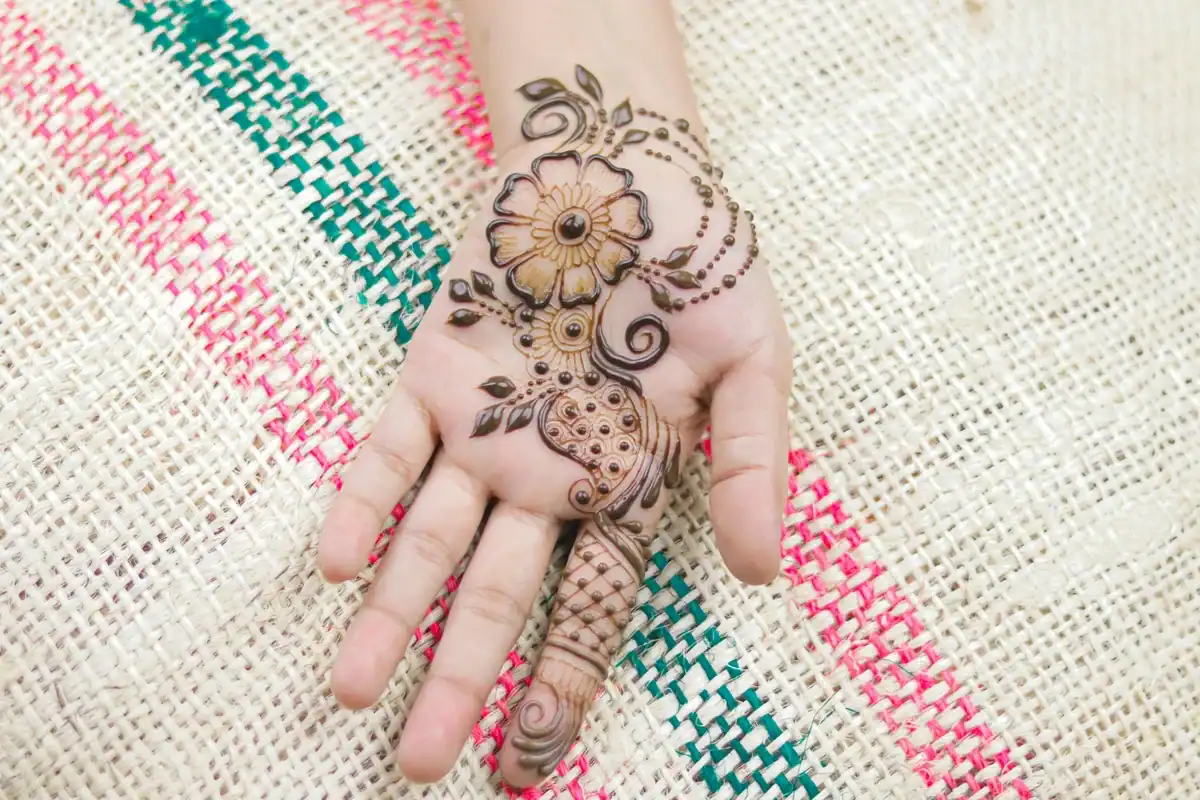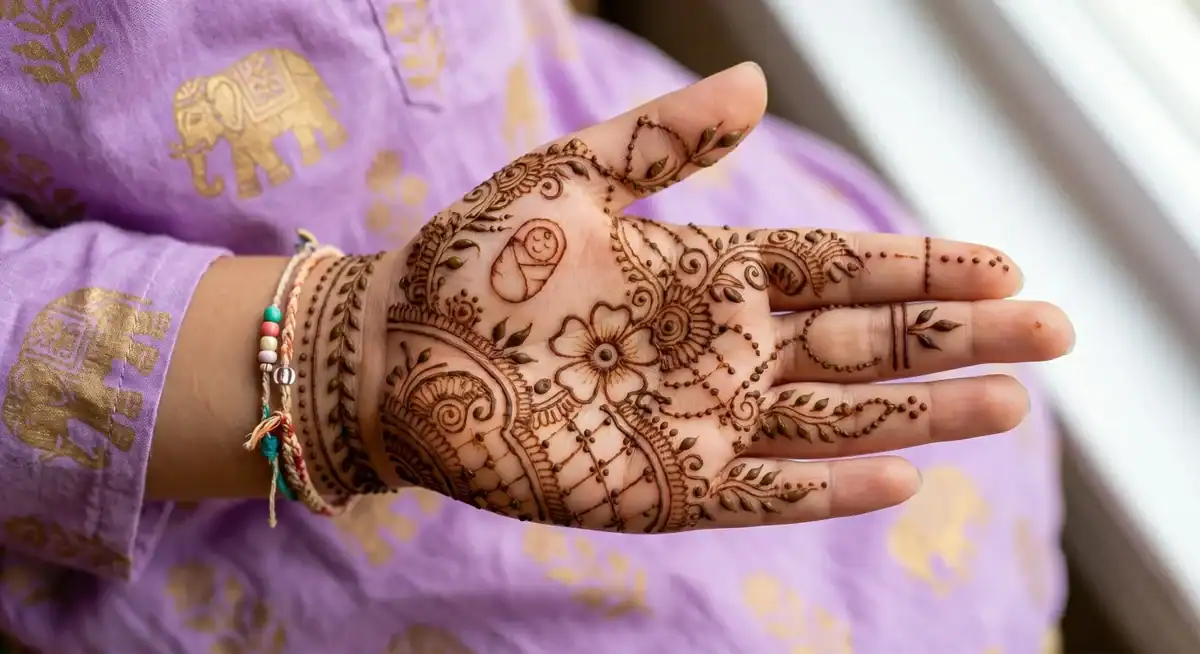
Baby Motif Front Hand Design With Floral Center And Vine Details
50 min · Intermediate


Browse — Easy
Three strokes, fifteen minutes, no prior experience required. 2 curated designs anyone can draw at home — every one tagged for time and the strokes it uses.
About this collection
An easy mehndi design — also written as easy mehandi or basic henna design — uses a small repertoire of strokes (straight line, gentle curve, dot, teardrop) arranged in a forgiving pattern. The best easy mehndi designs for beginners are anchored at one point so any wobbliness in the surrounding lines dissolves into the composition.
"Simple" describes the visual outcome — uncluttered, generous negative space. "Easy" describes the application difficulty — few strokes, forgiving of a shaky hand. Most designs in this collection are both, but the distinction matters when you’re choosing your first attempt. A clean half-mandala can look simple and still be hard to draw symmetrically. Start instead with a single rose or a row of dots.
The recipe
Five steps. Forty seconds to read, fifteen minutes to apply, six to eight hours to set.
Squeeze a short line on a piece of paper. The paste should flow evenly without skipping. If it skips, snip a millimetre more off the tip with scissors. If it floods, you’ve cut too much — switch to a fresh cone.
Draw your design twice on paper before going onto skin. The first pass teaches you the shape; the second pass teaches your hand the rhythm. You will be measurably better on the third attempt — which is the one that goes on you.
Place a single dot where you want the design to start — wrist, palm centre, or base of one finger. That dot is the centre of gravity for everything else, and it gives your eye a fixed reference point as you build outward.
Draw the silhouette of every motif first. If your hand cramps or the cone runs out at this point, the design still reads as a complete pattern. Only return to fill once every outline is in place.
Let the paste dry (about thirty minutes). Dab a lemon-sugar mix to seal it. Leave on for at least six hours, ideally overnight. Don’t wash — scrape the paste off with a butter knife. The colour darkens for the next forty-eight hours.
A design built from a small repertoire of strokes — straight line, gentle curve, dot, teardrop — arranged in a forgiving pattern. Easy designs avoid fine crosshatching, dense fills, or motifs that require a fully steady hand. If you can draw the silhouette on paper in under a minute, you can apply it on skin.
Five to fifteen minutes for the designs in this collection. The fastest is a row of dots traced along the base of the fingers — under five. The most involved is a vine that climbs from wrist to fingertip with leaves at each branch — closer to fifteen.
Almost — the overlap is large, but they’re not identical. "Simple" describes the visual outcome (uncluttered, lots of negative space). "Easy" describes the application difficulty (few strokes, forgiving of a shaky hand). Most easy designs are also simple, but not every simple design is easy — a clean half-mandala looks simple and is hard to draw symmetrically.
Three rules. Practise the silhouette on paper twice before going onto skin. Hold the cone like a pen, with the tip just barely off the surface — not pressing in. Start with a design anchored at one point (a single dot at the wrist or palm centre) so any wobble in the surrounding lines reads as deliberate.
Yes — most of them. Kids enjoy mehndi best as a quick activity rather than a forty-minute sit-still session, so anything in the under-ten-minute range works. Stick to the back of one hand, and skip the foot until they’re older. Patch-test on the inside of the wrist before applying if it’s their first time.
Yes. Stain depth is governed by paste freshness, contact time, and skin chemistry — none of which depend on how complex the pattern is. A five-stroke design left on overnight will out-stain a forty-stroke design rinsed off after an hour.