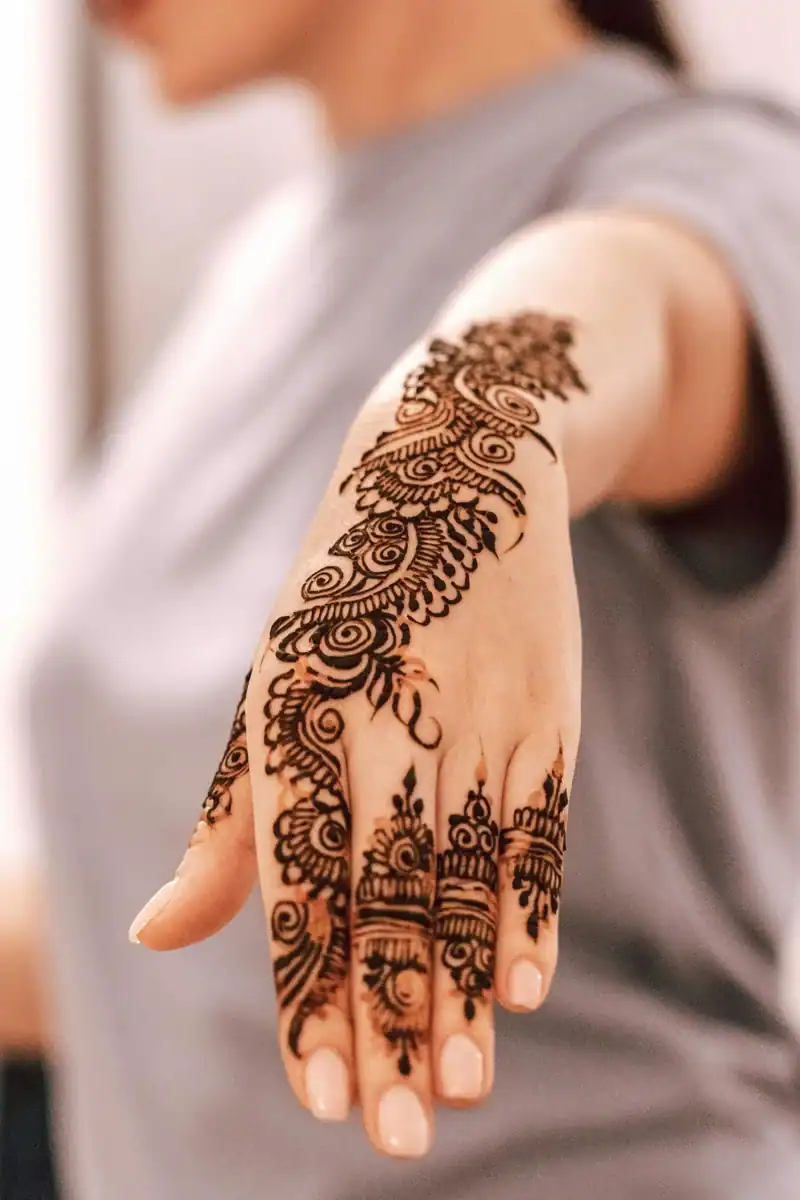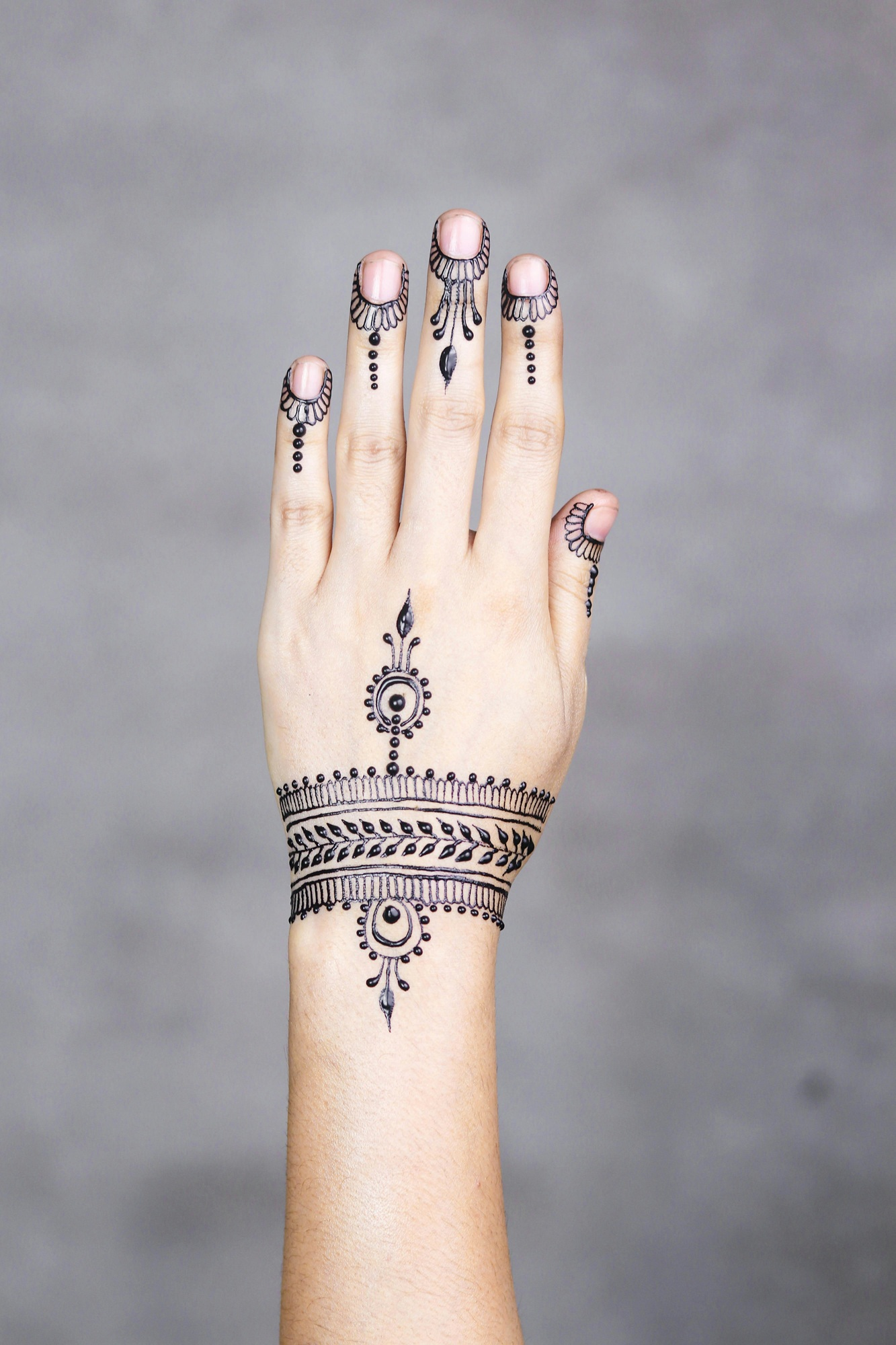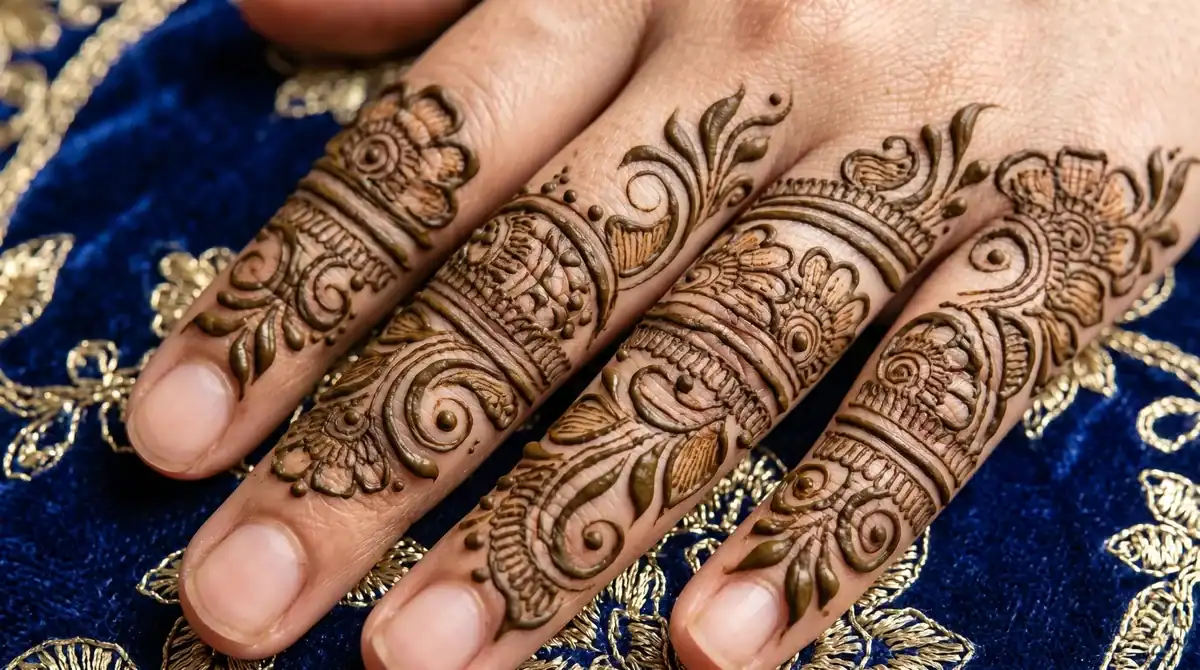
Royal Finger Mehndi Design with Ornate Bands and Floral Paisley Details
50 min · Advanced


Browse — Back hand
The palm side — where the skin is thickest and the stain runs deepest. 3 curated designs from our studio, every one tagged for time, skill, and tradition.
About this collection
In Indian-English mehndi vocabulary, a back hand mehndi design (also spelled back hand mehandi or palm mehndi design) sits on the palm side — the inside of the hand, wrist to fingertips. Outside South Asia the term means the opposite, which is why we tag everything by anatomical placement on the design pages. Palm-side patterns are traditionally applied alongside front hand mehndi for brides, and increasingly worn alone for sangeet and Karwa Chauth where the wearer wants the deepest possible henna stain.
The palm rewards generous, anchored compositions — a single rose or mandala at the centre, a half-pattern that grows outward from the wrist, a full bridal coverage that runs up the inside of the fingers. The flat surface and depth of stain mean motifs read clearly without much fill; some of the most striking palm designs in the catalogue are also some of the simplest.
The science of palm stain
Three reasons the same paste, applied at the same time, stains three to five shades darker on the palm than on the back of the hand.
Henna’s active dye, lawsone, bonds to keratin — the protein in your skin’s outer layer. Palm and sole skin have the highest keratin concentration on the body, which is why both stain dramatically darker than anywhere else. The same molecule, more binding sites.
The dorsal hand and most other body surfaces are dotted with sebaceous glands that produce a thin oil film. That film sits between paste and skin and dampens stain transfer. Palms and soles have effectively no sebaceous glands — the paste sits in direct contact with the keratin layer for the full eight to twelve hours.
Palms run consistently warmer than the back of the hand by a degree or two — the same vasodilation that lets us sweat there. Warmer skin draws stain deeper into the upper layers. It’s also why holding the hands above warming cloves accelerates colour development specifically on the palm side.
In Indian-English usage, "back hand" refers to the palm side — the inside of the hand, from wrist to fingertips, including the inside of the fingers. (In British English, "back of the hand" means the dorsal side, which we call front hand on this site.) The palm-side skin is thicker and more porous, which is why back hand patterns hold the deepest stain.
Two reasons. First, palm skin has the densest concentration of keratin in the body — and keratin is what henna lawsone bonds to. Second, the palm has fewer oil glands than the back of the hand, so the paste sits in direct contact with the skin without an oil film between. The combined effect: a back-hand stain runs three to five shades darker than a front-hand one applied at the same time.
Twenty to ninety minutes depending on coverage. A single rose at the centre of the palm is twenty; a stylish half-palm pattern is thirty to forty-five; a full bridal palm with surrounding finger work is sixty to ninety. Slightly longer than the equivalent front-hand pattern, because the palm surface is broader and bridal palms typically extend up the inside of the fingers.
Two practical differences beyond which side they sit on. Stain depth — the back hand runs three to five shades darker. Visibility — the front hand reads in photos and at a glance; the back hand only reveals when you turn the hand over. Brides traditionally apply both sides; everyday wear and festivals favour the front hand for visibility.
A single rose at the centre of the palm is the most forgiving design we know — the palm centre is the easiest part of the hand to draw on, and a rose hides minor wobbles in the spiral. After that try a half-mandala starting at the wrist and growing upward. Avoid finger work on the back hand for your first attempt; the inside of the fingers is the hardest surface on the body to apply on cleanly.
Three rules. Leave the paste on for at least eight hours, ideally overnight — palm patterns reward long contact. Scrape rather than rinse; water in the first twelve hours stops the colour from developing. Hold the palm above warming cloves for two to three minutes the morning after — clove steam is the single biggest darkening intervention.