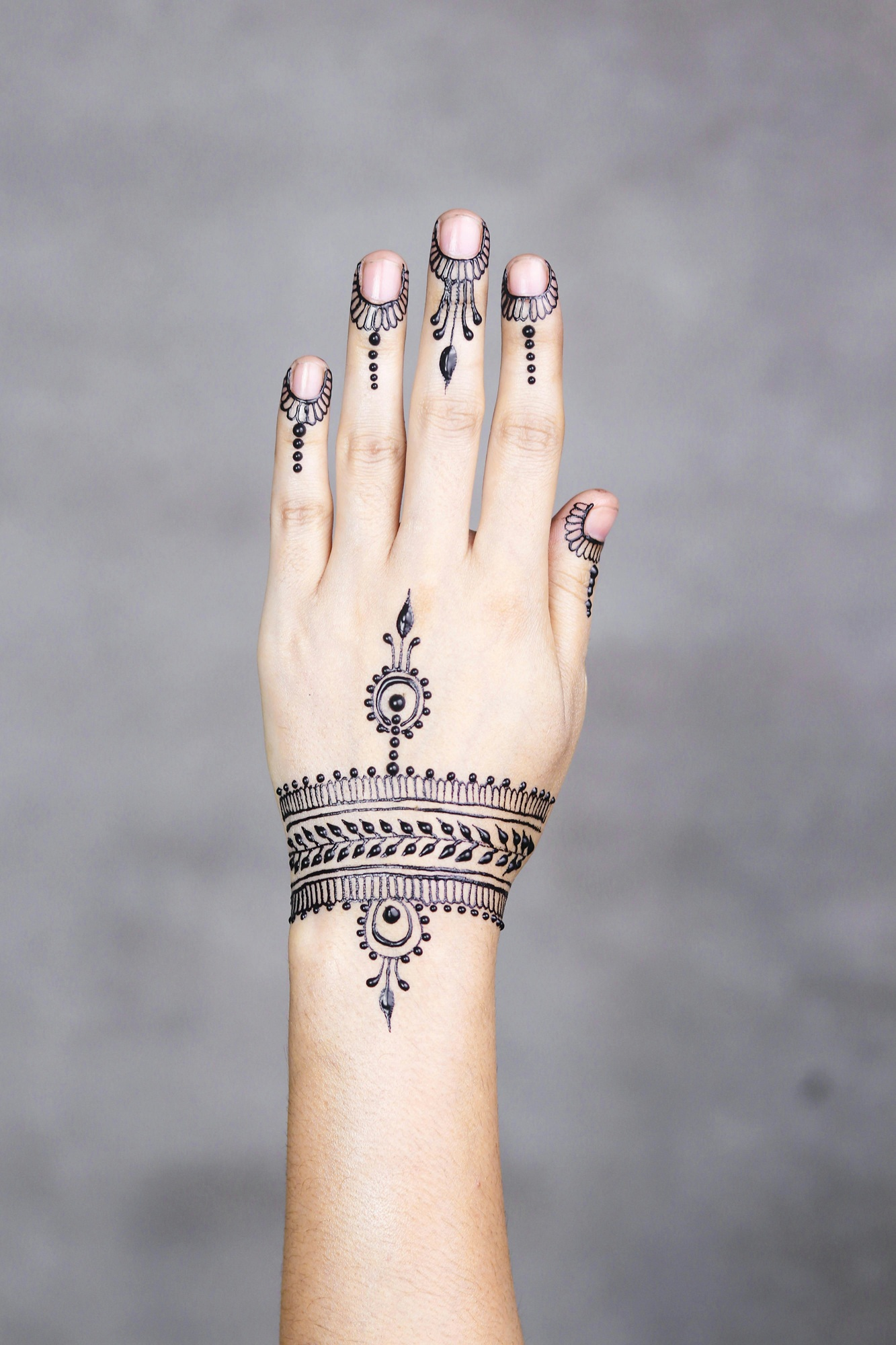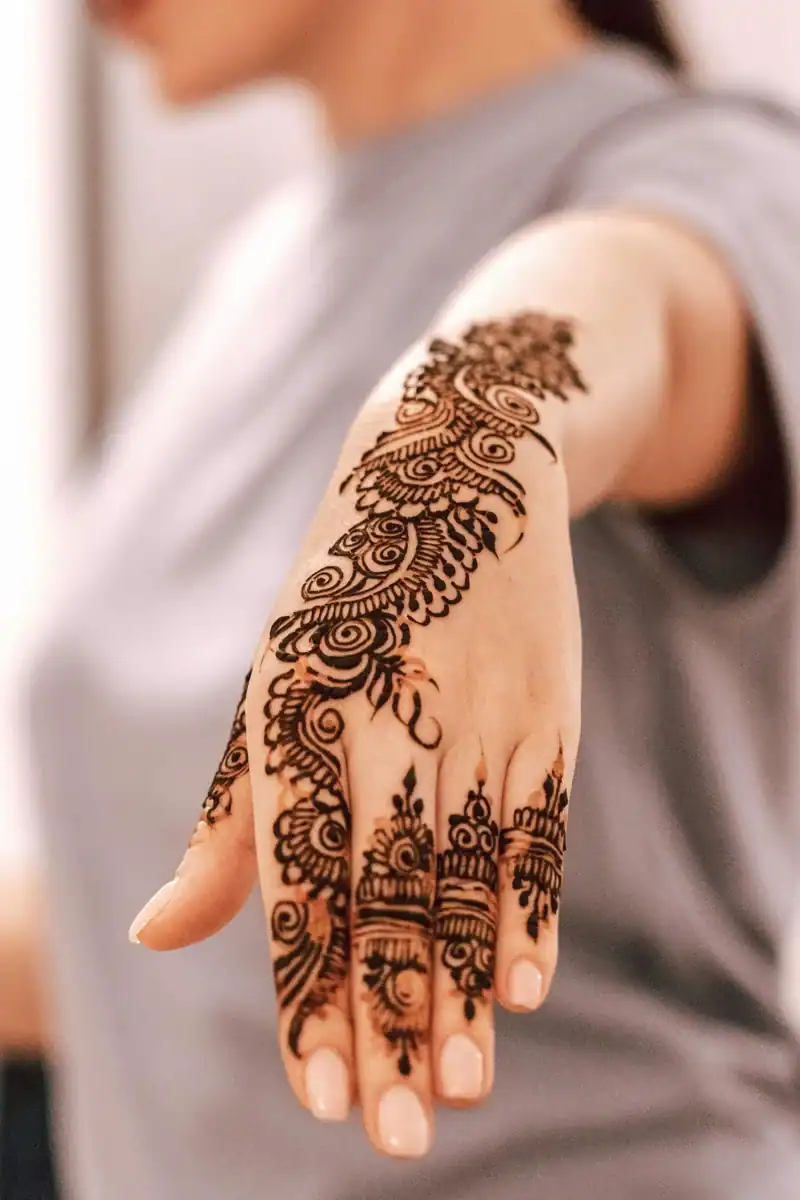
Indian Bridal Back Hand Design with Paisley Vine and Ornate Fingers
50 min · Advanced


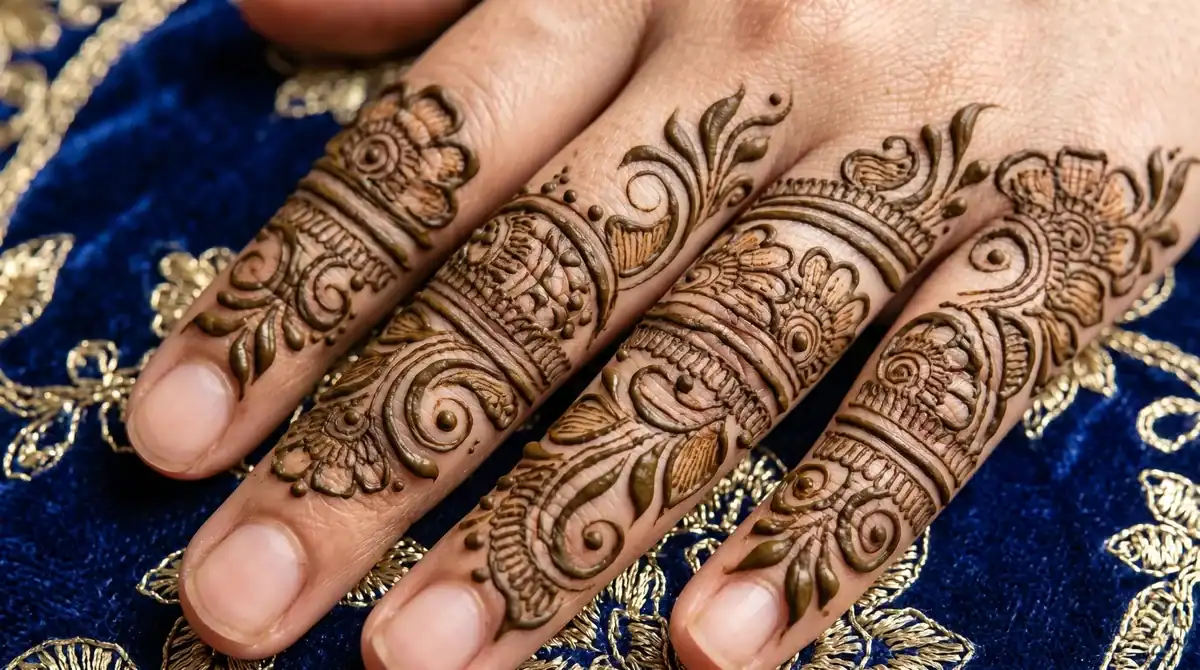
Four fingers fully adorned with horizontal banded patterns mixing floral knots, paisley curves, and geometric stripes. Each finger reads like stacked jewelry, creating a cohesive royal aesthetic across the back hand.
Style mix
This is what separates a casual finger mehndi design from true bridal artistry. Every finger is treated as its own canvas, decorated from knuckle to fingertip with horizontal bands that create a jewelry like effect. The pattern mixes floral knots, paisley curves, and geometric stripes in a rhythm that flows across all four fingers.
The density here is what makes this a royal front hand mehndi design. There is no bare skin left exposed on the fingers. Each band is packed with fine detail work, including tiny dots, micro petals, crosshatching, and delicate linework that requires a steady hand and advanced skill. This is the kind of bridal mehndi design detail that photographs beautifully and stains dark.
The composition works because each finger follows a similar visual language while maintaining its own unique pattern. The index and ring fingers feature prominent circular mandala elements. The middle and pinky fingers emphasize paisley and floral clusters. Together they create a cohesive full hand mehndi design aesthetic even though the palm itself remains bare.
Base Structure Start by mapping out horizontal bands across each finger. Draw three to four parallel lines wrapping around each finger from knuckle to tip. These bands will serve as your framework. Keep them evenly spaced and consistent in thickness.
Finger by Finger Detail Index Finger: Place a circular mandala at the middle knuckle. Fill it with concentric rings and fine dot work. Add paisley elements above and below the circle. Finish the tip with a solid band.
Middle Finger: Create horizontal stripes with alternating patterns. One band might have floral knots, the next geometric hatching, the next paisley teardrops. Vary the texture while maintaining the banded structure.
Ring Finger: Mirror the index finger with a central mandala element. Add delicate vine work trailing between the bands. Use fine khafif stippling to create tonal variation.
Pinky Finger: Keep it slightly simpler but still detailed. Use smaller versions of the motifs from other fingers. A compact floral cluster at the knuckle, a paisley in the middle, and banded detail at the tip.
Fill and Texture Add scattered dots between the main motifs to create density. Use fine hatching lines inside paisley shapes. Place tiny circles and teardrops as filler elements. The goal is to leave no large areas of bare skin visible.
Finishing Touches Ensure all lines are crisp and consistent. The bands should look like actual jewelry, clean, deliberate, and ornate. Check that the patterns flow smoothly across all four fingers when viewed together.
This design embodies the core principles of Indian mehndi design finger work. Full coverage is non negotiable here. Every inch of the finger is decorated, leaving no negative space empty. This density is what creates the rich, dark stain that brides specifically look for in a dulhan mehndi design.
The linework relies on precision rather than thickness. The details are executed with a fine cone tip, using delicate hatching, micro dots, and precise curves. Horizontal bands wrap around the fingers to mimic the look of stacked bangles or rings, which is a classic technique in traditional bridal work. Floral, paisley, and geometric elements are combined within a single composition to create visual interest while maintaining strict cohesion across the hand.
Bridal Mehndi Ceremony: This is the standard choice for brides who want detailed finger work without full palm coverage. The density and intricacy make it perfect for the main event when everyone will be photographing your hands.
Sangeet Night: The ornate banded patterns look stunning under party lights and pair beautifully with heavy jewelry and bangles. This sangeet mehndi design adds royal elegance without overwhelming your outfit.
Karwa Chauth: For married women wanting a beautiful karwa chauth mehndi design, this delivers traditional elegance with full finger coverage. It complements the bangles and red outfit traditionally worn for the fast.
Eid Celebrations: An eid mehndi design that makes a statement. The detailed finger work applies faster than a full hand but still delivers impact for festival celebrations.
More like this
About 50 min. Advanced-level — a practised hand only — book an artist for this one if you have not done royal-weight work before.
One to three weeks, depending on placement. Palm-side skin holds the deepest stain (two to three weeks); the back of the hand fades faster (about a week). Heat, moisture, and exfoliation all shorten the stain.
Leave the paste on for at least six hours, ideally overnight. Skip moisturiser before applying. Once dry, dab a lemon-sugar mix to keep it sealed. Avoid water for the first 24 hours after scraping.