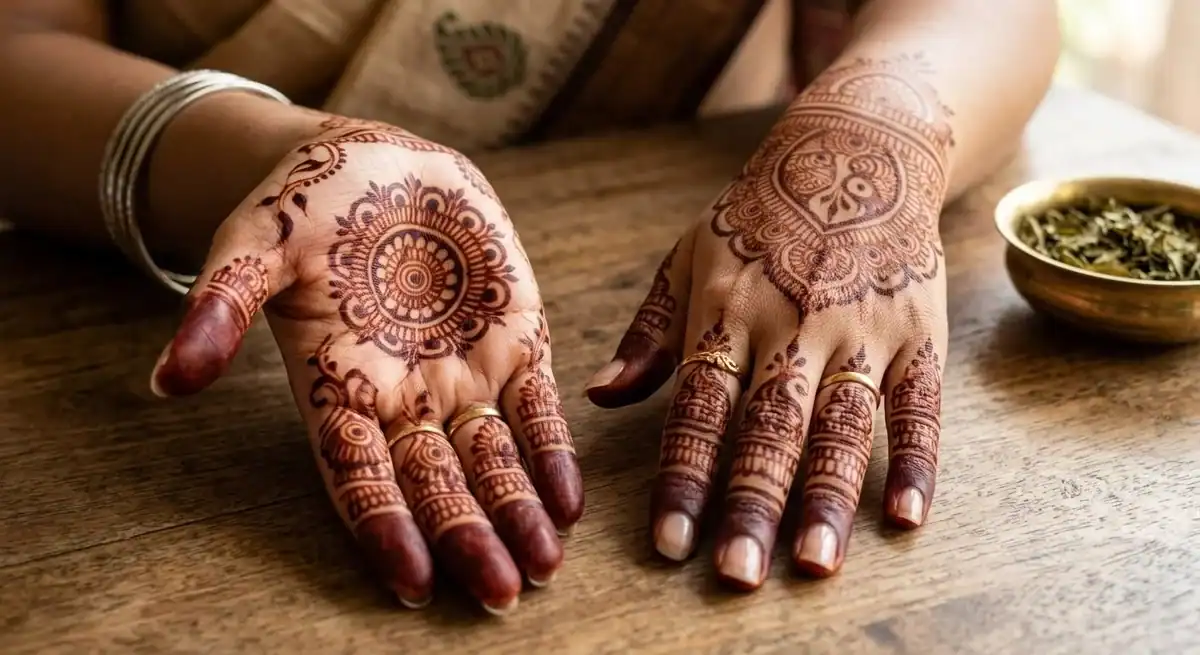
Royal Mandala Full Hand Bridal Mehndi with Geometric Jaal Fingers
90 min · Advanced


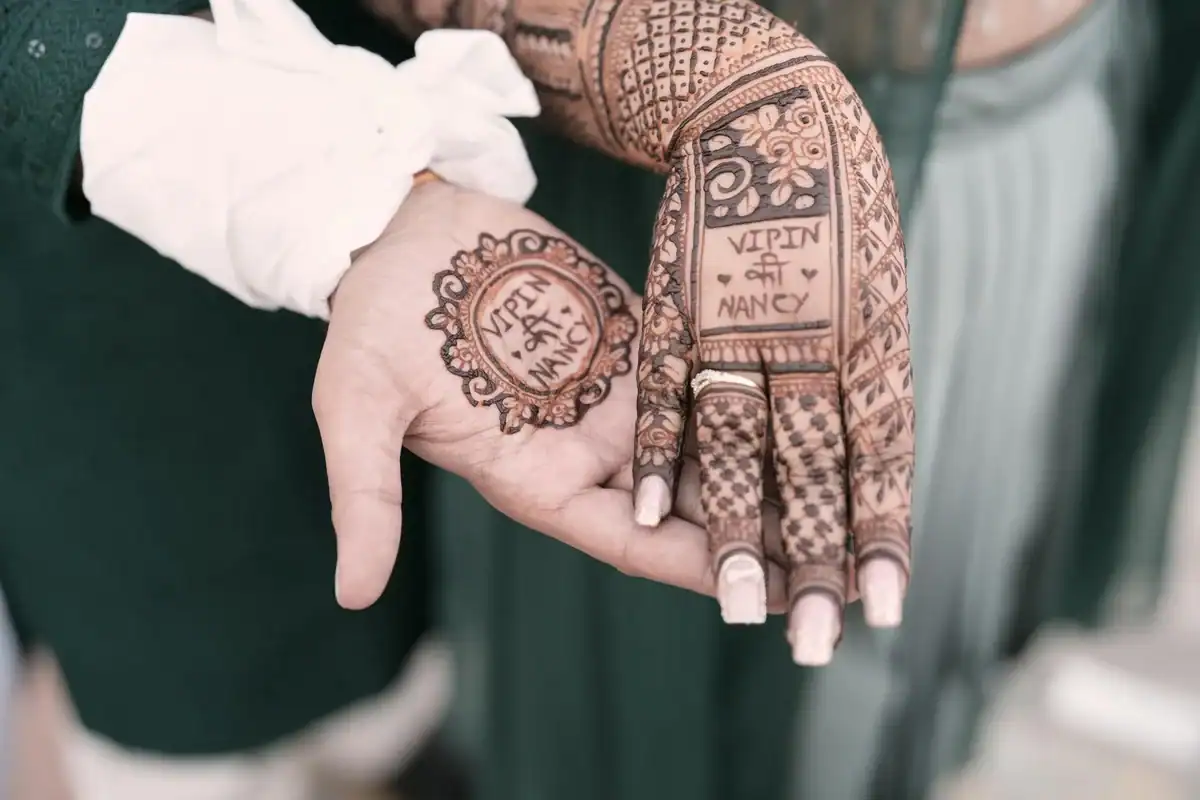
A classic Indian bridal composition featuring a central name mandala on the palm and a dense geometric jaal frame on the back hand, integrating text and lattice work for a personalized look.
Style mix
This is what a true Indian bridal mehndi design looks like when executed with precision. The composition balances density with personalization, creating a look that is both traditional and deeply meaningful. On the palm, we see a perfectly centered circular mandala mehndi design. It frames the couple’s names and an Om symbol, turning the hand into a personal canvas.
Moving to the back of the hand, the design shifts into high gear with a heavy geometric jaal pattern. A bold rectangular border anchors the wrist and fingers, enclosing intricate floral details and repeating text. Every inch of the skin is covered in fine lines, creating that rich, dark stain that every bride wants. This is a full hand bridal mehndi design that demands attention and showcases the artist’s steady hand.
The Palm Mandala Begin at the center of the palm. Draw a clean circle and fill it with the couple’s names and a central symbol, like the Om shown here. Surround this text with a thick, decorative border made of scalloped edges and tiny floral accents. This creates a “seal” effect that draws the eye immediately.
The Geometric Frame On the back hand, establish a strong architectural structure. Draw a heavy rectangular outline running from the wrist to the knuckles. Inside this frame, place the names again to mirror the palm. This symmetry between the front and back is a hallmark of skilled Indian mehndi design.
The Jaal Fill Fill the areas outside the central frame with a dense diagonal lattice, or jaal. This isn’t just random lines; use a consistent diamond pattern that hugs the curves of the hand. The density here is crucial for that royal mehndi design aesthetic.
Fingers and Borders Dress the fingers in matching patterns. Use a checkerboard or dotted lattice that connects seamlessly to the wrist design. Add thick borders along the sides of the hand to contain the pattern and give it a finished, jewelry-like appearance.
This design follows the rigorous standards of Indian bridal artistry:
The Mehndi Ceremony: This is the standard choice for the bride. The density and coverage signal the importance of the event. The darker the stain, the better the omen, so this design is meant to be left on overnight.
Sangeet Night: If you want something slightly less heavy than the full bridal set but still want that royal front hand mehndi design impact, you can simplify the jaal density while keeping the name mandala.
Reception: For a second-day look, this design photographs beautifully against heavy bridal jewelry and lehengas. The intricate lines show up clearly in professional wedding photography.
More like this
About 120 min. Advanced-level — a practised hand only — book an artist for this one if you have not done royal-weight work before.
One to three weeks, depending on placement. Palm-side skin holds the deepest stain (two to three weeks); the back of the hand fades faster (about a week). Heat, moisture, and exfoliation all shorten the stain.
Leave the paste on for at least six hours, ideally overnight. Skip moisturiser before applying. Once dry, dab a lemon-sugar mix to keep it sealed. Avoid water for the first 24 hours after scraping.