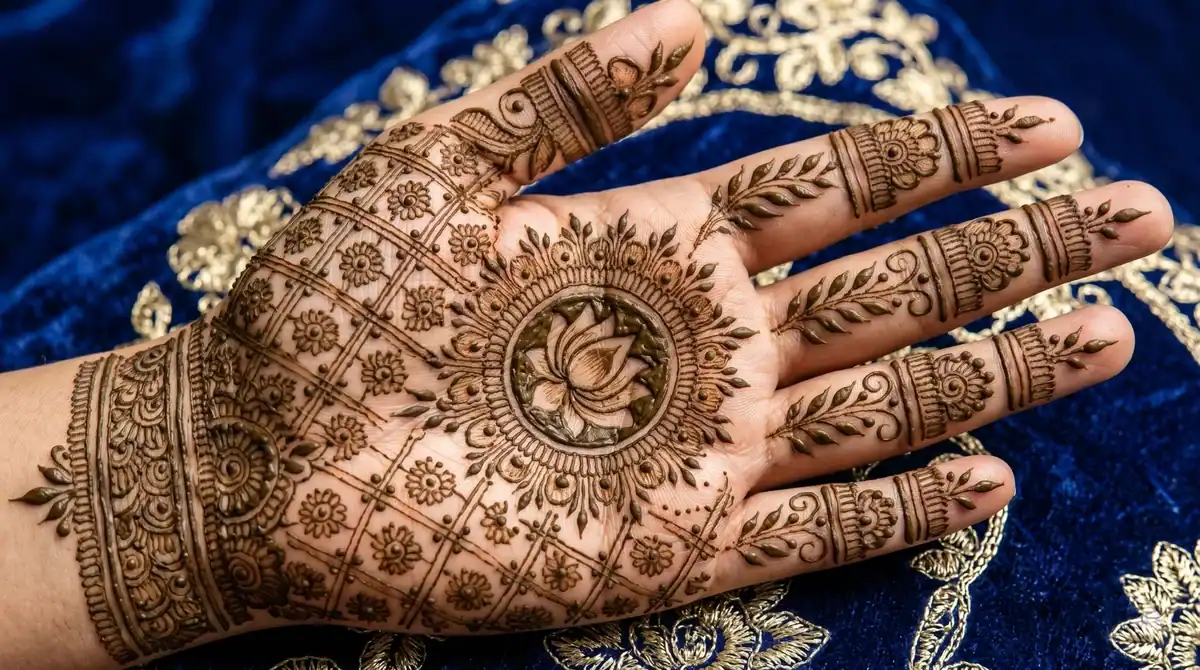
Lotus Mandala Palm with Geometric Jaal and Detailed Fingers
90 min · Advanced



Classical Indian bridal mehndi built around the rose — dense jaal fill, geometric wrist cuff, full coverage on both hands. 180 minutes, advanced skill. Perfect for weddings.
Style mix
A classical Indian bridal mehndi design built entirely around the rose. Three-dimensional blooms anchor both palms — each one constructed from concentric spirals outward to layered petals — while a dense jaal lattice fills every gap between them.
A wide geometric cuff at the wrist ties both hands together like a single piece of jewellery. The composition reads as one unified rose mehndi across the full hand, not two isolated palms.
The quality here is weight. This bridal mehndi design is meant to cover, to impress, to be seen from across the mandap. Nothing is left bare — every centimetre from fingertip to mid-forearm carries either a rose motif or a jaal fill, producing the deep mahogany stain that bridal photography demands.
Base
Start at the palm centre with a large rose — three rings of petals, each ring slightly more open than the last. Ink the outermost ring first to set the radius, then work inward. A spiral bud at the centre keeps the core tight.
Fingers
Carry a half-rose or buti onto each finger base, trailing into a thin jaal to the fingertip. The index finger gets a full climbing rose. Keep motifs on the back side only — leave the inner joints clean for natural movement.
Wrist Cuff
Draw a band of interlocking diamonds or chevrons at the wrist, two to three rows deep. This frames the hand field and photographs particularly well against bangles and kadas.
Fill
Every gap between roses gets a diagonal jaal fill — crosshatch with a small buti at each intersection. Work section by section so the paste does not dry mid-pattern. Use a fine-tipped cone for the lattice lines.
Time Saver
The two palm roses take the most time. If you are working within a three-hour mehendi session, lightly sketch the rose centres in pencil before reaching for the cone.
Indian bridal mehndi for the full hand follows a distinct visual logic that sets it apart from Arabic or Khaleeji styles. The key characteristics:
Bridal Mehndi Night (Mehendi Rasam) — The standard choice for a bride’s hands and forearms where full coverage is expected. The darker the stain, the better the omen — plan for a full evening application and an overnight soak.
Sangeet or Reception — A lighter version works well here — a single rose on each palm, partial jaal, no forearm extension. Full bridal coverage on both hands is traditionally reserved for the wedding day itself.
More like this
90 min · Advanced
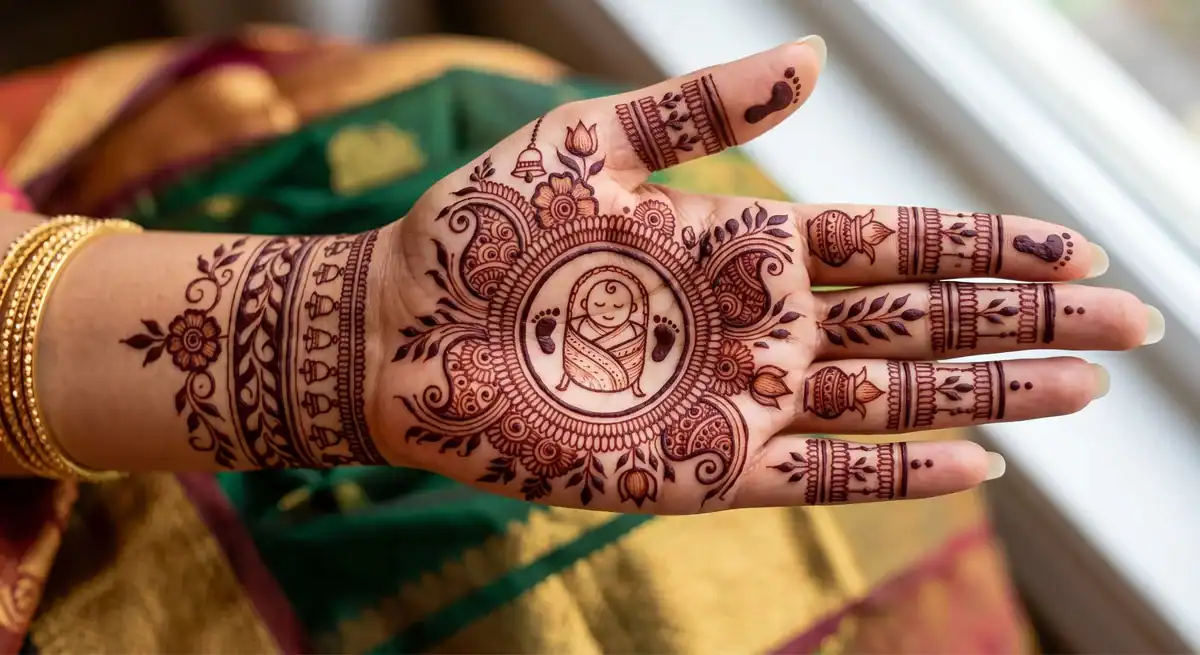
60 min · Intermediate
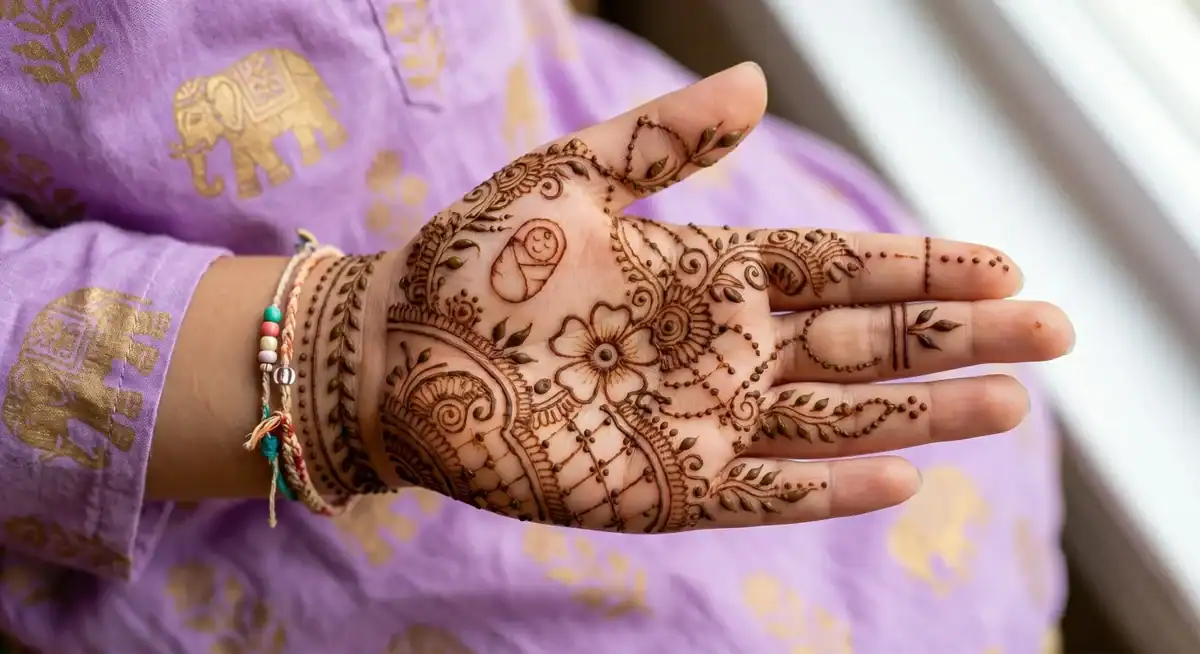
50 min · Intermediate
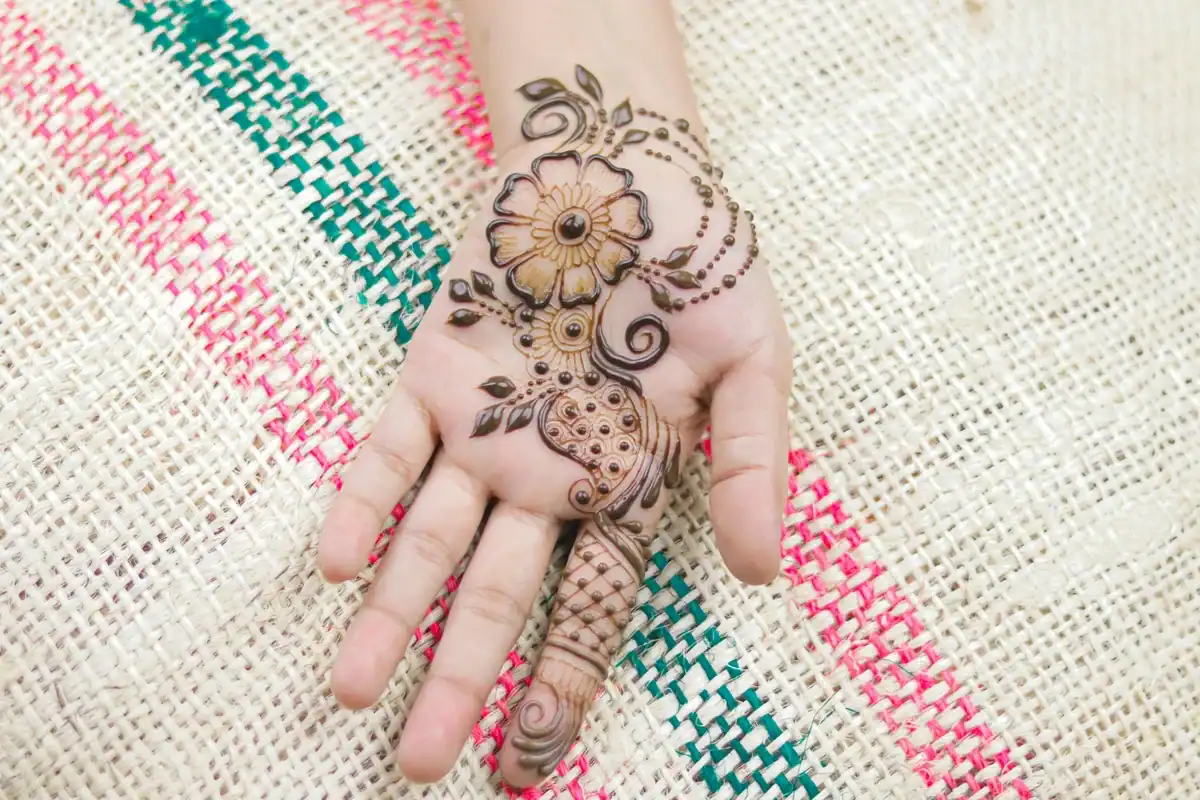
30 min · Beginner
About 120 min. Advanced-level — a practised hand only — book an artist for this one if you have not done royal-weight work before.
One to three weeks, depending on placement. Palm-side skin holds the deepest stain (two to three weeks); the back of the hand fades faster (about a week). Heat, moisture, and exfoliation all shorten the stain.
Leave the paste on for at least six hours, ideally overnight. Skip moisturiser before applying. Once dry, dab a lemon-sugar mix to keep it sealed. Avoid water for the first 24 hours after scraping.