
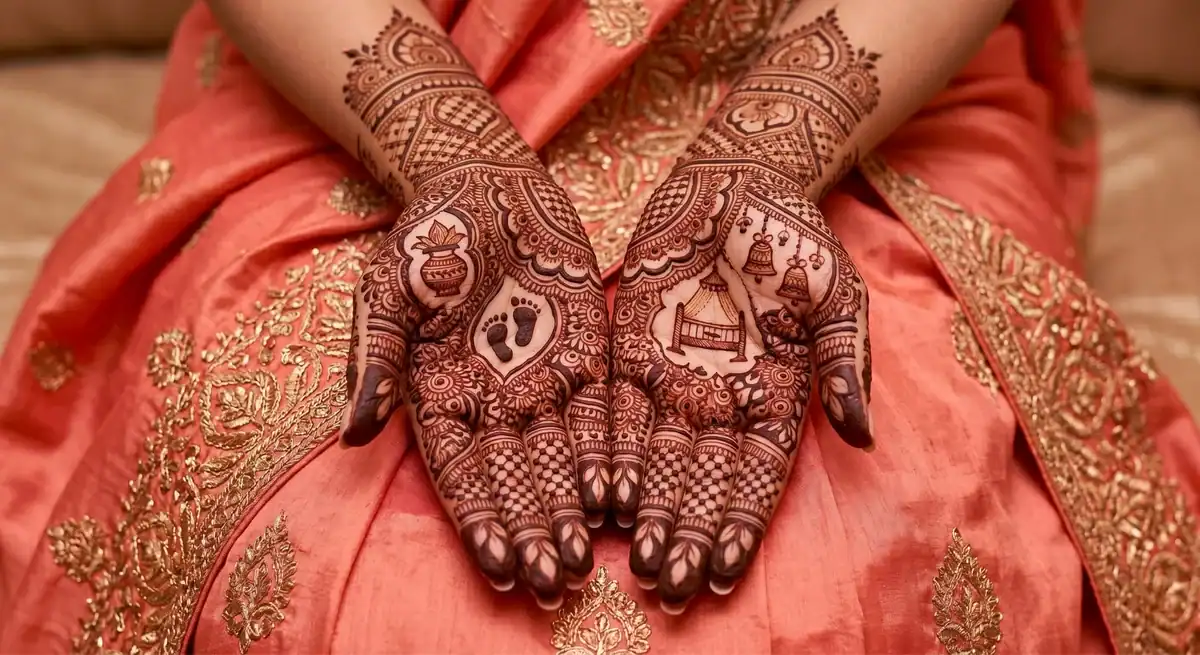
Baby Shower Palm Design With Footprints And Cradle Motifs
Traditional Indian palm mehndi featuring symbolic baby footprints, a cradle, and auspicious kalash motifs surrounded by dense jaal work and hanging bells, perfect for godh bharai ceremonies.
- Time
- 90 min
- Skill
- Advanced
- Placement
- Palm
- Tradition
- Indian · Mughlai
Style mix
- Indian 85%
- Mughlai 10%
- Floral 5%
THE DESIGN
This is a specialized baby shower mehndi design that blends traditional Indian bridal density with symbolic motifs specific to godh bharai ceremonies. The palms feature distinctive elements: baby footprints representing the expected child, a cradle symbolizing the nursery, an auspicious kalash pot for prosperity, and decorative hanging bells that add movement and celebration to the composition.
The density and fine linework make this a royal palm mehndi design rather than a simple baby shower pattern. Dense jaal lattice work fills the spaces between the main motifs, creating the rich, dark stain that traditional ceremonies demand. The fingers receive full treatment with horizontal bands featuring geometric patterns, floral knots, and detailed dot work from knuckle to tip.
This is not your typical easy baby shower mehndi design. It requires advanced skill and 90 minutes of application time, making it suitable for mothers-to-be who want traditional coverage with personalized symbolic elements. The composition balances the playful baby motifs with the ornate Indian mehndi design aesthetic that photographs beautifully for this milestone celebration.
RECIPE
Palm Motifs
Start with the central symbolic elements. Draw the baby footprints in the center of one palm using solid filled shapes. On the other palm, sketch a detailed cradle with canopy and hanging elements. Add the kalash pot with mango leaves and coconut on top. Finish with clusters of hanging bells (jhoomar) using curved lines and small circles.
Jaal Filling
Surround each main motif with dense diagonal jaal lattice work. Create a net-like texture that expands outward from the central symbols. Fill the negative spaces within the jaal with tiny dots and micro florals. The goal is to create a cohesive background that connects all the baby shower motifs while maintaining the dense coverage typical of Indian bridal mehndi design.
Finger Detail
Each finger gets three to four horizontal bands. Mix geometric stripes, floral clusters, and paisley elements. Use fine hatching and stippling to create tonal variation. The fingertips should be completely filled solid for maximum stain impact. This creates the jewelry-like effect that frames the palm motifs.
Wrist And Forearm
Extend the design slightly up the wrist with decorative bands featuring peacock motifs and floral patterns. This anchors the composition and creates visual balance with the detailed palm work.
THE INDIAN SIGNATURE
This design embodies the core principles of Indian mehndi design adapted for baby shower celebrations:
- Dense coverage — No large areas of bare skin, every inch is decorated with fine detail work
- Fine linework — Delicate hatching and stippling throughout the jaal patterns
- Symbolic motifs — Baby footprints, cradle, and kalash carry cultural significance for godh bharai
- Jaal patterns — The lattice work is a distinctly Indian technique used to fill negative space
- Full finger coverage — All fingers decorated from knuckle to tip with detailed bands
- Geometric fills — Concentric circles and structured patterns create visual rhythm
WHEN TO WEAR IT
Baby Shower Ceremony This is the ideal choice for godh bharai or baby shower ceremonies where the mother-to-be wants traditional coverage with personalized baby motifs. The symbolic elements make it meaningful while the density ensures it photographs beautifully for this milestone celebration.
Sangeet Night If you are attending a pre-wedding sangeet while pregnant, this sangeet mehndi design delivers the ornate beauty you want without requiring you to sit for 3+ hours of bridal application.
Diwali Celebrations The auspicious kalash and bells make this appropriate for Diwali festival celebrations, combining traditional symbols with festive elegance.
Everyday Styling While this is a royal mehndi design, the palm-focused composition means it applies faster than full hand coverage, making it suitable for special occasions beyond baby showers.
Common questions
How long does this design take to apply? +
About 90 min. Advanced-level — a practised hand only — book an artist for this one if you have not done royal-weight work before.
How long will the stain last? +
One to three weeks, depending on placement. Palm-side skin holds the deepest stain (two to three weeks); the back of the hand fades faster (about a week). Heat, moisture, and exfoliation all shorten the stain.
How do I make the stain darker? +
Leave the paste on for at least six hours, ideally overnight. Skip moisturiser before applying. Once dry, dab a lemon-sugar mix to keep it sealed. Avoid water for the first 24 hours after scraping.