Aisha Mahmood
· · 7 min readArabic vs Indian Mehndi: How To Tell The Difference (And Which To Choose)
Confused between Arabic and Indian mehndi styles? Learn the key visual differences, cultural origins, and which tradition suits your event, skill level, and aesthetic preferences.
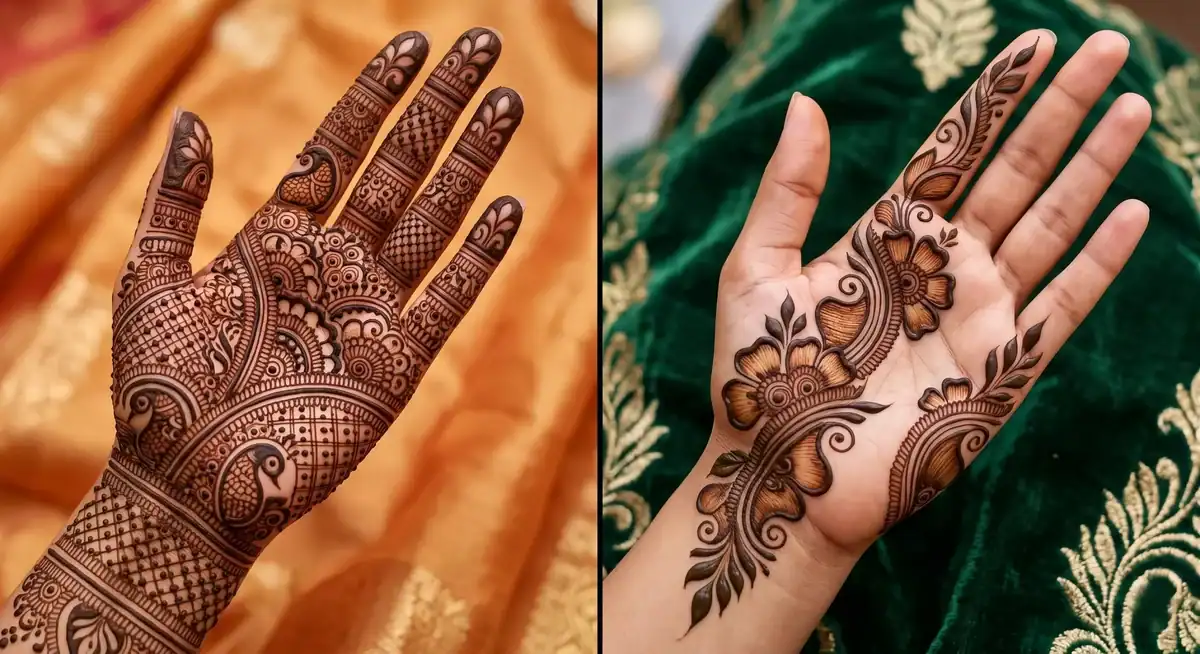
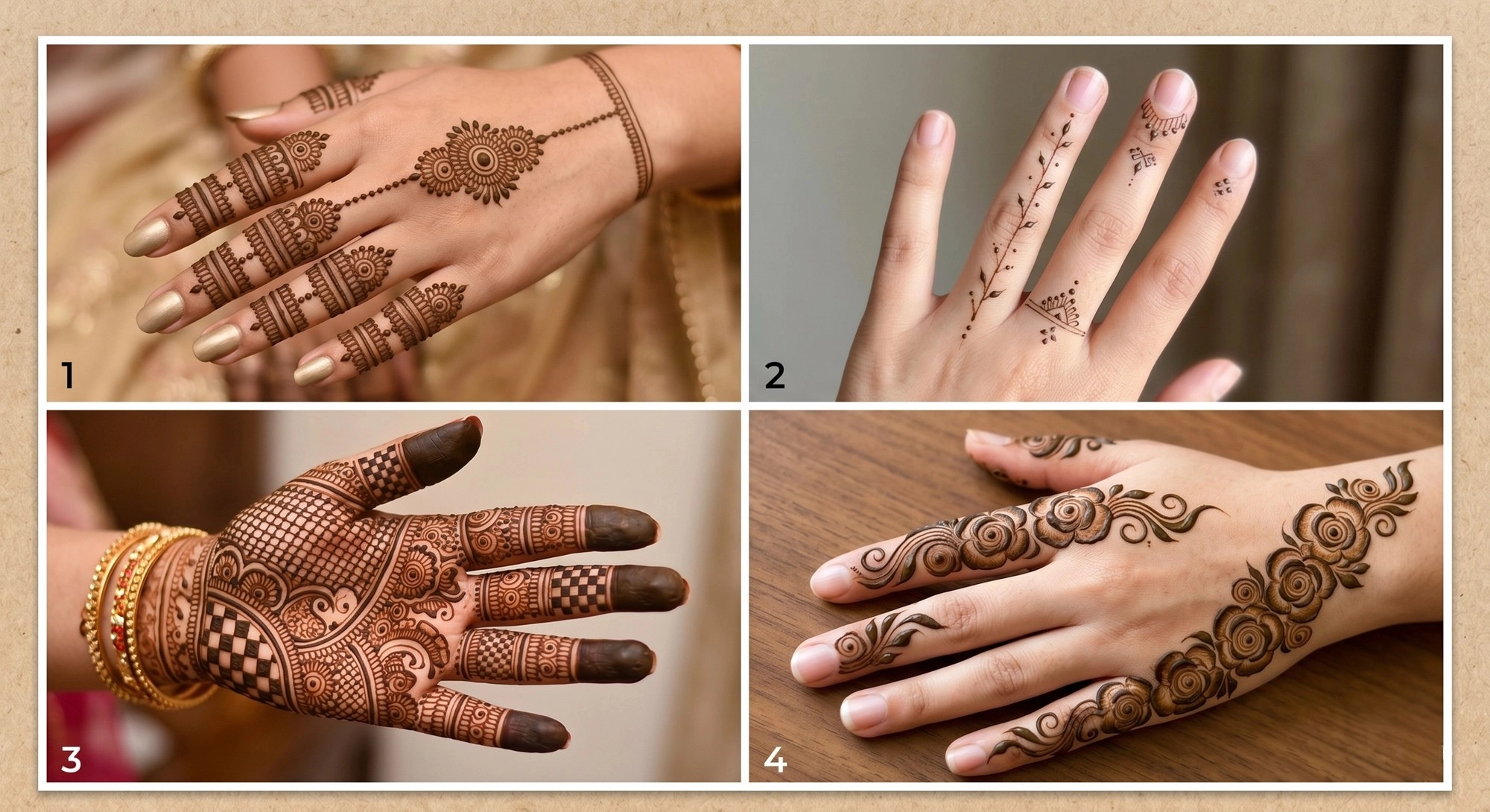
THE VISUAL DIFFERENCE AT A GLANCE
You are scrolling through Instagram or Pinterest looking for the perfect mehndi design for your upcoming wedding or festival. You see hundreds of images, but something feels off. Some designs look bold and graphic with lots of open skin showing. Others are incredibly dense, with every inch covered in fine detail work. You realize these are not just different skill levels or motifs. They are entirely different traditions.
Arabic mehndi design and Indian mehndi design represent two distinct schools of henna artistry. They come from different cultural roots, use different techniques, and create completely different visual impacts. Yet most people cannot tell them apart at first glance, which means they often end up choosing a style that does not match their event, their outfit, or their personal aesthetic.
Here is how to spot the difference in under ten seconds, and more importantly, how to choose which one is right for you.
WHAT MAKES ARABIC MEHNDI DISTINCTIVE
The Bold Outline Philosophy
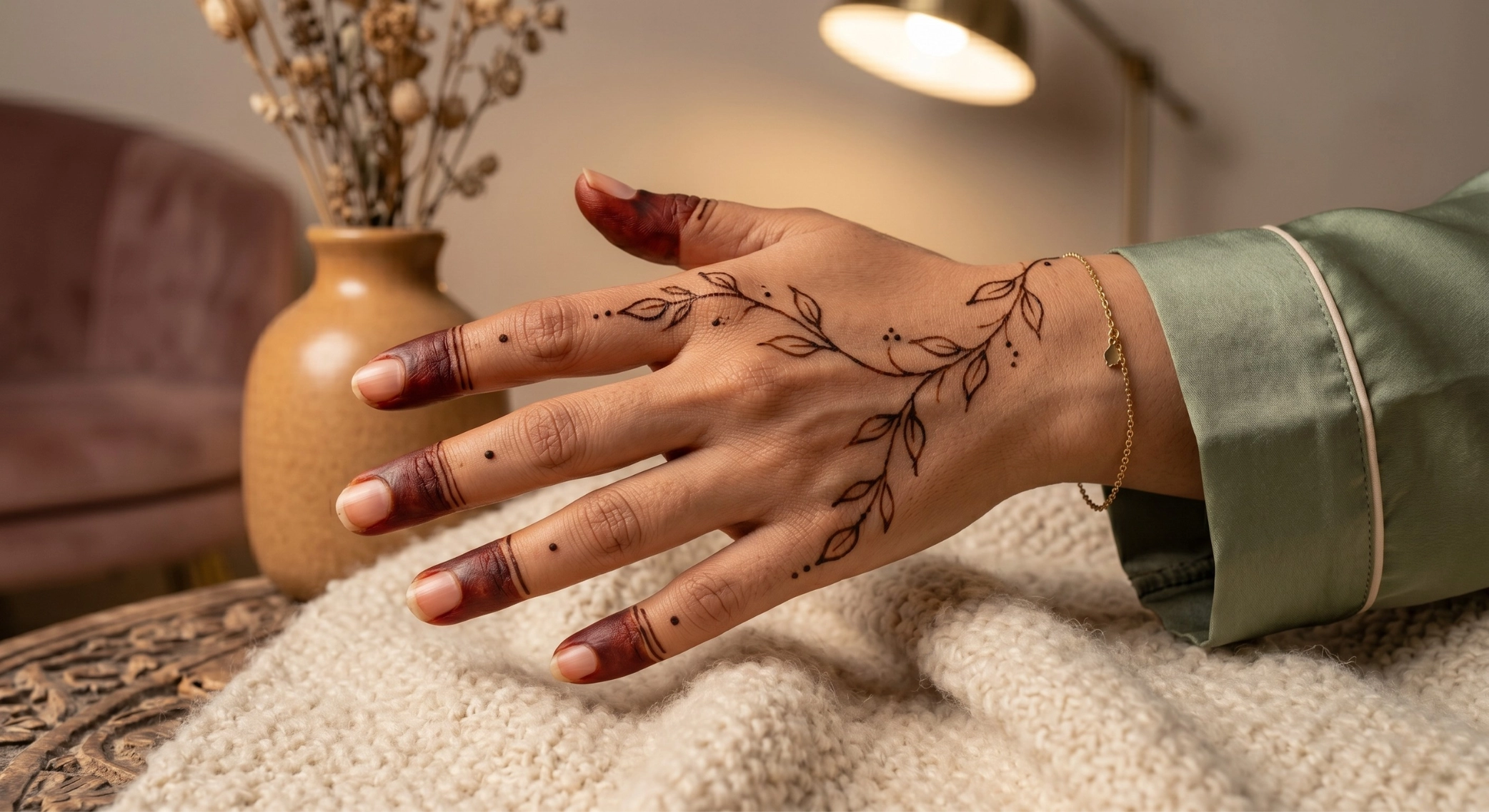
Arabic henna is instantly recognizable once you know what to look for. The defining characteristic is thick, confident outlines that create a graphic, almost jewelry-like effect. The lines are bold and deliberate, with minimal internal filling. This creates a design that looks modern, clean, and breathable.
Negative space is not just tolerated in Arabic mehndi design. It is essential to the composition. Large areas of bare skin are left untouched between motifs, allowing the bold outlines to stand out dramatically. This open composition is what gives Arabic henna its contemporary, editorial feel that performs exceptionally well on Instagram and in professional photography.
Floral Clusters Without Fillers
The dominant motif in Arabic style is the floral cluster. You will see large, open flowers with thick petals, often arranged in cascading patterns across the back of the hand or along the fingers. These florals are not filled with dense texture. Instead, they rely on the strength of their outlines to carry the visual weight.
Trailing vines and leaf elements connect the main motifs, creating flow and movement across the hand. The linework throughout maintains that consistent bold weight. There is no switching between thick and thin lines. Everything is confident and substantial.
Fast Application, High Impact
One practical advantage of Arabic mehndi design is the application time. Because the lines are bold and the coverage is open, a skilled artist can complete a full hand in 30 to 45 minutes. This makes it ideal for last-minute events or for brides who want beautiful henna without the multi-hour commitment.
The bold lines also mean the stain develops quickly and darkly. Even beginners can achieve professional-looking results with easy Arabic mehndi design patterns, as the thick outlines are forgiving of minor wobbles or inconsistencies.
WHAT DEFINES INDIAN MEHNDI TRADITION
Density Is Non-Negotiable
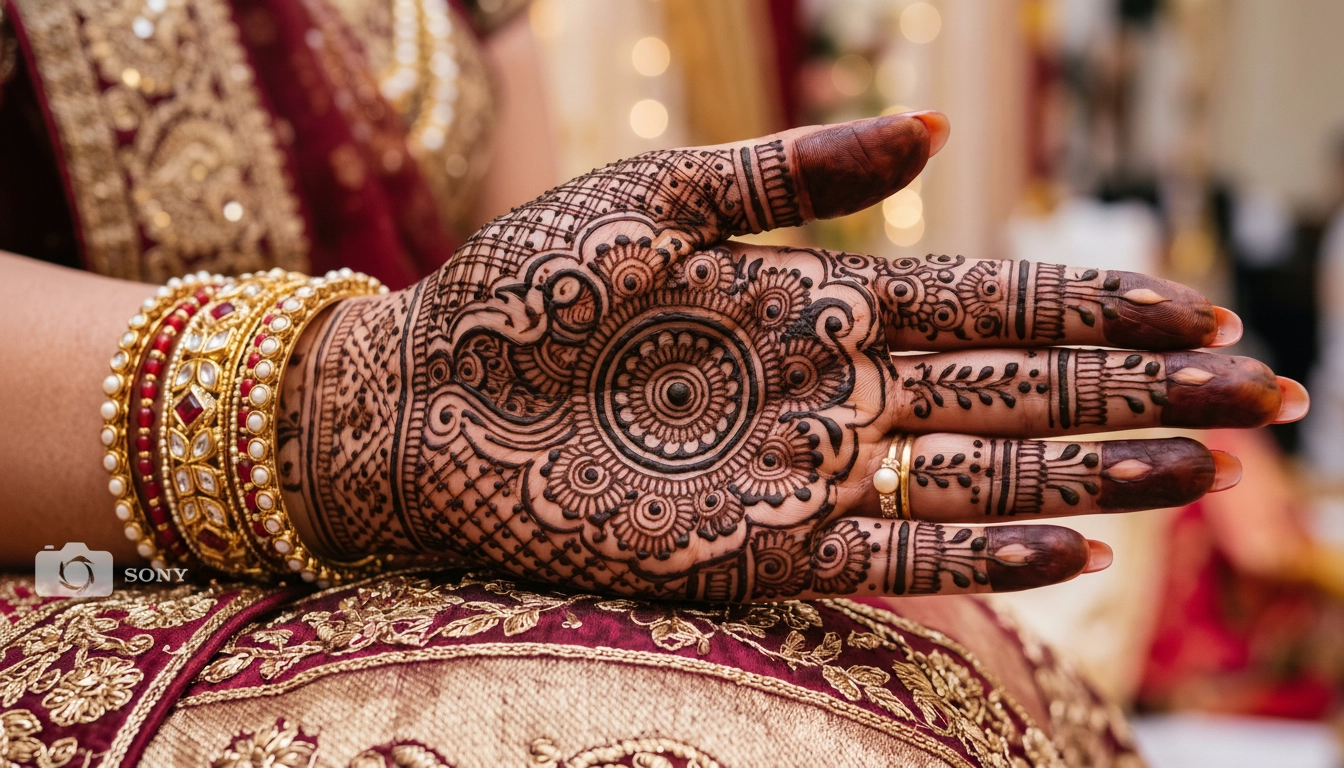
Indian henna operates on a completely different visual philosophy. Where Arabic style celebrates negative space, Indian mehndi design seeks to cover every available inch of skin. The goal is dense, rich coverage that creates a deep, uniform stain across the entire hand.
This is not just an aesthetic choice. It is cultural. In traditional Indian bridal contexts, the darkness and density of the henna stain is considered auspicious. The darker the stain, the stronger the bond between the bride and groom. This cultural weight means that bridal mehndi design in the Indian tradition demands full coverage from wrist to fingertip.
Fine Linework And Jaal Patterns
The technical skill required for Indian style is significantly higher. Artists use fine cone tips to create hair-thin lines, delicate hatching, micro dots, and intricate stippling. The linework is precise and detailed, often requiring a very steady hand and advanced technique.
The signature element of Indian mehndi design is jaal, or lattice work. This is a repeating diagonal grid pattern that fills large areas of the hand, creating a net-like texture. Jaal is not just decorative. It is functional, providing structure to the composition while allowing the design to breathe despite the dense coverage.
Mandala Anchors And Geometric Fills
Where Arabic style uses bold florals, Indian tradition relies heavily on mandalas and geometric fills. A central mandala, often featuring a lotus or peacock motif, anchors the palm. This radial element organizes the entire composition, with jaal and other patterns radiating outward from this focal point.
The fingers receive individual attention with detailed bands, floral knots, and geometric stripes. Each finger is treated as its own canvas, decorated from knuckle to tip with fine detail work. This creates a jewelry-like effect similar to Arabic style, but achieved through density rather than bold outlines.
Time Investment And Skill Requirements
A full Indian bridal mehndi design requires 90 to 180 minutes for both hands. This is not a quick application. The density and fine detail work demand patience, precision, and advanced skill. Beginners will struggle with the consistency required for fine linework and the stamina needed for full coverage.
However, the payoff is a design that stains incredibly dark and lasts longer than Arabic style. The fine lines create more surface area for dye penetration, resulting in a rich mahogany stain that photographs beautifully and withstands the rigors of multi-day wedding celebrations.
SIDE BY SIDE COMPARISON
Visual Characteristics
Arabic Mehndi:
- Thick, bold outlines throughout
- Large areas of negative space
- Floral clusters and trailing vines
- Minimal internal filling or texture
- Graphic, modern aesthetic
- Fast application (30-45 minutes)
Indian Mehndi:
- Fine, delicate linework
- Dense coverage with minimal negative space
- Mandalas, jaal, and geometric fills
- Heavy internal texture and detailing
- Traditional, ornate aesthetic
- Long application (90-180 minutes)
Cultural Context
Arabic henna originates from the Gulf region and North Africa, where the aesthetic prioritizes boldness and simplicity. It reflects the clean lines and geometric patterns found in Islamic art and architecture. The style is practical for hot climates where heavy, dense henna might crack or fade quickly.
Indian henna comes from the Indian subcontinent, where it is deeply embedded in wedding and festival traditions. The density and darkness carry symbolic meaning, representing love, prosperity, and spiritual protection. The intricate patterns reflect the ornate aesthetics of Mughal and Rajasthani art traditions.
WHICH SHOULD YOU CHOOSE
Choose Arabic Mehndi If:
You have a last-minute event and need something applied quickly. The 30 to 45 minute application time makes Arabic mehndi design perfect for same-day celebrations or when your schedule is tight.
You prefer a modern, minimalist aesthetic. The bold outlines and open composition create a contemporary look that pairs beautifully with modern outfits and minimal jewelry.
You are a beginner applying your own henna. Easy Arabic mehndi design patterns are forgiving and achievable even with shaky hands or limited experience.
You want your design to photograph well on social media. The high contrast and graphic nature of Arabic style performs exceptionally on Instagram and Pinterest.
You are attending a casual event like a sangeet, mehendi ceremony, or Eid celebration where full bridal coverage is not expected.
Choose Indian Mehndi If:
You are the bride and need traditional full coverage. For a bridal mehndi design, Indian tradition delivers the density and darkness that wedding photography and cultural expectations demand.
You have several hours available for application. The 90 to 180 minute commitment is worth it for the rich, long-lasting stain and intricate detail work.
You prefer traditional, ornate aesthetics. The fine linework and dense patterns create a classic, royal look that pairs beautifully with heavy bridal jewelry and traditional outfits.
You want the darkest possible stain. The fine lines and full coverage of Indian mehndi design penetrate deeper, creating a rich mahogany color that lasts 2 to 3 weeks.
You are attending a traditional festival like Karwa Chauth, Diwali, or Teej where cultural authenticity matters.
THE HYBRID APPROACH
Modern henna artists increasingly blend both traditions to create hybrid designs. You might see a bold Arabic-style floral cluster on the back hand combined with Indian-style jaal on the fingers. Or an Indian mandala on the palm surrounded by Arabic negative space.
These stylish Arabic mehndi design meets royal front hand mehndi design combinations offer the best of both worlds. They provide visual impact and modern appeal while maintaining traditional density where it matters most.
If you cannot decide between the two traditions, ask your artist for a fusion approach. Specify which elements you want from each style, and let them create a custom composition that honors both aesthetics.
THE VERDICT
Arabic and Indian mehndi are not better or worse than each other. They are different tools for different jobs. Arabic style delivers speed, modernity, and graphic impact. Indian style delivers tradition, density, and intricate beauty.
Understanding the difference allows you to make an informed choice based on your event, your timeline, your aesthetic preferences, and your skill level. Whether you choose bold Arabic outlines or dense Indian jaal, the right choice is the one that makes you feel confident and beautiful.