
Priya Sharma
· · 8 min readSimple Mehndi Designs: When Minimal Is Actually Harder
Discover why simple mehndi designs demand more skill than you think. We break down the technical precision, negative space mastery, and modern aesthetic that make minimal henna the hardest to execute perfectly.
THE MYTH OF “SIMPLE”
Scroll through any beginner tutorial or browse Instagram for easy mehndi design. You will see the same promise: clean lines, open space, quick application, zero stress. The word simple suggests effortless. It suggests that if you can draw a flower, you can nail a minimalist composition. This is one of the most persistent misconceptions in henna artistry.
Simple mehndi design is not easier than dense bridal work. It is harder. Where traditional Indian or Mughlai styles rely on density to hide imperfections, minimal designs expose every tremor, every uneven curve, every inconsistent line weight. There is no jaal lattice to fall back on. There are no micro florals to distract the eye. What remains is pure composition, pure line control, and pure negative space management. This is why professional artists often consider simple mehndi design the ultimate test of skill.
Understanding why minimal is actually harder changes how you approach application, how you choose designs for your events, and how you evaluate your own progress. Let us break down the technical reality behind the aesthetic.
WHY NEGATIVE SPACE IS THE HARDEST PART
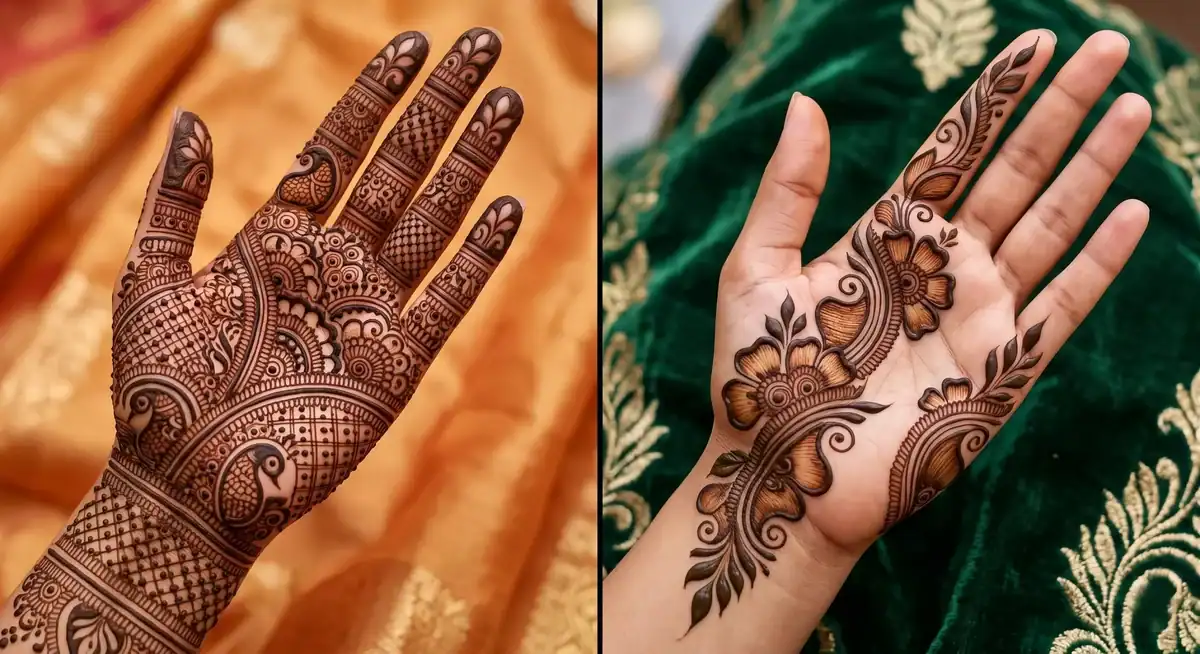
Dense coverage solves a compositional problem automatically. When you fill every inch of skin with fine detail, the eye reads texture first and structure second. Minor spacing errors blend into the overall pattern. A slightly crooked vine disappears into the surrounding filler. The density forgives what the minimalist approach never will.
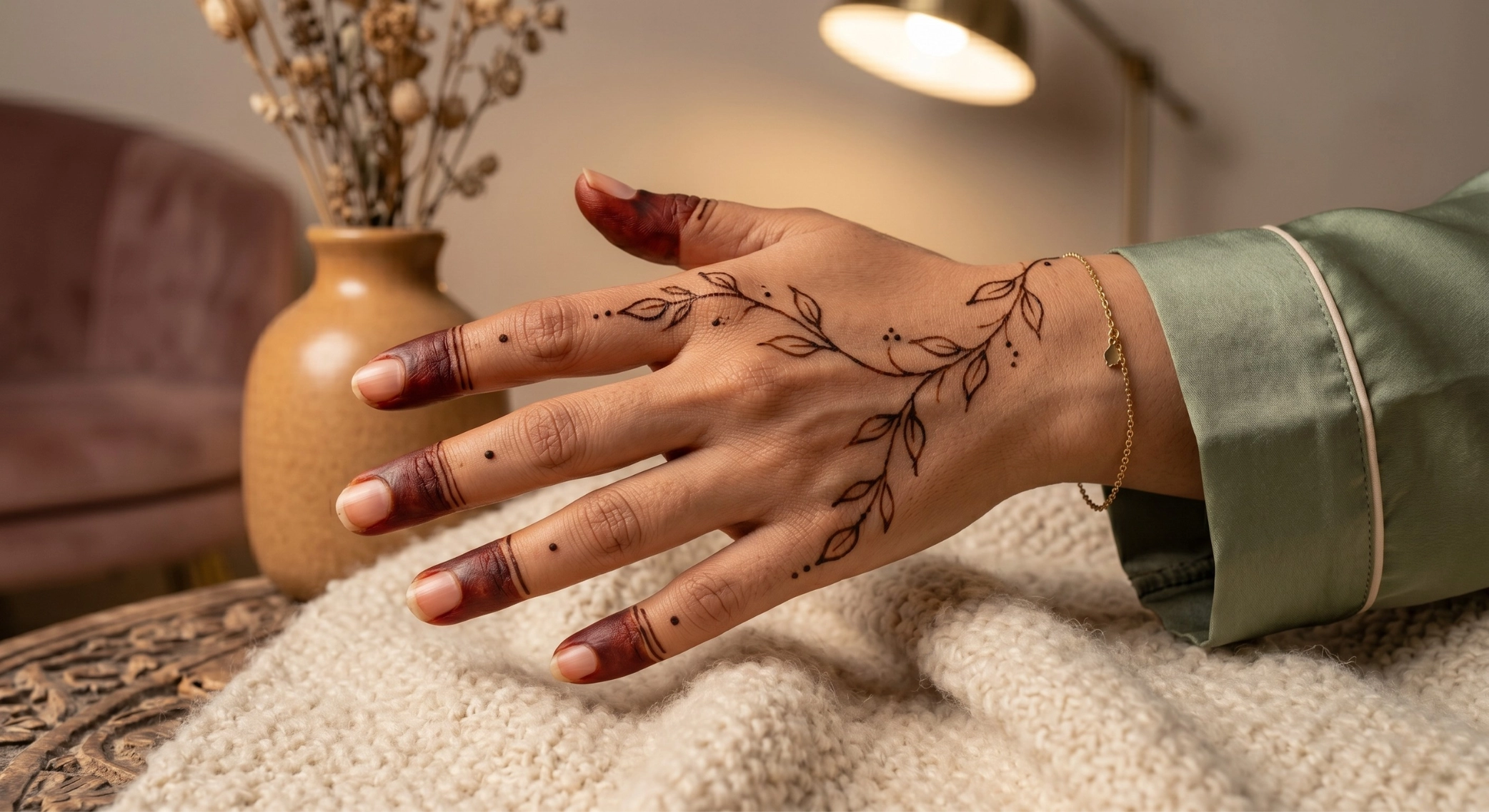
Simple mehndi design removes that safety net. Every element must stand alone. The space between motifs is not empty. It is an active design choice that dictates balance, flow, and visual weight. If your floral cluster sits too far left, the composition feels lopsided. If your trailing vine stops too short, the hand looks unfinished. If your spacing is inconsistent, the design reads amateur rather than intentional.
Mastering negative space requires spatial awareness that takes years to develop. Artists practicing easy mehndi design often rush the application, assuming minimal means fast. But minimal means deliberate. Each line placement must be calculated. Each gap must be measured. The result looks effortless only because the artist has trained their eye to see balance before the cone ever touches skin.
When you remove density, you remove the ability to correct mistakes later. In full coverage work, you can adjust filler patterns or add dots to smooth over awkward gaps. In minimal work, there is no second layer. The first stroke is the final statement. This permanence demands a level of confidence that only comes from repetition and study.
THE BOLD LINE CHALLENGE
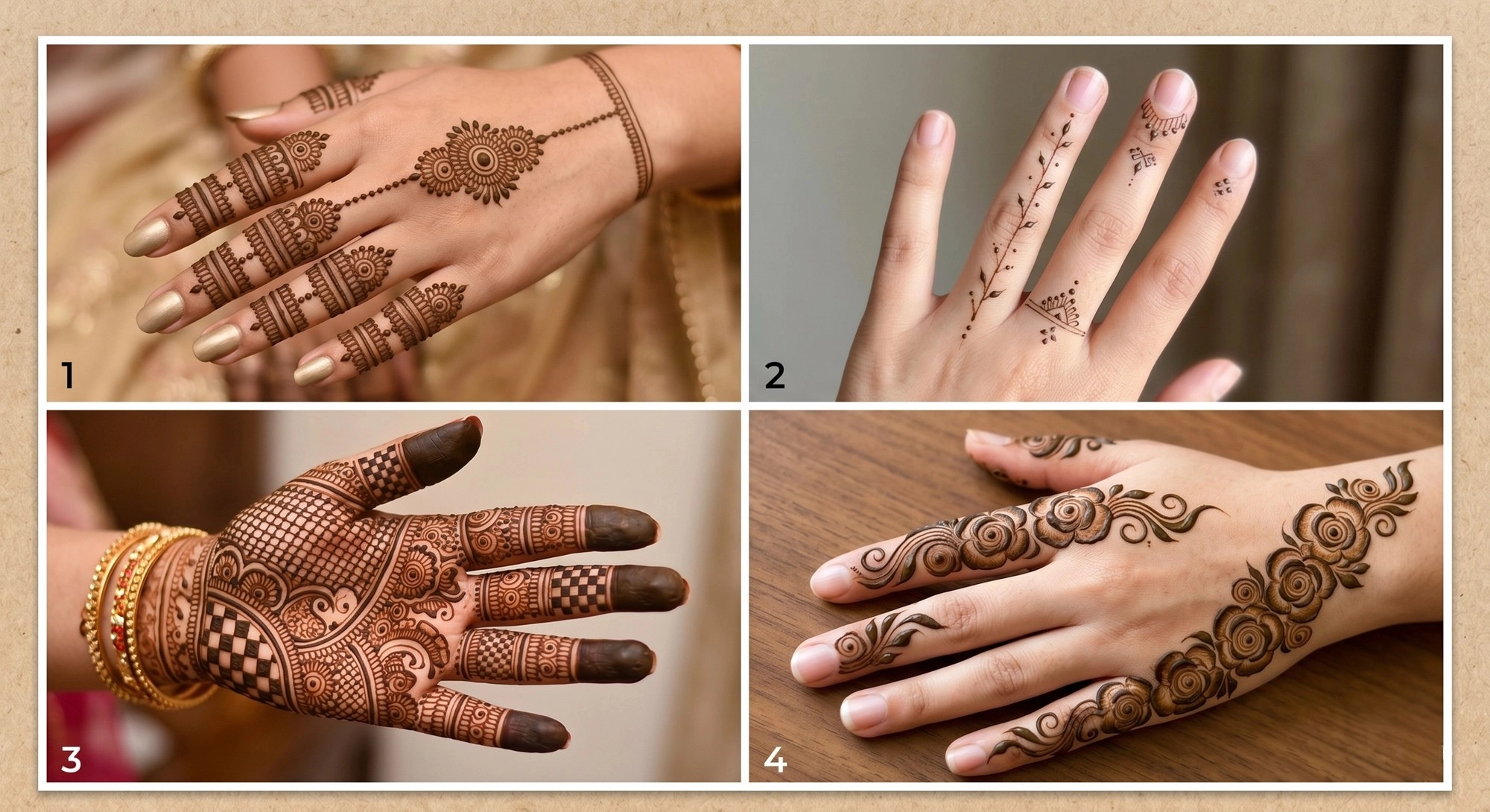
Modern minimalist henna heavily features bold, confident outlines. This aesthetic draws from Arabic tradition, where thick strokes create a graphic, jewelry-like effect. The appeal is obvious. Bold lines stain dark, photograph beautifully, and read clearly on mobile screens. But executing bold lines consistently is technically demanding.
A thick line requires steady pressure, controlled flow, and a hand that does not shake. If you press too hard, the paste spreads and blurs. If you press too lightly, the line breaks and looks patchy. If your speed varies, the line weight shifts and ruins the graphic symmetry. Unlike fine linework, where micro wobbles disappear into dense texture, bold lines magnify every inconsistency.
This is why beginner mehndi design tutorials often start with dots and vines before moving to solid bands. The transition from delicate to bold requires muscle memory that cannot be rushed. Artists who master thick outlines can apply stylish finger mehndi design or aesthetic back hand mehndi design with confidence. Those who struggle with line control will find their minimalist compositions looking messy rather than modern.
The cone tip size matters significantly here. A standard tip can produce bold lines, but only if the paste consistency is thick enough to hold its shape. Thin paste will feather and blur, destroying the clean edges that define modern mehndi aesthetics. Mastering paste preparation is just as important as mastering hand movement.
COMPOSITIONAL BALANCE WITHOUT FILLERS
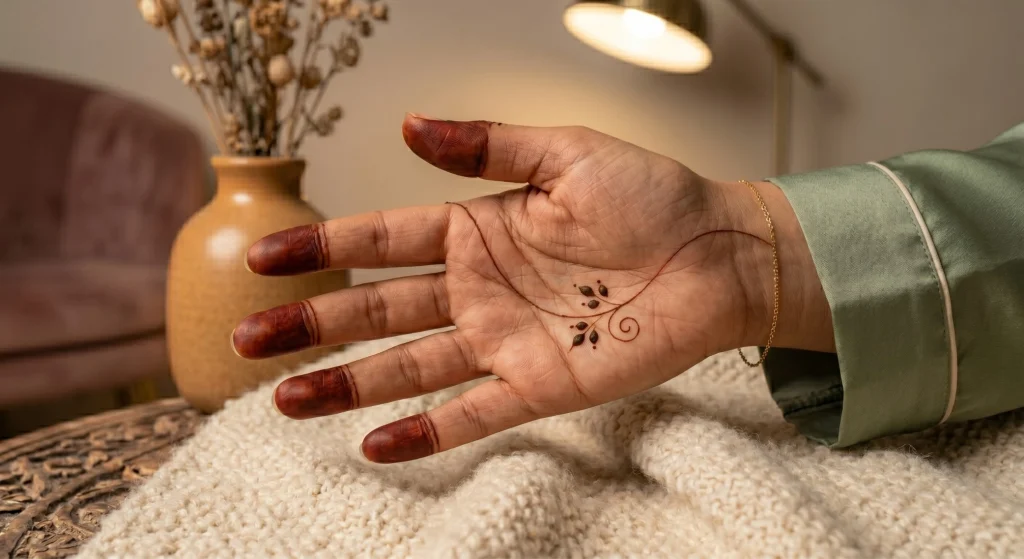
Traditional designs use fillers strategically. Tiny dots, micro petals, and fine hatching occupy negative space and guide the eye across the hand. These elements create rhythm and connect isolated motifs into a unified whole. Minimalist designs strip away these connectors. What remains must balance itself through scale, placement, and motif weight alone.
A single flower on the back hand needs a trailing vine that curves just right to counterbalance it. A geometric band on the fingers needs a dotted accent that bridges the gap to the next element. A paisley near the wrist needs breathing room on one side and a subtle leaf cluster on the other. Without fillers, every placement decision carries more weight. Every curve must earn its space.
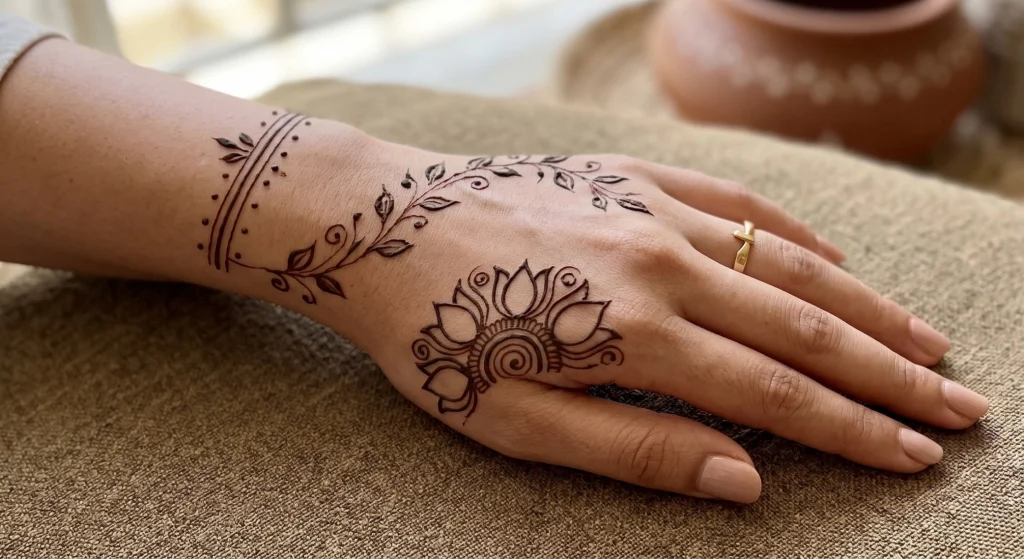
This compositional discipline is what separates amateur attempts from professional aesthetic mehndi design. The artist must visualize the finished composition before drawing the first line. They must understand how negative space will read once the stain develops, not just how the paste looks wet. This foresight is what makes simple designs deceptively difficult.
Many beginners make the mistake of adding filler elements after realizing the composition feels empty. This defeats the purpose of minimalism and creates a disjointed hybrid that lacks intention. The discipline lies in trusting the negative space. When executed correctly, the bare skin becomes part of the design, framing the motifs and giving them room to breathe.
WHEN SIMPLE IS THE RIGHT CHOICE
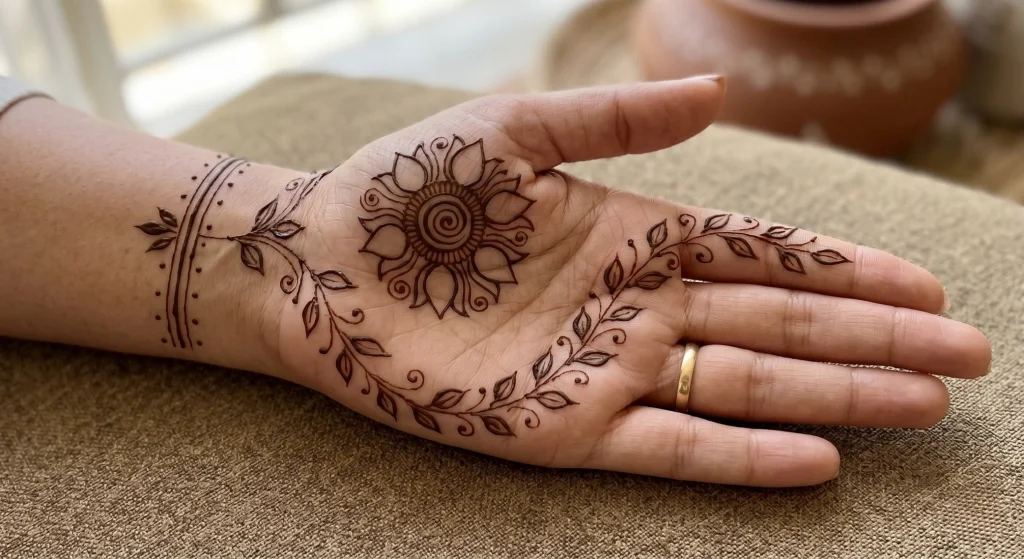
Despite the technical demands, simple mehndi design dominates modern celebrations for practical and aesthetic reasons. Understanding when to choose minimal over dense ensures you get the look you want without compromising skill or timeline.
Everyday Styling Minimal designs pair effortlessly with office wear, casual outings, and daily routines. The open composition does not interfere with typing, cooking, or frequent hand washing. An everyday mehndi design provides traditional elegance without the commitment of full coverage.
Sangeet Celebrations Pre-wedding events demand festive beauty without the fatigue of three-hour application. A sangeet mehndi design featuring bold floral vines and geometric finger bands applies in 30 to 45 minutes while still delivering high visual impact for photography and social sharing.
Eid Festivities Festival mornings move quickly. An eid mehndi design that emphasizes clean lines and strategic negative space leaves time for preparation, family visits, and celebration. The bold outlines stain quickly and look striking against traditional outfits and gold jewelry.
Beginner Practice While simple designs are technically harder to perfect, they are ideal for skill development. Focusing on one motif at a time allows beginners to isolate line control, spacing, and composition without the overwhelm of dense filling. Mastering easy mehndi design fundamentals builds the foundation for advanced work later.
Destination Weddings Brides traveling for destination weddings often prefer lightweight, quick-application designs that survive humidity and long flights. Minimal patterns deliver bridal elegance without the risk of cracking or smudging during transit.
COMMON QUESTIONS
- Why do my simple designs look messy when others look clean? Messy minimal designs usually stem from inconsistent line weight, rushed spacing, or paste that is too thin. Thick outlines require a steady squeeze and uniform speed. If your cone tip is too large or your paste lacks the right consistency, bold lines will spread and blur. Practice on paper first to build muscle memory before applying to skin.
- Can beginners achieve professional-looking simple mehndi? Yes, but with adjusted expectations. Start with single-finger bands, isolated floral clusters, or basic vine patterns. Focus on one technical element at a time. Do not attempt full back hand compositions until you can draw consistent curves and measured spacing on a single finger. Progression beats perfection in beginner mehndi design.
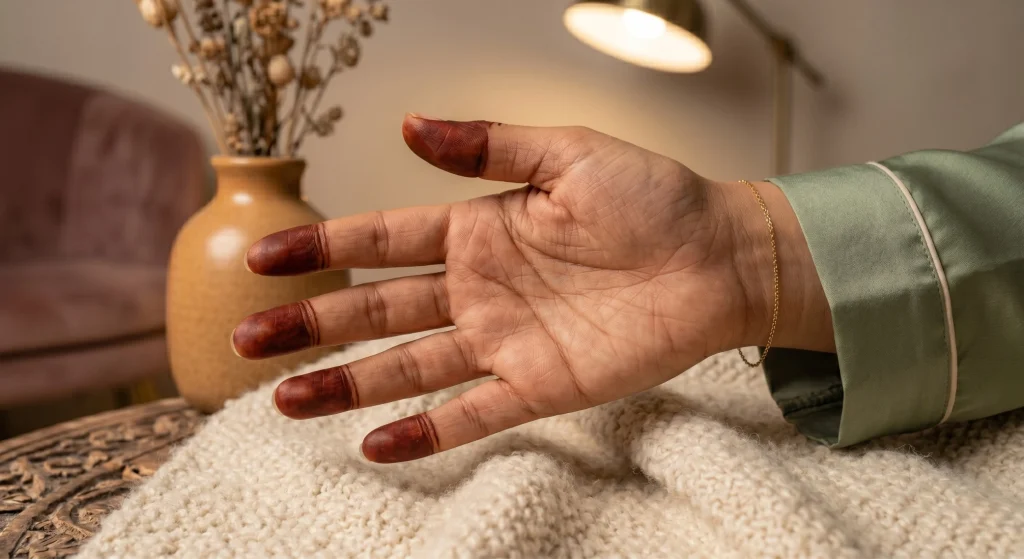
- Will minimal designs stain as dark as dense patterns? Bold lines often stain darker than fine linework because they contain more paste volume. However, the overall visual impact relies on contrast between stained lines and bare skin. Keep the paste on for 4 to 6 hours minimum. Apply a sugar and lemon juice sealant once dry to lock in moisture. The lines will turn deep mahogany while the negative space remains clean.
- How do I improve my negative space composition? Study professional aesthetic mehndi design galleries and analyze spacing before drawing. Use a light pencil sketch to map motif placement and check balance. Step back from your work frequently to assess visual weight. Practice drawing the same composition multiple times until the spacing feels intuitive rather than calculated.
- Is simple mehndi suitable for brides? Traditional bridal expectations often demand full coverage, making simple mehndi design unconventional for the main ceremony. However, minimalist patterns work beautifully for pre-wedding events, civil ceremonies, or destination weddings where comfort and quick application matter more than density. Modern brides increasingly choose elegant minimalism for cocktail parties and reception styling.
- How long does a simple design take to apply? Most easy mehndi design patterns require 20 to 40 minutes for a full hand. This is significantly faster than the 90 to 180 minutes required for dense bridal work. The time savings come from fewer elements and no filler work, but the application pace must remain steady to maintain line consistency.
THE VERDICT
Simple mehndi design is not a shortcut. It is a discipline. The removal of fillers, the demand for consistent bold lines, and the requirement for precise negative space management make minimal henna one of the most technically challenging styles to execute well. What looks effortless on Instagram is the result of calculated placement, practiced line control, and compositional awareness that takes time to develop.
Understanding this reality changes how you approach your own practice and how you select designs for your events. Minimal is not easier. It is different. It rewards patience, precision, and spatial intelligence over speed and density. When executed well, easy mehndi design delivers modern elegance that photographs beautifully, wears comfortably, and ages gracefully.
The next time you see a clean, minimalist composition online, you will know what you are actually looking at. Not simplicity. Mastery. That distinction is what separates temporary trends from lasting skill, and it is why minimal henna will continue to dominate modern aesthetics for years to come.