Priya Sharma
· · 4 min readRoyal Front Hand Mehndi: What Makes A Design Royal
What separates a royal front hand mehndi design from everyday patterns? We break down the density, motifs, and technical precision that define royal henna artistry across Indian and Mughlai traditions.
THE VISUAL TEST: ROYAL IN TEN SECONDS
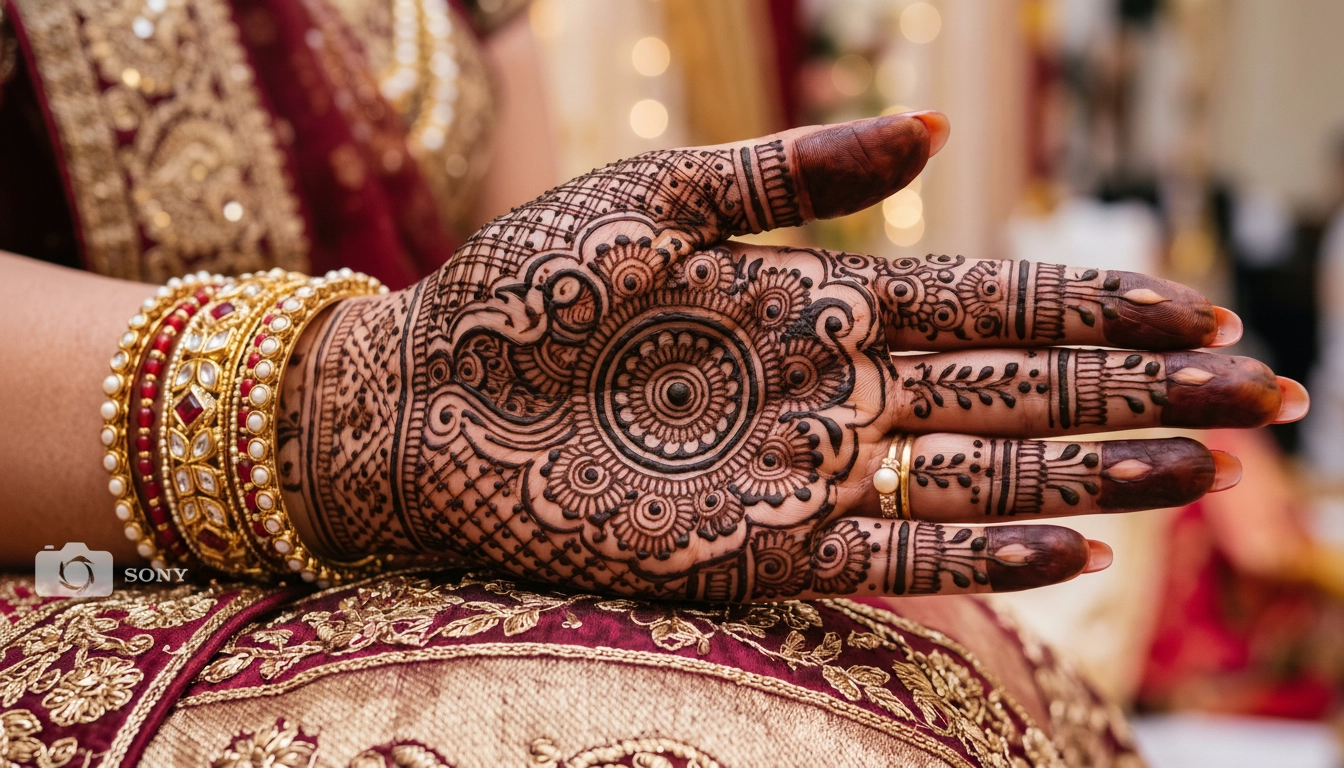
Open any gallery labeled royal front hand mehndi design. Scroll past the first ten images. You will notice a pattern that has nothing to do with motifs or placement. Every single design shares three non negotiable characteristics: full coverage from wrist to fingertip, fine linework that demands a steady hand, and a central anchor motif that organizes the entire composition.
This is not subjective. It is structural. A royal mehndi design is defined by density, precision, and cultural weight. Understanding these three pillars allows you to identify royal work instantly, choose the right artist for your event, and even attempt beginner friendly versions without losing the aesthetic that makes royal henna so distinctive.
Here is what actually makes a front hand design royal, and why these characteristics have remained consistent across centuries of Indian and Mughlai bridal tradition.
PILLAR ONE: DENSITY IS NON NEGOTIABLE
The first and most visible marker of royal front hand mehndi design is coverage. There is no negative space left empty. Every inch from wrist to fingertip is decorated with fine detail work. This is not an aesthetic preference. It is cultural logic.
In traditional Indian bridal contexts, the darkness and density of the henna stain carries symbolic meaning. The darker the stain, the stronger the bond between bride and groom. This belief means that royal mehndi design seeks maximum surface area for dye penetration. The result is a rich mahogany stain that lasts two to three weeks and photographs beautifully under any lighting.
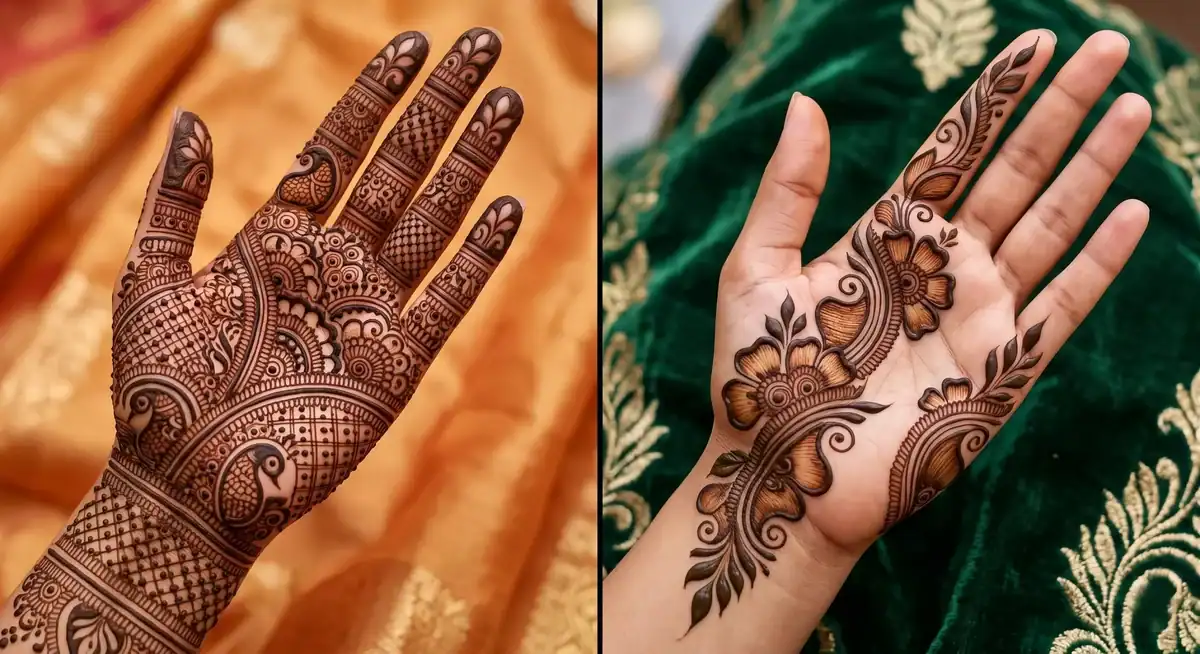
How density is achieved matters. Royal designs use jaal lattice work to fill large areas without creating visual clutter. The diagonal grid pattern creates a net like texture that expands across the back of the hand. Within each diamond of the jaal, artists place micro butis, tiny florals, or fine stippling. This layered approach creates tonal variation while maintaining the dense coverage that defines royal work.
PILLAR TWO: FINE LINEWORK REQUIRES PRECISION
The second marker is technical. Royal front hand mehndi design relies on hair thin lines executed with a fine cone tip. Delicate hatching, micro dots, and precise curves define the aesthetic. This is not beginner work. It demands a steady hand, advanced skill, and patience.
Compare this to Arabic style, which uses bold outlines and open composition. Royal Indian work does the opposite. The linework is fine but confident. Every stroke is deliberate. The artist cannot afford wobbles or inconsistencies because the density magnifies every mistake.
This precision extends to motif execution. A mandala in royal work features multiple concentric rings, each filled with different textures. The innermost ring might have tiny dots. The next ring out could have micro petals. The outer rings often feature fine hatching or crosshatching that creates tonal variation. The whole composition is meant to stain as dark as possible, so density and detail are the priorities.
PILLAR THREE: THE CENTRAL ANCHOR MOTIF
The third marker is compositional. Royal front hand mehndi design always features a central anchor that organizes the entire layout. This is typically a mandala, lotus, or peacock motif placed in the palm or center of the back hand.
The anchor serves three functions. First, it provides a focal point that draws the eye immediately. Second, it creates radial symmetry that forgives minor imperfections in the surrounding work. Third, it dictates where secondary elements like jaal, bel vines, and finger bands should begin.
Without this central anchor, even skilled artists can struggle to make a full hand composition feel unified. The mandala or lotus solves this problem by providing a fixed point around which everything else orbits. This is why you will see it consistently across Indian, Mughlai, and Rajasthani royal collections. The cultural technique changes. The density of fill changes. But the structural role of the central motif remains identical.
THE MUGHLAI INFLUENCE ON ROYAL AESTHETICS
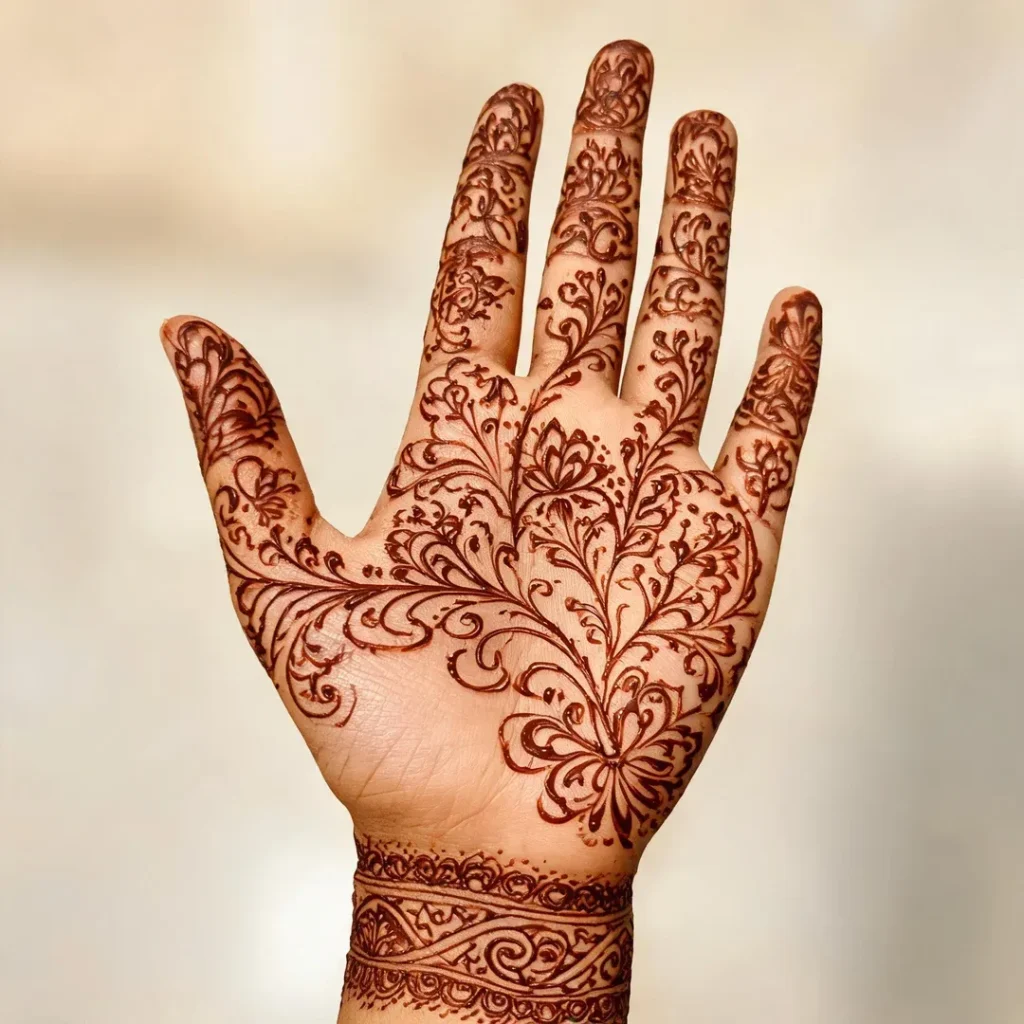
Mughlai tradition adds specific characteristics that distinguish royal work from simpler Indian styles. The courtly aesthetic prioritizes peacock motifs, dense paisley clusters, and fine hatching that creates a painterly effect.
In Mughlai royal designs, you will see:
- Peacock motifs with detailed tail feathers used as secondary anchors
- Paisley teardrops filled with fine khafif stippling rather than solid color
- Floral clusters that cascade from wrist to fingers in a controlled flow
- Geometric borders that frame the composition like jewelry
This influence is why royal front hand mehndi design often feels more ornate than standard Indian work. The Mughlai layer adds decorative complexity without sacrificing the structural principles of density and central anchoring.
WHEN ROYAL IS THE RIGHT CHOICE
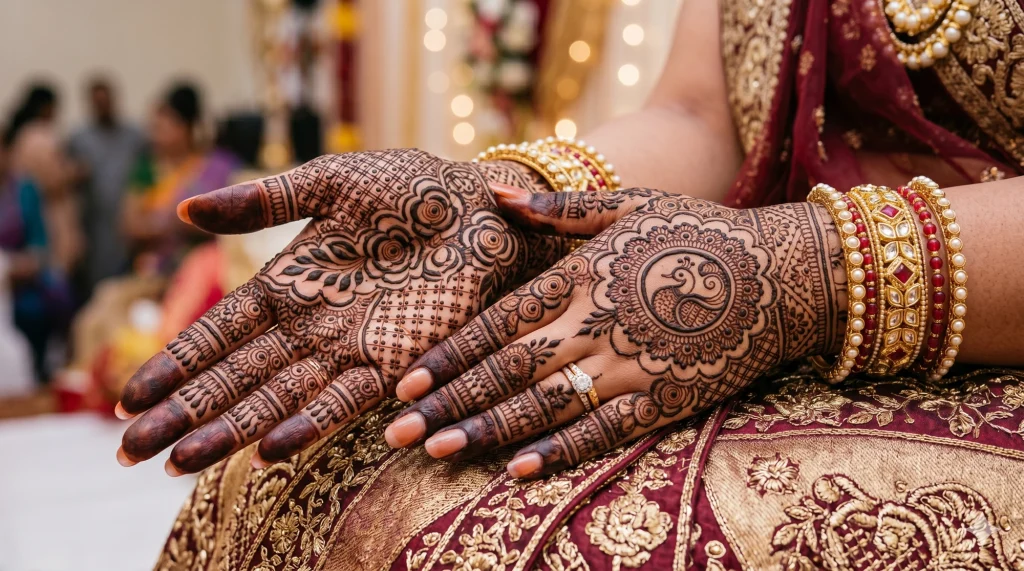
Royal front hand mehndi design is not for every occasion. The density and application time make it best suited for specific contexts.
Bridal Mehndi Ceremony This is the definitive use case. The density ensures a dark, long lasting stain that photographs beautifully. The fine detail work signals the importance of the event. If you are the bride, royal coverage is the traditional standard.
Sangeet Night If you want ornate beauty without the three hour commitment of full bridal work, royal front hand design delivers impact in 60 to 90 minutes. The detailed finger bands and palm anchor look stunning under party lights and pair perfectly with heavy jewelry.
Karwa Chauth For married women observing the fast, royal mehndi design carries cultural significance. The density and darkness align with the spiritual weight of the occasion. The central mandala or lotus motif adds traditional symbolism.
Diwali Celebrations The ornate aesthetic pairs beautifully with festive outfits and gold jewelry. Apply it a day before the celebration so the stain has time to deepen into rich mahogany.